

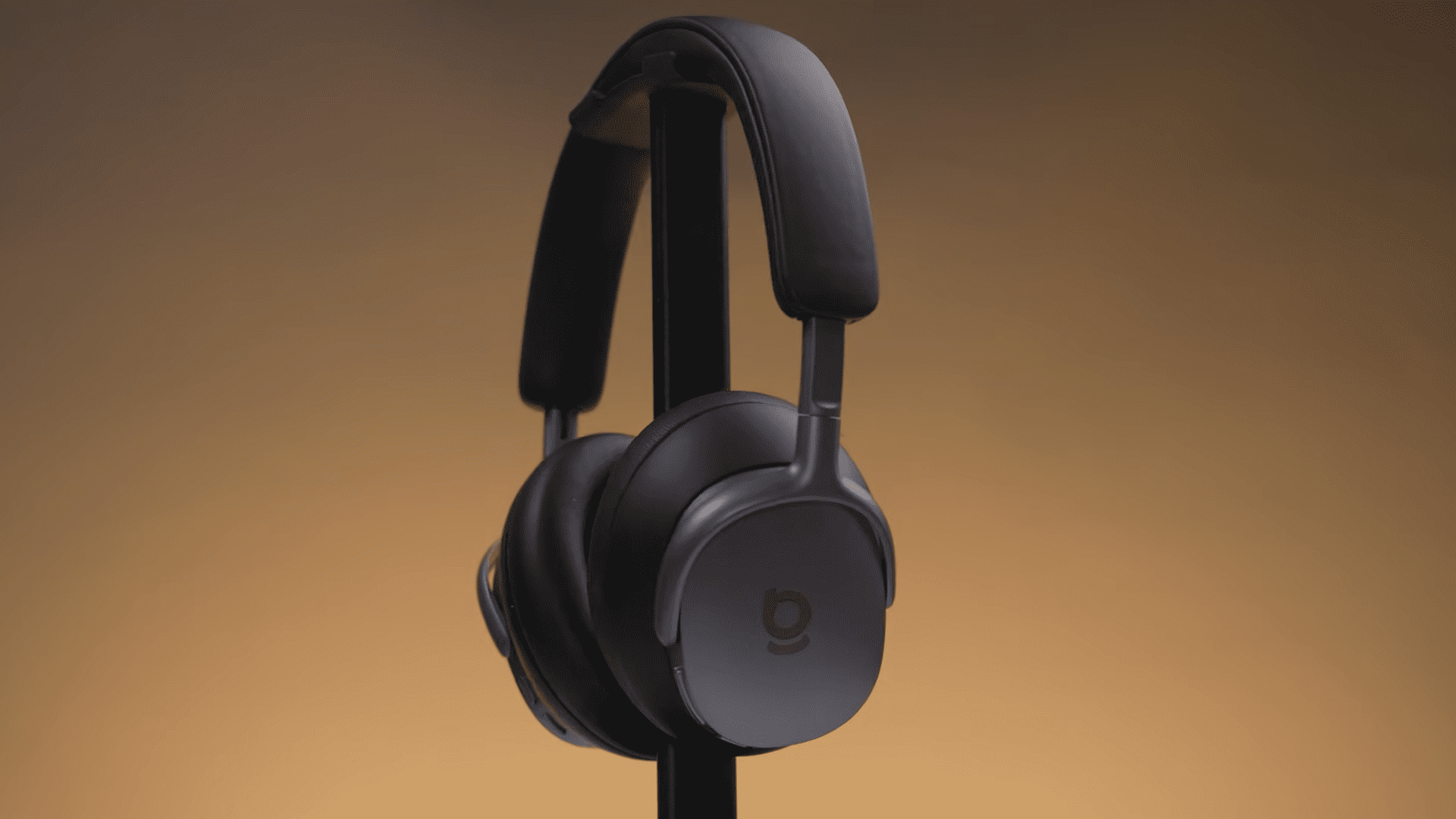
It is the first time this brand has utilized a co-engineering setup with Bose, spanning three distinct models. The lineup includes the Baseus XH1 noise-canceling headphones, the Open Ear XC1 earbuds, and the In-Ear XP1 noise-canceling earbuds. Both companies brought their expertise in acoustics to this project, specifically targeting the balance between noise cancellation and sound quality. This collaboration offers a hard-to-replicate advantage that has typically been elusive for mid-range headphone brands.
I found myself genuinely intrigued by how this partnership plays out across these devices. We often wonder what the actual performance looks like when high-end engineering meets budget-friendly hardware. In this review, I will dig into the key areas of the XH1 and its siblings to see how they really perform.

Ergonomic Build Quality
Looking at the packaging, the presentation is definitely premium and sets a strong tone immediately. There is a customized case included to protect the headphones during transport. The case features a slope-like design meant to hug the headphones entirely, ensuring they do not wobble inside. This design choice also means it takes up less space in a backpack for those intending to use them while traveling.
The headphones are foldable, although they cannot fit into the compact case in that specific folded configuration. I found the headband to be soft, and I did not feel any pressure even after several hours of wearing it. The rackets are angled inwards, while the connecting points with the speakers remain flexible. This architecture makes the ear cups hug my ears tighter but comfortably.
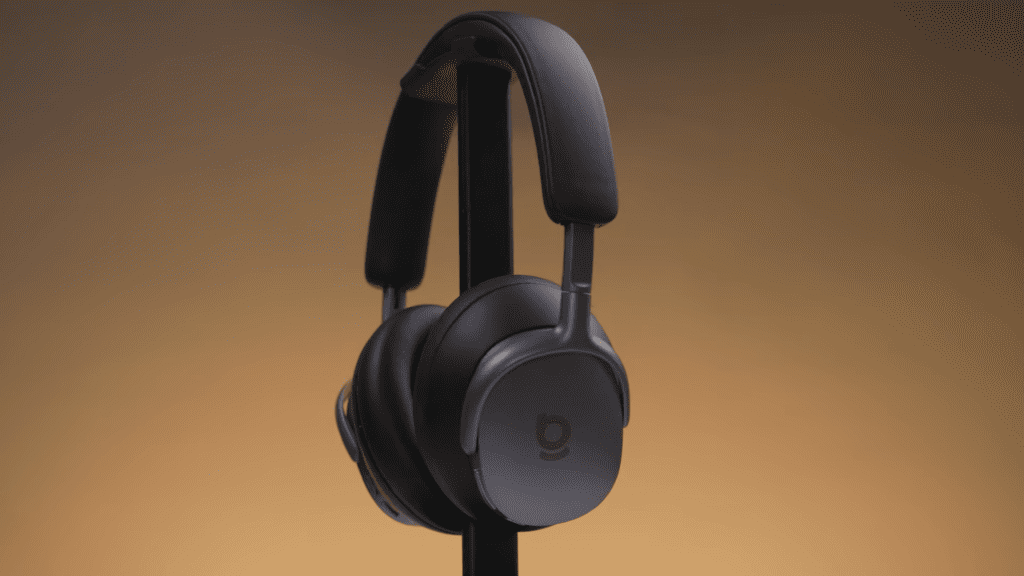
Weight is a significant factor for long listening sessions, and the Baseus XH1 weighs in at a very light 272 grams. The sound unit houses a 35mm driver inside alongside a damping tube for better acoustics, all tuned by Bose. This physical construction provides a solid foundation for the audio performance we will discuss next.
Comfort and Durability
Users who are not quite comfortable with the over-ear design might consider the XC1 open-ear earbuds from the same series. It adopts an open-ear design that is extremely lightweight. The wearing comfort lets you almost forget the device is there.

The connecting joints are highly durable, capable of withstanding up to 10,000 bends without damage. Crafted from soft liquid silicone, the material is skin-friendly, non-irritating, lightweight, and breathable. It is ideal for running workouts or daily use, ensuring no ear fatigue or discomfort whatsoever.
Audio and Listening Experience with LDAC Support
For the speaker unit, Baseus employs a hybrid two-way driver system featuring the newest BA tweeter. This supports up to 40 GHz frequency and is paired with a resilient LCP dynamic woofer. Such a combination ensures it can provide superior sound quality compared to most open-ear earbuds currently available. To get a full understanding of the sound performance, I used the track “Flares of the Blazing Sun” with a 192 kHz 24-bit high-resolution master.

The sound performance of these headphones truly exceeded my expectations. You can pick up the delicate graininess in a singer’s smoky vocals, and every slight nuance in the vocal line is distinguishable. The soundstage is genuinely impressive, offering a 360-surround effect that creates an immersive atmosphere. Sound naturally extends to the area above the head, adding significant layering and spatial depth.
Technological advantages are clearly reflected in the actual listening experience. LDAC high-resolution audio preserves details to the greatest extent, clearly presenting overtones of music instruments and faint background sounds. The low frequencies, optimized by Super Bass 2.0, reproduce deep sub-bass and deliver energy solidly into the ear canal without overwhelming the ears. It works well with genres ranging from rock and electronic to classical music.

Bose-Tuned Active Noise Cancellation and Transparency Mode Performance
Noise cancellation has always been a core strength of Bose products, and this feature certainly lives up to expectations in the Baseus XH1 model. The two core noise cancellation settings are highly practical for daily use. An adaptive mode adjusts the intensity in real time based on ambient noise. Alternatively, the fixed scene mode allows for manual selection to match scenarios like commuting or office work.
I found the subtle differences in noise cancellation levels across different modes to be well calibrated. This avoids one-size-fits-all redundancy and enables precise adaptation to user needs. A five-level manual adjustment option caters to various scenarios, whether you need light cancellation or deep-sealed quietness. In testing, the 48 dB noise cancellation depth proved competitive, filtering out subway rumbles and street traffic in high-intensity mode.

Crucially, even when set to the highest level, there is no strong, stuffy sensation in the ear canal. The balance between wearing comfort and noise cancellation performance is well achieved. Transparency mode also delivers outstanding performance with no lag or distortion. I could capture conversations clearly and crisply through the headphones, distinguishing subtle tonal details without that muffled “listening through a film” feeling.
Battery Life, Connectivity Specs, and App Customization
Battery performance is substantial across the lineup. The XP1 and XC1 boast 45 hours and 40 hours of battery life per charge, respectively. This kind of performance helps significantly for long flights, guaranteeing uninterrupted sleep. Naturally, the devices feature a Type-C port and support fast charging.

In the companion app, other than the usual mode changes, you can customize your own EQ and enable Dolby Audio. The Baseus XH1 includes a specific sleep mode, offering many types of sounds to help you sleep. Connectivity is robust, with support for Bluetooth 6.1 and multipoint connecting. There is also an aux cable included for the Baseus XH1 in case you want to use the headphones with a computer.

Control schemes rely on physical buttons rather than touch controls. This is totally a call for the user’s preference. Users who like buttons better will find this is not an issue. This setup often prevents accidental touches during adjustment or handling.
Final Thoughts — Price & Value
The Baseus XH1 represents a significant value proposition in the current market, primarily due to the Bose co-engineering offered at a mid-range price point found on platforms like AliExpress. The inclusion of high-end features like LDAC, 48dB ANC, and 360-degree spatial audio usually commands a much higher premium.

I haven’t found any obvious shortcomings in them after extensive use. It serves as a very good pair for office use, allowing me to handle editorial work while enjoying video and music. The versatility extends to commuting, where the reliable ANC and all-day comfort shine. This aligns well with what Baseus likely means by their slogan “born to inspire.”
The comprehensive package, including the premium case and the option for wired connectivity further reinforce the value. For those seeking Bose-level tuning without the flagship price tag, this collaboration offers a compelling solution.
