

There is a distinct saturation in the Bluetooth speaker market where manufacturers often prioritize raw volume or massive size to grab a consumer’s attention. The Edifier QD25, however, takes a completely different approach, seemingly engineered for a specific persona rather than the mass market.
This device immediately stands out, not just for its audio capabilities, but for its bold design language. Pricing varies depending on where you look, often found on platforms like AliExpress or Amazon, where it competes aggressively in the mid-range compact sector. My analysis of the QD25 reveals a product that largely succeeds in its mission, though it does harbor specific quirks that potential buyers need to understand before adding it to their setup.

Visual Aesthetics and the Tron-Inspired Transparent Design
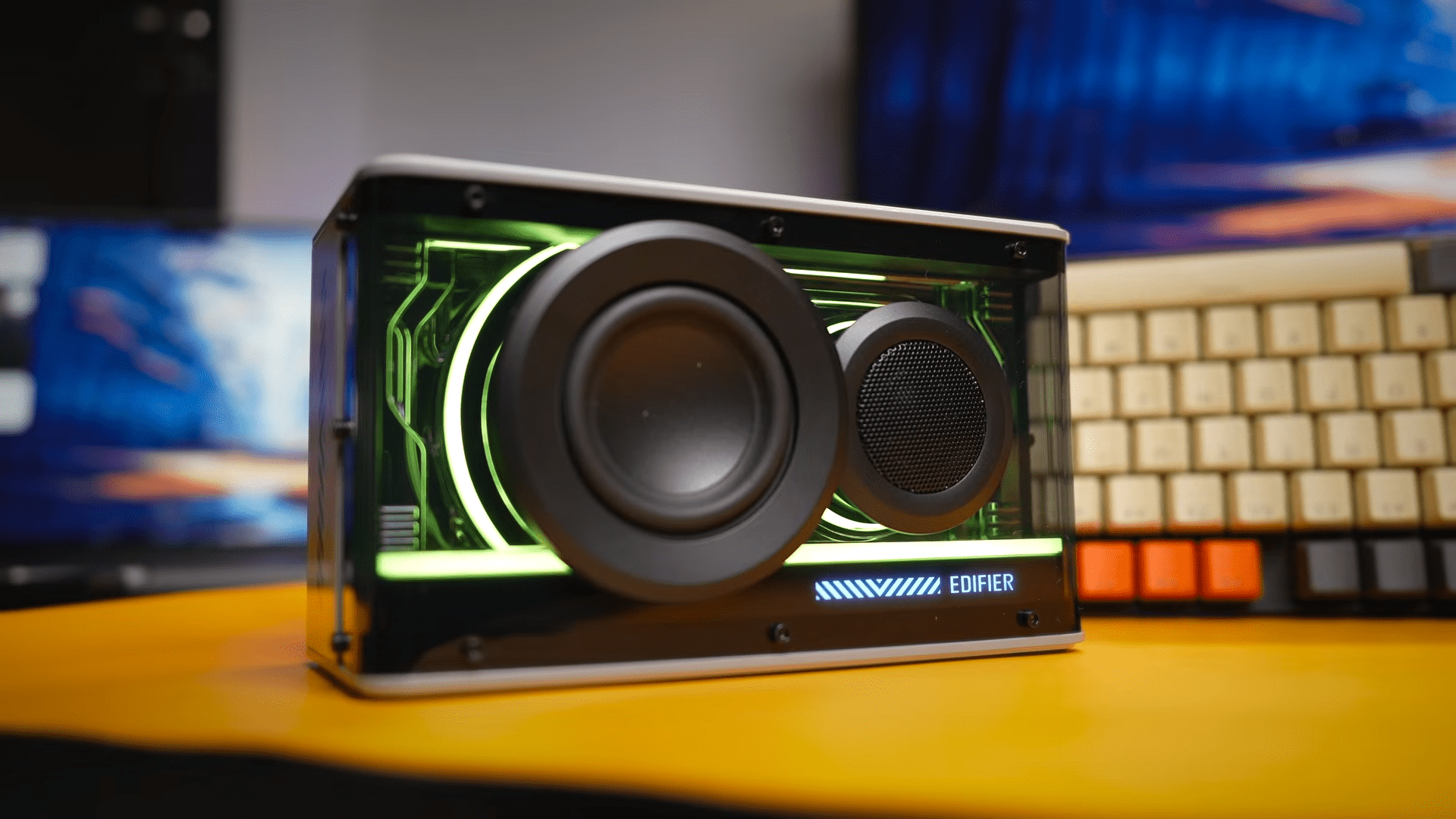
Edifier has crafted something that feels instantly familiar to anyone who has followed their recent releases, particularly if you have seen the larger QD35. The QD25 effectively scales down that architecture into a form factor that is significantly more portable while retaining the core visual identity. The design language screams retro-futurism, borrowing heavily from a “Tron” inspired aesthetic that fits seamlessly into modern gaming setups. The transparency of the casing combined with clean, sharp lines allows the device to straddle the line between modern technology and nostalgic hardware.
Functionality has been integrated into this aesthetic in clever ways. The light bar situated on the side is a standout feature for me. It serves a crucial function by clearly displaying your battery level. The implementation is subtle, fitting the overall aesthetic perfectly without being distracting or overly bright. It represents a marriage of form and function that I appreciate in desktop gear. However, the visual design does have one functional oversight regarding the physical controls. I found myself wishing the buttons were backlit. In a low-light gaming environment, which is exactly where this speaker belongs, illuminated controls would significantly enhance usability. While not a deal-breaker, the lack of button visibility is a missed opportunity for a “finishing touch” on an otherwise beautifully illuminated device.

Wireless Stability and High-Resolution Wired Connectivity
Connectivity options on the QD25 are robust and designed to minimize friction in your daily workflow. Pairing the device is a quick and painless process with Bluetooth 6.0, which ensures that the connection remains exceptionally stable.
By plugging the speaker in via USB-C, you unlock high-resolution audio playback. This connection supports up to 24-bit at 96 kHz, a significant step up from standard Bluetooth compression. This dual-mode nature allows the speaker to serve as a convenient wireless unit for casual phone listening and a high-fidelity soundbar alternative for your laptop or desktop computer.

Battery Endurance and App-Based Customization
Portable speakers live and die by their battery life, and the QD25 puts up impressive numbers for its size. When used at moderate volume levels, the device supports playback for up to 15 hours on a single charge.
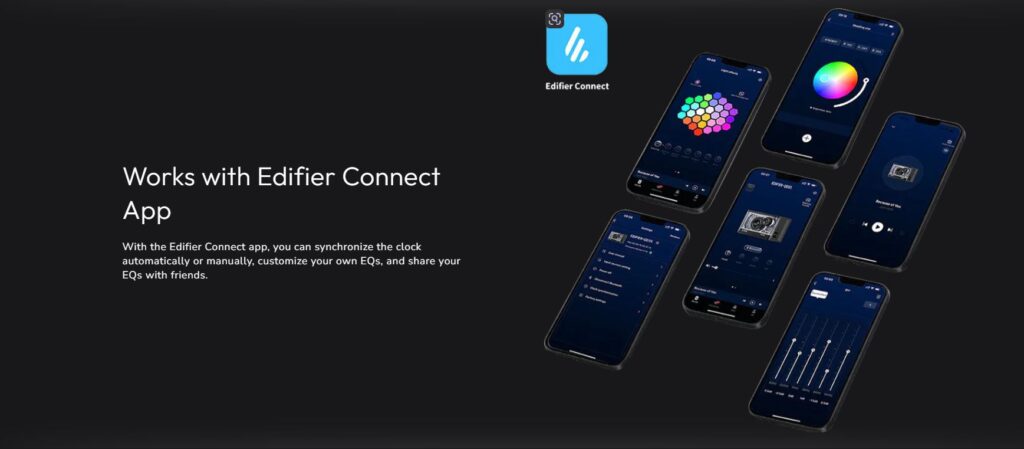
Software support is provided via the Edifier Connect app, which unlocks the full potential of the hardware. This application gives you granular control over the lighting adjustments. More importantly, the app provides EQ control.
Tuning the EQ is essential because, as I will discuss later, the default sound profile has specific characteristics that benefit from adjustment. The app interface is intuitive, making these tweaks accessible even to those who are not audio engineers. By leveraging the app, you transform the speaker from a static piece of hardware into a customizable audio tool. This integration of hardware and software is what elevates the QD25 above budget competitors that offer no post-purchase sound customization.
Volume Handling and Dynamic Performance
Volume output plays a critical role in how a speaker feels in a real-world environment, and the QD25 manages its power output with confidence. To be honest, the speaker is decently loud for its footprint. My testing revealed that around 45% volume is the sweet spot.
Pushing the volume upwards of 80% reveals that the device can get surprisingly loud. It possesses enough power to easily fill a single room. What impressed me is that it does not struggle or break apart immediately when pushed.
However, you can tell that at these upper limits, the speaker approaches its physical boundaries. The transition into these higher volumes is handled nicely, but the physics of small drivers eventually become apparent. The fact that it maintains composure without aggressive distortion speaks to the quality of the amplification and driver control Edifier has implemented.

Bass Texture and Low-Frequency Limitations
Inside the compact chassis, Edifier utilizes a dedicated mid-bass driver paired with a passive radiator at the back to move air. This configuration creates a distinct separation in the sound frequencies. Starting with the bass, the performance is decent given the enclosure’s size. You receive a satisfying mid-bass thump that gives music its necessary body and rhythm. Kick drums land well, and basslines feel present, ensuring the track never sounds thin or hollow.
There are limitations regarding the sub-bass capabilities. The deep low-end rumble is somewhat lacking, and the very deep lows feel a little weak. This is a physical constraint of the driver size. More critically, the bass texture can at times sound slightly “plasticky.” Instead of feeling the air move with a deep resonance, the bass impact can occasionally resemble tapping on a rigid surface. It is not uncontrolled or boomy, which is a positive, but it lacks the organic depth of larger woofers.
We must understand this in the context of the device’s size. Expecting earth-shaking sub-bass from a portable desktop speaker is unrealistic. The mid-bass focus is a smart tuning decision, as it prioritizes the frequencies that provide rhythm and punch over the frequencies that would likely cause distortion. While the texture might not satisfy a bass-head, it remains tight and controlled, avoiding the muddy mess that often plagues speakers in this category.

Mid-Range Clarity and Treble Detail
The mid-range is undoubtedly where the QD25 shines the brightest. Vocals are rendered with beautiful clarity and cleanliness. There is a natural smoothness to voices that makes this speaker exceptionally easy to listen to for long periods.
At the default music EQ setting, vocals do sit slightly recessed in the mix. They could benefit from being pushed a little further forward to truly take center stage. Fortunately, a quick tweak in the Edifier Connect app remedies this immediately. Once adjusted, the mids sound excellent, bringing the vocals right to the forefront where they belong. This responsiveness to EQ adjustments highlights the quality of the drivers used; they are capable of better performance than the out-of-the-box tuning initially suggests.
High frequencies are handled by a silk dome tweeter, which does a commendable job. There is a gentle sparkle to the highs that provides detail without introducing sharpness or fatigue. Cymbals, strings, and ambient details come through cleanly, adding a layer of polish to the overall sound signature. The use of a silk dome tweeter is a key differentiator here, as it avoids the metallic harshness often found in cheaper tweeter materials. The result is a sound that is clear, present, and refined.

Wireless Codecs and Soundstage Assessment
A necessary and honest note regarding the Bluetooth performance is the reliance on the SBC codec. The QD25 does not support advanced wireless codecs like LDAC or aptX Adaptive. While the audio still sounds good, you do miss that last bit of resolution and separation when listening wirelessly.
This codec limitation reinforces the value of the USB-C connection mentioned earlier. Plugging the device in tightens up the sound, particularly in the mids and highs, thanks to the high-res support. The difference in resolution is palpable, making the wired connection the preferred method for critical listening. The reliance on SBC for wireless is a compromise, likely to keep costs down or prioritize connection stability, but it is a factor worth noting for high-fidelity enthusiasts.

Final Thoughts — Price & Value
The Edifier QD25 establishes itself as a very specific speaker that knows exactly who it is for. It is a beautifully designed, compact unit that prioritizes clarity, comfort, and everyday listening over earth-shattering bass or audiophile wireless codecs. The value here lies in the combination of its unique “Tron” aesthetics and its competent acoustic performance.
While it is definitely not built for deep sub-bass lovers, those seeking a massive soundstage, or zero-latency competitive gaming, it excels in its intended lane. For casual music, watching videos, working, and relaxed gaming sessions, it performs its job quietly and confidently. The inclusion of high-res audio via USB-C adds significant value for desktop users, offsetting the limitations of the Bluetooth SBC codec. It feels like a premium accessory for your lifestyle rather than just a utility.
Considering the price point found on major retailers, you are paying for the design and the build quality just as much as the sound. The transparent chassis and functional lighting make it a standout piece of hardware. For the listener who wants a conversation starter that delivers clear vocals and non-fatiguing highs for hours on end, the QD25 is a solid investment that delivers on its specific promises.
