

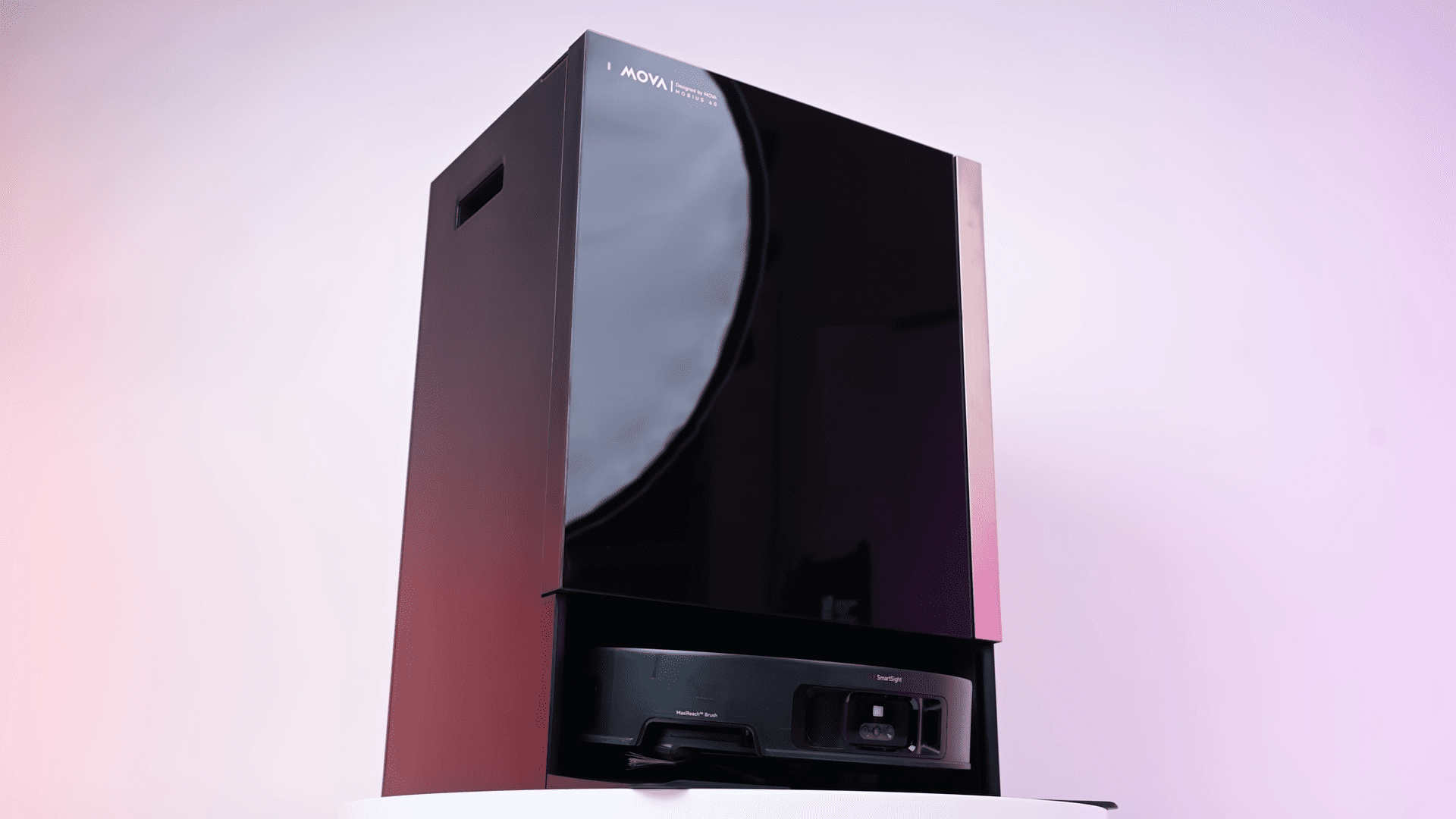
Today, I am testing the MOVA Mobius 60, the latest flagship robot vacuum from a company that is rapidly establishing itself as a top-tier player in the automated cleaning industry. This device arrives packed with innovative technology, most notably a multi-mop switching dock, a feature that is quickly becoming a distinct and popular category within the market.
I purchased this unit to conduct a rigorous series of tests over several weeks, allowing us to evaluate its capabilities beyond the marketing hype. The goal of this analysis is to break down the pros and cons based on real-world data and determine exactly where it stands among the current competition.
This article serves as a direct review of the Mobius 60, but it is impossible to ignore its primary rival, the Dreame Matrix 10 Ultra. These two companies share a lineage, and their products are clearly modeled after one another, yet the Mobius 60 enters the market at a lower price point than the Dreame alternative. Seeing if this more affordable option can outperform the Matrix 10 Ultra became a central theme of my testing process.

Turbo Wave Duo Brush System and Suction Metrics
The construction of the robot immediately stands out, particularly regarding its debris collection mechanism. MOVA utilizes a system they call the Turbo Wave Duo Brush. This configuration involves a dual-brush setup that is open at one end, designed specifically to channel hair toward the side for easier ingestion.
This works in tandem with a single side brush that possesses the ability to automatically extend. Whenever the sensors detect that the robot is nearing a corner, this side brush reaches out, ensuring significantly better coverage in hard-to-reach areas than standard static brushes.

During my various pickup tests across both hard floors and carpeting, these two brushes demonstrated excellent synergy. The debris collection was as efficient as one could hope for, sweeping up particles from surfaces with precision. While the sweeping mechanics are solid, the Mobius 60 truly distinguished itself in specific performance metrics. In many instances, the data showed that this robot was not only performing better than the industry average but also surpassing its more expensive competitor, the Dreame Matrix 10 Ultra.
Regarding raw power, I measured the suction capabilities at 1.3 kilopascals. This figure is slightly higher than what was recorded for the Dreame Matrix 10, although the airflow measurements between the two units were identical. The combination of the brush design and this suction power provides a robust foundation for general cleaning.

Deep Cleaning Performance and Pressure Retention
The deep-cleaning tests provided some of the most impressive data points of this review. The Mobius 60 consistently outperformed the Matrix 10 in these high-stress scenarios. In the standard carpet deep-clean test, the robot achieved an astounding 88% pickup rate. This score is one of the highest I have seen on record, indicating that the agitation and suction are reaching deep into the carpet fibers. Furthermore, in the 2½-inch flattened pet hair pickup test, it scored a 94%, which is well above the industry average of 81%.
A likely contributor to these superior deep-cleaning results is a novel feature introduced with this model. When the Mobius 60 detects that it is traveling over carpet, a pressure retention baffle automatically lowers. This mechanism creates a semi-sealed space between the vacuum and the floor, effectively increasing the available suction power directed at that specific area. This innovation appears to be a key differentiator in how the robot handles textiles compared to hard surfaces.

This pressure retention feature likely played a significant role in the crevice pickup test as well. Once again, the data showed the Mobius 60 performing significantly better than its main competitor in pulling debris from deep cracks. The anti-tangle capabilities of the brushes also deserve mention, as they achieved a perfect score in the 7-inch hair tangle test. Between the raw power, the sealing baffle, and the tangle resistance, the vacuuming fundamentals of this machine are undeniably top-tier.
StepMaster System 2.0 and Threshold Traversal
One of the more unique engineering choices on the Mobius 60 is its approach to vertical obstacles. The robot utilizes the StepMaster System 2.0, which features robotic retractable legs. These legs actively lift the chassis, allowing the unit to cross thresholds, door tracks, and U-shaped furniture legs that would typically trap other robots. This active suspension system represents a significant evolution in robot vacuum mobility, moving beyond simple brute force to a more mechanical solution for obstacle traversal.

I subjected this system to various physical tests, and the results actually exceeded the manufacturer’s claims. MOVA advertises that the robot can cross single-tier thresholds up to 1.9 inches, or about 50 millimeters. In my testing environment, the robot successfully crossed obstacles just over that limit, managing 51 millimeters. While it did eventually fail at the 57-millimeter mark, the performance is still exceptional relative to the market standards.

This 51-millimeter clearance ties the Mobius 60 with the previous record holder, the MOVA Z60, for the highest threshold crossing capability I have witnessed. For homes with uneven transitions between rooms or high door frames, this feature solves a persistent pain point. It ensures the robot can navigate the entire floor plan without requiring manual assistance or getting stranded on a door jam.
AI-Driven Obstacle Avoidance Capabilities
Navigation and safety are handled by a sophisticated suite of sensors located at the front of the robot. The system includes a camera and a structured-light 3D scanner, supplemented by an LED light that boosts visibility in low-light conditions. MOVA claims the robot has been trained on 240 different types of obstacles. This is a substantial number, identical to the figure Dreame advertises for the Matrix 10, reinforcing the technological shared DNA between the two devices.

Theoretical training data is one thing, but practical application is what matters. In the various obstacle avoidance tasks I conducted, the Mobius 60 performed admirably. It achieved a score of 22 out of a possible 24 points. This score places it significantly above the industry average of 17, proving that the combination of optical and structured light sensors is highly effective at identifying and evading common household hazards.
The inclusion of the LED light is a thoughtful addition, ensuring that the obstacle avoidance system remains functional even when the robot runs a cycle at night or in dark rooms. The system’s ability to identify objects and maneuver around them without making contact protects both the robot and the items on the floor. It is rare to see a cheaper alternative outperform or match a premium competitor in such a complex software-hardware integration, yet the Mobius 60 manages to do exactly that.

The Multi-Functional Mop Swapping Dock
The headline feature of the Mobius 60 is undoubtedly its multi-functional dock, which houses the innovative “mop swap” system. This station automatically changes out three interchangeable mop pads to suit different cleaning requirements. The Dreame Matrix 10 Ultra was the first robot I encountered with this specific capability, making this comparison vital. The dock handles all major maintenance tasks: emptying the robot’s dustbin into a disposable bag, washing the mop pads with industry-leading 202-degree Fahrenheit hot water, and refilling the onboard water tank.
The dock’s mop swap hub rotates between three distinct pad types. The Thermo-Hold mop is designed to absorb heat during the hot water washing process, maximizing the cleaning effect on the floor. The Plush mop utilizes ultra-soft materials, making it ideal for delicate surfaces like hardwood. Finally, the HyperClean mop features composite microfibers intended for heavy-duty, all-around cleaning tasks. The base also manages two cleaning solution tanks, automatically adding the correct mix to the robot.

Users have the option to manually set which mops are used for which rooms via the app, or they can allow the robot to make intelligent decisions by default. My experience with the switching mechanism was seamless; the robot exchanged pads without any mechanical failures or errors across tests in two different locations. While there is a drawback regarding power consumption related to this feature, which I will detail later, the mechanical execution of the mop swapping is impressive.
Mopping Mechanics and Stain Removal Efficiency
Beyond the swapping dock, the robot’s onboard mopping hardware is quite advanced. It employs two spinning mop pads, one of which can automatically extend to the side to ensure edge-to-edge coverage. Additionally, the pads can lift to avoid wetting carpets or detach completely and remain at the base if the user prefers a vacuum-only run. The robot also features a 5-degree angle option to maintain contact on uneven surfaces, making it one of the most feature-rich mopping systems available.

Despite these mechanical advantages, my testing revealed that stain removal performance was slightly below average. The primary culprit appears to be water usage; even on the “high” setting, the robot dispensed less water than the average competitor. However, the specialized mop pads did offer some redemption. The Thermo-Hold pads, which retain warmth from the dock’s hot water wash, performed approximately 15% better than the other pad types when tackling dried-on stains.
Combining the stain removal score with the water distribution metrics resulted in an overall mopping score that was just barely above average. This is one specific area where the Dreame Matrix 10 maintained a lead, particularly with tough stains. Users looking to maximize the Mobius 60’s potential should manually boost the water level in the app settings. While the hardware is capable, the default software tuning for water flow seems overly conservative.

Retractable LiDAR and Navigation Speed
One of the notable design compromises on the Mobius 60 involves its navigation system. The robot utilizes an internal, retractable LiDAR turret. When the unit senses low-hanging furniture, the turret retracts into the body, reducing the robot’s height to approximately 3.5 inches. This is about half an inch lower than the average LiDAR-equipped robot, allowing it to access areas under sofas or cabinets that would otherwise be inaccessible.
While this retraction capability offers a physical advantage, these internal systems often trail standard turrets in terms of mapping speed and efficiency. My navigation tests confirmed this, as the Mobius 60 completed its mapping and cleaning cycles at a pace that was slower than average. The robot is certainly smart—it never got stuck during my testing—but it lacks the rapid pace of its fixed-LiDAR counterparts.

The trade-off here is clear: you gain accessibility at the cost of speed. For homes with low-profile furniture, this feature is invaluable. However, for users prioritizing the fastest possible cleaning cycle, the slightly sluggish navigation might be a minor annoyance. Despite the speed reduction, the navigation reliability remains high, ensuring the job gets done without user intervention.
Battery Endurance and Thermal Performance Under Load
The most significant downside revealed during my analysis concerns the battery life. The Mobius 60 performed significantly below the industry average in terms of runtime, scoring even lower than the Dreame Matrix 10, which itself was not a leader in this category. The official battery specifications are lower, but the real-world impact is exacerbated by the robot’s slower navigation speed, resulting in poor square-foot-per-charge efficiency.
Further investigation revealed that the advanced docking station is partially responsible for this drain. I noticed that battery performance dropped precipitously when multiple mop pad swaps were selected. The robot must spin its mop pads vigorously during the wash cycle at the base, and this mechanical action draws power from the robot’s onboard battery. If a cleaning run involves multiple pad changes and washes, the robot expends a significant amount of energy while sitting in the dock.

On one occasion, I observed the robot starting a run at only 91% battery because it had pre-washed two different sets of mop pads before launching. While the robot supports “recharge and resume”—returning to the dock to charge before finishing the job—the heavy power consumption is a notable weakness. It was able to finish the floor plans in my studios, but larger homes might require a mid-cleaning charge break.
Final Thoughts — Price & Value
The MOVA Mobius 60 presents a compelling case for value in the high-end robot vacuum market. Despite the concerns regarding battery life and slightly slower navigation, the sheer volume of technology packed into this device is undeniable. The fact that it outperforms the more expensive Dreame Matrix 10 Ultra in critical areas like vacuuming power, deep cleaning, and threshold crossing makes it a standout option for budget-conscious buyers seeking flagship features.

Homeowners who prioritize granular control over their cleaning regime will find the Mobius 60 to be an excellent investment. The ability to deploy specific mops for specific rooms, combined with the dual solution tanks and heat-optimized cleaning, offers a bespoke cleaning experience. While not perfect, the Mobius 60 successfully democratizes advanced features that were previously locked behind much higher paywalls.
