

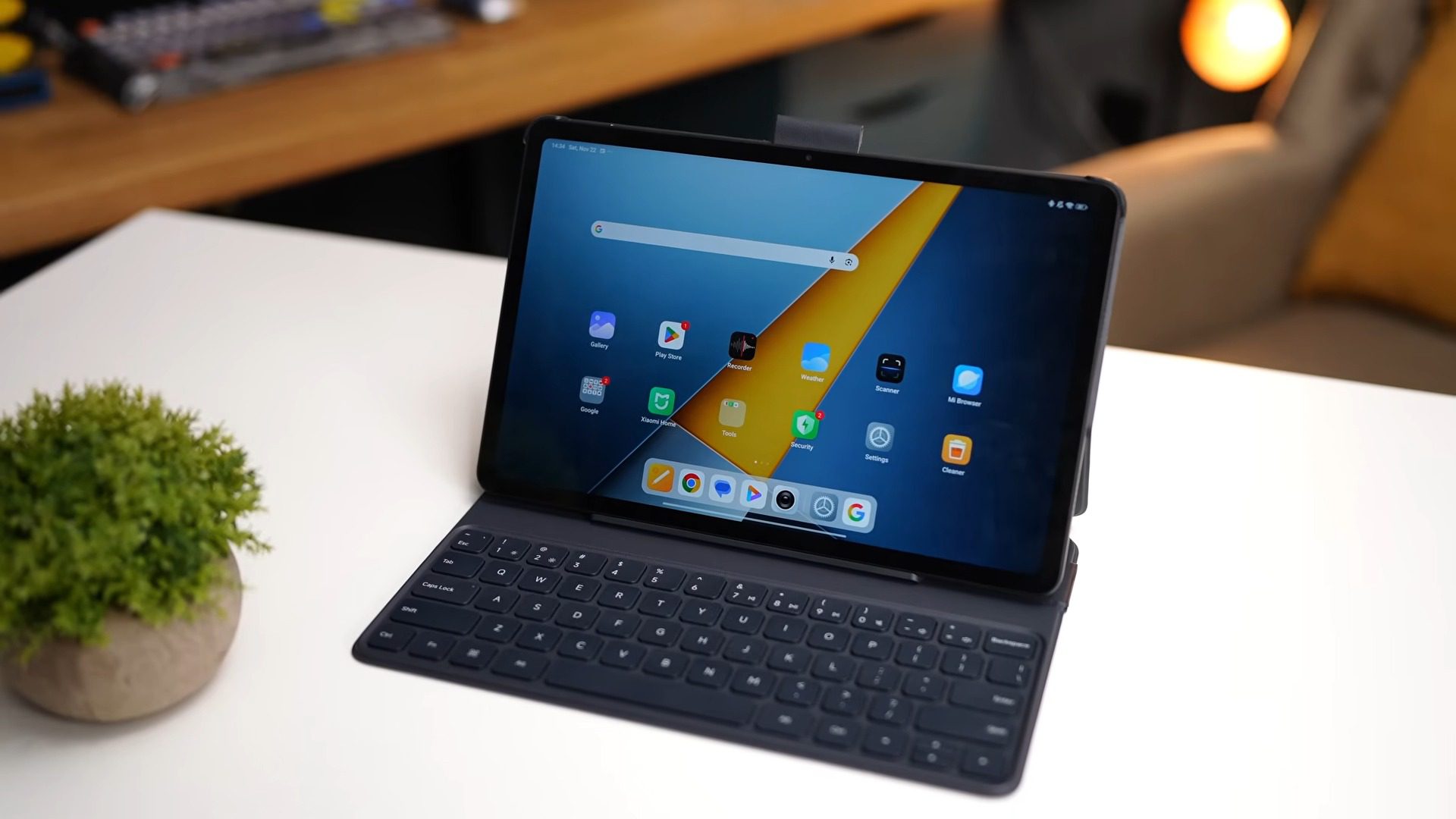
I have been testing the new POCO Pad M1, and it immediately stands out as a tablet designed for two specific things: massive screen real estate and incredible battery endurance. Pricing is often the make-or-break factor for tablets in this category. You can typically find the Pad M1 for around $200 to $250, depending on sales and bundles. This price point makes it an extremely attractive option for buyers looking for high specifications without the premium flagship tax.

Display Quality and Multimedia Experience
The screen is the centerpiece of the POCO Pad M1, featuring a massive 12.1-inch panel with a 2.5K resolution. This size makes multitasking, reading comics, or watching long series feel incredibly spacious and immersive. I found the 120Hz refresh rate adds a layer of fluidity that makes navigating the UI and scrolling through web pages feel snappy and premium.
Brightness levels are solid for this price bracket, hitting around 504 nits in normal usage. This is more than sufficient for indoor use, and I found it remains legible even in brighter outdoor conditions. While it might not match the peak brightness of high-end flagship tablets, it handles everyday lighting scenarios with ease.

Color reproduction is another strong suit, with the screen covering 94% of the sRGB gamut and 68% of DCI-P3 in Vivid mode. The colors are punchy enough for an enjoyable viewing experience during movie marathons or browsing sessions. It may not be professional-grade color accuracy, but for media consumption and studying, it looks sharp and is comfortable on the eyes.
Battery Life and Endurance
The most impressive aspect of this tablet is undeniably its massive 12,000 mAh battery. This capacity is not just a marketing number; it genuinely feels like having a power bank integrated directly into the device. I put it through rigorous testing to see how it holds up against real-world usage, and the results were remarkable.
Streaming a 1080p video for 30 minutes only consumed 4% of the battery, which is incredibly efficient. Scrolling through social media apps like TikTok and Instagram for the same duration drained just 6%, while a 30-minute gaming session took it down by only 10%. These numbers suggest that for casual users, this tablet could easily last two full days without needing a recharge.

POCO claims you can stream nonstop for over 10 hours, but my testing suggests it might even exceed that estimation. The efficiency here allows you to leave the charger at home without worry. It is a relief to use a device that prioritizes longevity so effectively, especially for users who travel or commute frequently.
Performance and Synthetic Benchmarks
Under the hood, the POCO Pad M1 is powered by the Snapdragon 7S Gen 4 chipset. This processor places the tablet firmly in the mid-range category, but it delivers surprising stability. I ran several benchmarks to gauge its raw power, and it scored 798,213 points on AnTuTu, which is a respectable figure for this class.
Geekbench 6 scores further confirm its capability, with 1,238 for single-core and 3,305 for multi-core performance. These numbers translate to smooth daily operation for most standard apps and tasks. I barely noticed any stutter or lag when switching between applications or browsing heavy websites.

Thermal stability is where this chipset really shines. I conducted a 30-minute CPU throttling test, and the performance never dipped below 91%. This indicates that the tablet can sustain its performance over long periods without overheating or slowing down, which is crucial for consistent user experience.
Gaming Tests and Thermal Results
I tested the gaming capabilities with Delta Force set to “Smooth” graphics and “Ultimate” frame rate. Over a 15-minute session, the tablet maintained an average of 59 FPS, with only minor drops to the low 50s during intense combat scenes. The temperature peaked at a very reasonable 40 degrees Celsius, keeping the device cool enough to hold comfortably.
Lighter games like Mobile Legends ran even better. With settings cranked up to HD and “Super” frame rate, I consistently hit an average of 59 FPS. The lowest recorded drop was only to 54 FPS, and the device stayed cooler at just 39 degrees Celsius.

This tablet is not marketed as a dedicated gaming machine, but it handles mid-range gaming surprisingly well. The combination of the large screen and stable frame rates makes for an enjoyable experience. You can confidently play popular titles without worrying about severe lag or uncomfortable heating.
Final Thoughts — Price & Value
The POCO Pad M1 delivers exceptional value, particularly given its entry price on AliExpress of roughly $200. You are getting a massive 12.1-inch 120Hz display and a 12,000 mAh battery that outlasts almost everything else in its class. It strikes a balance between performance and practicality that is hard to beat at this price point.

Performance is stable and reliable, thanks to the Snapdragon 7S Gen 4 chipset, making it capable of handling everything from work documents to moderate gaming. The thermal management is excellent, ensuring the device stays cool and responsive even during extended use. It proves you do not need to spend a fortune to get a capable and comfortable tablet.
This device is an easy recommendation for anyone prioritizing battery life and screen size above all else. It is not trying to be a flagship killer, but it dominates the budget segment by mastering the basics. For the price, it is a fantastic investment for students, families, and professionals alike.
