

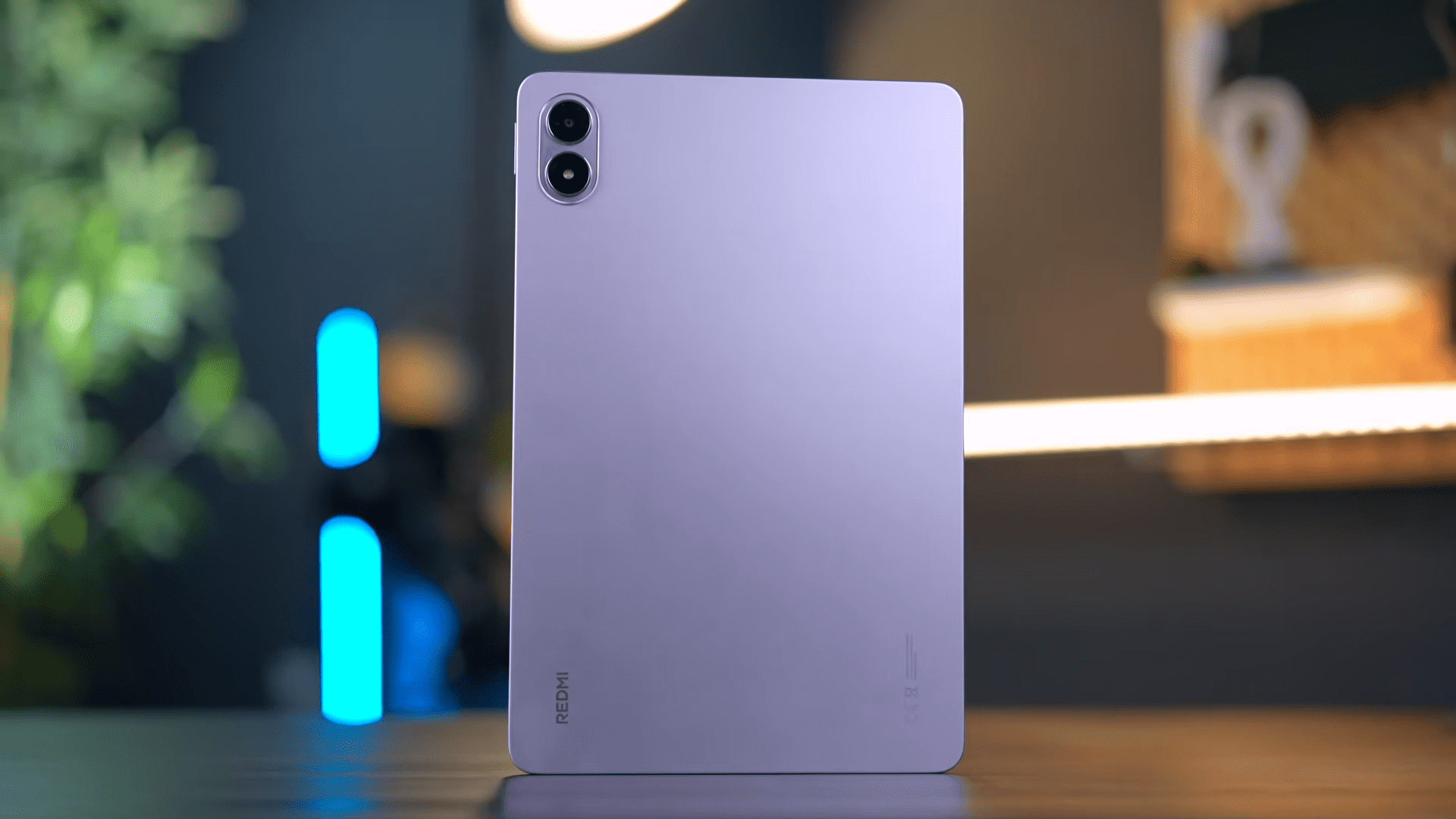
You used to have two pretty terrible choices in the tablet world: spend a mortgage payment on an iPad Pro you probably don’t need, or buy a cheap plastic slate that lags before you even open YouTube. Xiaomi has been busy fixing that gap, and their latest release, the Redmi Pad 2 Pro, might just be the sweet spot we’ve been waiting for. I grabbed this 12-inch beast for just under $370 on AliExpress, and honestly, it feels a little illegal to get this much hardware for that price.
After spending some quality time gaming, streaming, and trying to kill this battery, I’m ready to tell you exactly why this might be the best value tablet you can buy right now.

Design & Display
Picking up the Redmi Pad 2 Pro, the first thing that hits you is just how premium this thing feels for the money. Xiaomi went with a full metal unibody design here, and it gives off a serious “Pro” vibe that usually costs double.
I have the Silver version, and the matte aluminum finish does a great job of hiding fingerprints while feeling cool to the touch. It is a large slab, though. Weighing in at around 610 grams, you definitely know you are holding a substantial piece of tech, but because it’s only about 7.5mm thick, it doesn’t feel clumsy or overly heavy in a backpack.

I was genuinely shocked to find a 3.5mm headphone jack on the side. Most manufacturers killed this port years ago, especially on “Pro” models, so seeing it here is a massive win for anyone who hates dealing with Bluetooth latency or dongles. One design choice I’m not thrilled about is the lack of a fingerprint scanner. You are stuck typing in a PIN or using the face unlock, which works fine via the front camera, but I really miss the convenience of just tapping a power button sensor to get in securely.
Flipping it around, that massive 12.1-inch display is the main event. It’s an IPS LCD panel rather than OLED, which is expected at this price point, but don’t let that scare you off. The 2.5K resolution looks incredibly sharp, and text is crisp whether you are reading an ebook or browsing the web. The colors pop nicely without being oversaturated, and thanks to Dolby Vision support, watching movies on Netflix feels immersive with decent contrast for an LCD.

The 120Hz refresh rate is the real star here. Everything from scrolling through menus to navigating the UI feels buttery smooth. It makes the tablet feel faster than it actually is. The 16:10 aspect ratio is a nice middle ground, giving you plenty of vertical space for productivity apps while still being great for wide-screen video.
Brightness tops out around 600 nits, which is perfectly fine for indoor use, though I did struggle a bit to see the screen clearly when I took it out into direct sunlight. The bezels are symmetrical and slim enough to look modern without causing accidental touches when you hold it with two hands.

Audio & Multimedia
Having a massive screen is only half the battle for a good tablet; you need sound to back it up. The Redmi Pad 2 Pro uses a quad-speaker setup that supports Dolby Atmos, and it gets loud. I mean really loud. Xiaomi included a “Volume Boost” feature that lets you crank the audio up to 300%.
While that sounds impressive on paper, you probably want to keep it under 200% because the audio starts to lose quality and sound a bit tinny when you max it out completely. At normal levels, though, the separation is great, and voices in movies come through clearly.

You won’t get earth-shattering bass like you might on a high-end Bluetooth speaker, but for a tablet chassis this thin, the soundstage is surprisingly wide and immersive. It easily fills a medium-sized room, making it a solid choice for propping up in the kitchen while you cook or watching Netflix in bed. Speaking of Netflix, this tablet has Widevine L1 certification, so you can stream all your favorite shows in full HD without any pixelation issues.

I have to circle back to that 3.5mm headphone jack because it actually changes the multimedia game here. Bluetooth is fine for music, but if you play rhythm games or competitive shooters, the latency can be a killer. Plugging in wired headphones eliminates that lag entirely. Plus, it’s just nice to have the option to plug in a cheap pair of earbuds when your battery-powered ones die in the middle of a movie. It turns this slate into a complete, no-compromise media consumption machine.
Performance & Software
Under the hood, the Redmi Pad 2 Pro is running on the Snapdragon 7s Gen 4 processor built on a 4nm architecture. While that naming scheme sounds fancy, just know that this is a solid upper-mid-range chip designed for efficiency rather than raw, flagship-killing power. It handles daily tasks like web browsing, jumping between apps, and editing documents without breaking a sweat. You get 8GB of RAM which keeps things snappy, and I love that Xiaomi kept the microSD card slot. Being able to slap in a 2TB card means you can hoard movies and games without paying a premium for internal storage.

I threw some heavy games at it to see if it would buckle. Call of Duty Mobile ran beautifully, holding a steady 60 frames per second on high graphics settings. It was a smooth experience, and that large screen gives you plenty of room for on-screen controls without blocking your view.
I also tested Wuthering Waves, which is notoriously demanding. It played fine, though the tablet did get a little warm to the touch after about 30 minutes, and I noticed the occasional frame drop when things got chaotic on screen. It isn’t going to replace a dedicated gaming rig, but for casual to moderate gaming, it punches well above its price tag.

I ran Geekbench 6 just to put some actual numbers to the performance I was feeling, and the results back up my experience pretty well. The Snapdragon 7s Gen 4 pulled a single-core score of 1,240 and a multi-core score of 3,322. For context, that is a healthy jump over the previous generation and puts this tablet squarely in reliable mid-range territory.
It isn’t going to threaten an M-series iPad or a top-tier Galaxy Tab, but it doesn’t need to. The GPU OpenCL score came in around 3,630, which explains why games like PUBG Mobile run smoothly at 60fps while heavier titles need a little tweaking on the graphics settings. These numbers prove you are getting a chipset that prioritizes stability and efficiency over raw, flagship-level power.

Software is where manufacturers usually cut corners, but HyperOS 2 running on Android 15 feels polished here. Xiaomi has clearly tried to make the “Pro” moniker mean something by including decent multitasking features. You can run two apps side-by-side with a floating window on top, which actually feels usable on a screen this size.
I typed up part of this review using Google Docs on one half and Chrome on the other, and the tablet didn’t stutter once. It still has that distinct Xiaomi look and feel, so if you are coming from stock Android, there is a slight learning curve to find where all the settings are hidden.

Battery & Charging
This is where the Redmi Pad 2 Pro stops being just a tablet and starts showing off. Xiaomi packed a massive 12,000mAh battery inside this thing, which is significantly larger than what you usually find in this price bracket. To put that in perspective, most competitors are hovering around the 8,000 to 10,000mAh mark. In real-world use, that extra capacity makes a huge difference. I managed to get over 14 hours of continuous video playback, and with my typical mix of browsing, YouTube, and writing, I was easily going three days without even thinking about a charger.

I ran a heavy drain test with the screen brightness maxed out, and it still clocked in around 7 hours of screen-on time. That kind of endurance changes how you use a device. You stop worrying about percentage points and just use it. The standby time is also ridiculous; Xiaomi claims over 80 days, and while I haven’t had it that long, leaving it on my desk for a weekend barely put a dent in the battery level.
There is a slight catch to having a battery this big, though: filling it back up takes patience. The tablet supports 33W fast charging, which sounds decent until you remember you are filling a 12,000mAh tank. It isn’t painfully slow, but you are looking at a couple of hours to go from zero to full.

The coolest feature here isn’t actually how the tablet charges itself, but how it charges your other gear. It supports 27W wired reverse charging. That means if your phone is dying while you are out at a coffee shop, you can plug it into the tablet via USB-C and charge it up almost as fast as a dedicated wall charger. It effectively turns the Redmi Pad 2 Pro into a giant, high-speed power bank that also happens to play movies. It’s one of those features you don’t think you need until it saves your day.
Accessories: The Stylus & Keyboard
To get real work done, you usually need more than just a glass screen. I tested the Redmi Smart Pen and the Keyboard case to see if they turn this tablet into a proper laptop replacement.
Let’s talk about the pen first. It’s a decent tool for the price, offering 4096 levels of pressure sensitivity and low enough latency that writing feels natural. Scribbling notes or annotating screenshots works flawlessly, and palm rejection kicks in reliably so you don’t make accidental marks.

However, two design choices drive me crazy. First, there are no magnets to snap it onto the side of the tablet, meaning you will lose this thing in your couch cushions eventually. Second, it doesn’t charge wirelessly. You have to plug a USB-C cable directly into the pen to juice it up. It feels like a step backward compared to the seamless magnetic charging we see on other tablets.
The keyboard case is a similar story of “good but not perfect.” The typing experience is actually solid; the keys have about 1.3mm of travel, which is plenty for banging out emails or writing essays without your fingers hurting. It feels tactile and clicky, not mushy like some cheap folio cases.

The catch? It connects via Bluetooth rather than direct pins, so it has its own battery you need to charge separately. It also lacks a trackpad. You find yourself constantly reaching up to touch the screen to scroll or click links, which gets tiring after a while. If you can grab these accessories in a bundle deal, they add a lot of value, but just know that the ergonomics aren’t quite on the same level as a laptop.
Cameras
Let’s be real—nobody buys a 12-inch tablet to take photos at a concert. Xiaomi knows this, so they didn’t waste the budget here. You get an 8MP camera on the back and another 8MP shooter on the front. They are purely utilitarian. The rear camera is decent enough for scanning a document or snapping a quick reference photo in good lighting, but it falls apart pretty quickly in the dark.
The front camera is the one you will actually use, and it does a solid job for Zoom calls or Microsoft Teams meetings. It handles exposure well enough that you won’t look like a silhouette if you sit with a window behind you. Video recording tops out at 1080p at 30 frames per second, which is standard for this price range. It’s nothing to write home about, but it gets the job done.

Pros & Cons Summary
The Good
- Incredible battery life + Reverse charging.
- Premium metal build quality.
- Smooth 120Hz 2.5K display.
- Headphone jack included.
The Bad
- No fingerprint scanner.
- Stylus doesn’t charge magnetically.
- Charging speed (33W) takes a while for such a big battery.

Should You Buy It?
For a price hovering between $350 and $400, the Redmi Pad 2 Pro punches way above its weight class. Xiaomi has managed to cut corners in places that most people won’t mind—like the cameras and the lack of a fingerprint sensor—while doubling down on the features that actually impact your daily use.
If you are a student looking for a reliable note-taking machine, a gamer on a budget, or just someone who wants a big, beautiful screen for binge-watching shows on a long flight, this tablet is a fantastic choice. It offers a polished experience that feels reliable, fast, and impressively long-lasting.
However, if you need professional-grade drawing tools or the absolute deepest blacks of an OLED screen, you might need to stretch your budget for a Samsung Tab S-series or an iPad. But for everyone else? It’s hard to find a better deal than this.
At this price, it’s hard to ignore what Xiaomi has pulled off here—would you pick this one over the competition?
