

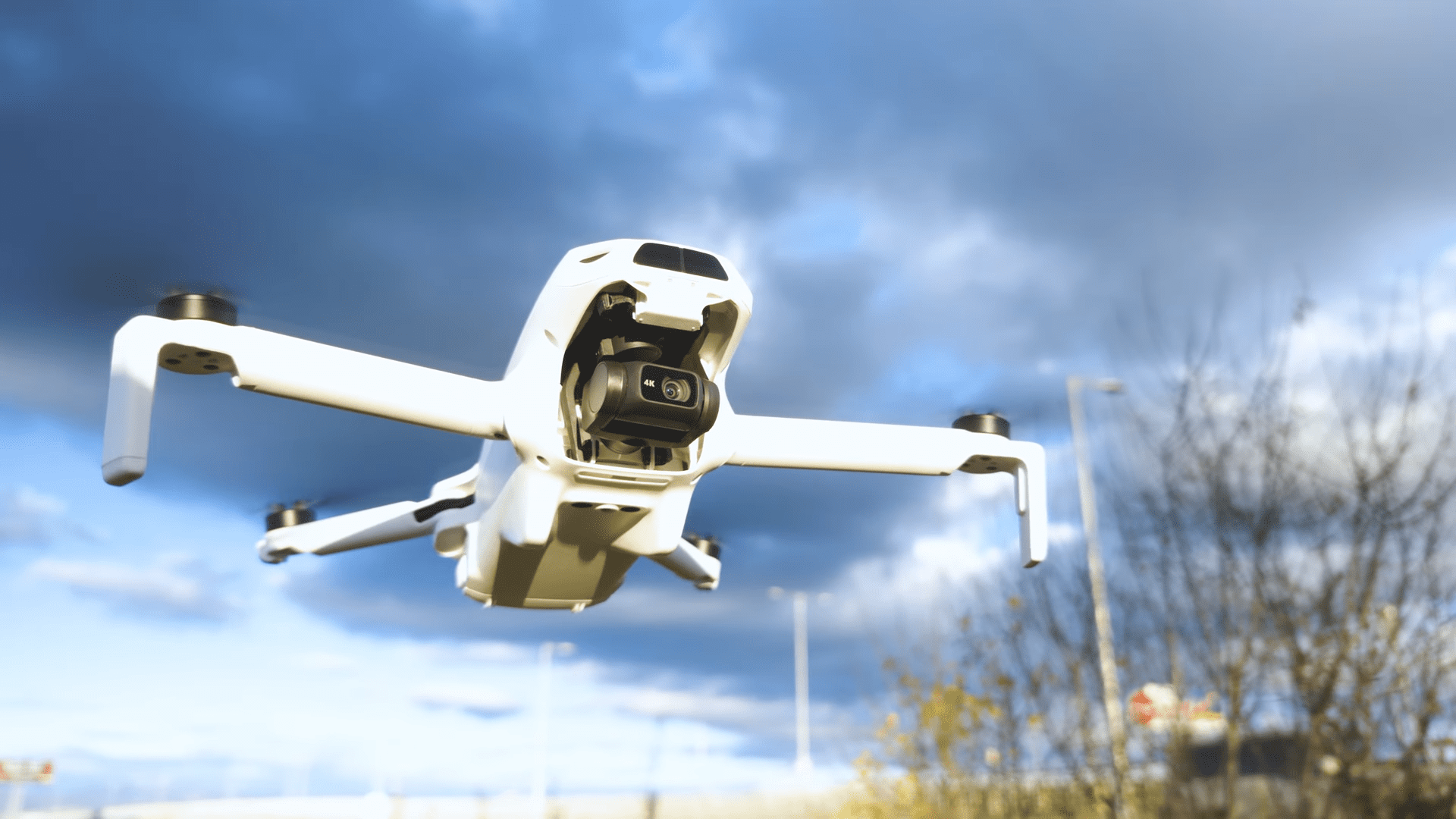
SkyRover sent me their latest unit, the S1, which enters the market as a budget-friendly drone designed to challenge established norms. Despite the affordable entry point, this quadcopter carries specifications that feel suspiciously familiar to anyone who has flown premium consumer drones. I spent the last few days flying, filming, and pushing this sub-250g device to its absolute limits to see exactly what it offers beyond the spec sheet. You can find this model on platforms like Amazon where the pricing structure remains very aggressive for the hardware provided.
The device arrives in a combo retail pack with a case that, while large, offers plenty of room for accessories. My testing focused heavily on verifying the 4K video capabilities, the stability of the three-axis gimbal, and the intelligent flight features that usually do not appear in this price bracket. This review breaks down the reality of using the SkyRover S1, separating the marketing promises from the actual flight experience I encountered in the field.

Camera Capabilities and Image Stabilization Performance
The image quality produced by the S1 is honestly impressive given the cost of the unit. The main camera shoots 4K at 60 frames per second, which provides excellent room for smooth motion and real slowdowns in post-production. For those needing significant slow motion, the 1080p mode at 120 frames per second delivers a clean four-time speed reduction. I found the full manual control over ISO and shutter speed to be essential, although the aperture remains fixed at f/2.8.

Photography enthusiasts will appreciate that RAW photos are supported alongside 48-megapixel high-resolution JPEGs. With some patience in Lightroom, I managed to squeeze out decent results that rival more expensive devices. The three-axis mechanical gimbal does an excellent job of stabilizing the camera and compensating for vibration during flight. Angle control from the remote felt smooth and responsive throughout my sessions.

I did notice some “jello” effects in the footage after reviewing my maiden flight. This issue was fortunately not permanent. Freeing up the gimbal and performing a simple recalibration from within the app fixed the problem entirely. Post-calibration, the S1 shapes up to be a very capable flying camera that delivers image quality challenging much pricier competitors.
Low Light Limitations and Sensor Performance
The limits of the hardware become apparent as soon as the sun goes down. The S1 utilizes a half-inch image sensor which behaves like an action camera from two or three years ago, lacking the modern AI-powered low-light processing we see today. The footage is decent and usable for recreational flying, but it is not night-video friendly in the same way an Osmo Action 5 might be.

Switching to manual mode offers the best chance for usable low-light content. I found that slowing down the shutter speed and raising the ISO gradually to a tolerable point helps, provided you keep the drone movement smooth to avoid blur. This manual adjustment helps in some cases, but it certainly won’t perform miracles.

For hobby-level content and daytime filming, the sensor is absolutely fine. Users looking for professional-grade night videography will likely find the noise levels restrictive. It serves its purpose well within its tier, but physics dictates the performance ceiling here.
Build Quality, Materials, and Controller Design
SkyRover clearly used basic plastics to keep the drone under the critical 250-gram weight limit. These materials do not feel fragile, but this is definitely not a drone you want to crush or drop. While the propellers are easy to replace, the gimbal assembly is not, and damage there could cost close to the price of the drone itself. One design critique I have involves visibility; the white body blends into cloudy skies, so I would recommend adding colored stickers or reflective tape.

The remote controller looks almost identical to the DJI RC-N2, though it features a different color palette and button layout. I actually prefer the button placement on the SkyRover controller as they are closer to the center and easier to reach while flying. You do need to rely on your smartphone for the screen, but the controller supports both Android and iPhone seamlessly.

Direct access to filming parameters is available through the controller buttons. The ergonomics make sense for long flight sessions. It feels like a blend of familiar controllers, making the transition easy for anyone who has piloted modern consumer drones.
Real Battery Endurance and Management
SkyRover advertises up to 40 minutes of flight time, but my real-world results differed. Combining winter temperatures with occasional use of sports mode meant I consistently achieved around 25 to 30 minutes of airtime. This duration is still very respectable, though you should avoid draining LiPo batteries below 15% to preserve long-term health.
The batteries are intelligent and include self-discharge firmware that drops them to about 50% after weeks of inactivity. This feature is perfect for long-term storage and prevents battery swelling. The firmware behavior feels suspiciously familiar, resembling the battery logic found in DJI products.

The overall power management experience feels like a blend between the Mini 3 and the Mini 4K. Having intelligent battery management in a budget drone adds a layer of safety and longevity that is often missing in this price category.
Software Interface and Smart Flight Features
The software experience provides a heavy sense of “déjà vu” for anyone who has flown a Mini or Air series drone. You must download the app directly from the SkyRover website rather than the Google Play or App Store. Activation is mandatory upon first setup, and I strongly suggest doing this at home to save time and battery capacity. Once airborne, the interface displays familiar tools like altitude, distance, signal strength, and camera parameters.
Smart flight presets include Circle, Dronie, Arc, Rocket, and Helix. The biggest surprise, however, is the inclusion of Active Track and a follow function. This feature works much better than expected for the price and is notably absent on the DJI Mini 4K. It makes the S1 excellent for solo filming, riding, or hiking where reliable subject tracking is necessary.

Vertical shooting mode is supported, though it operates via a crop rather than a mechanical rotation of the gimbal. This is still useful for quick social media content. Inside the settings, you can adjust obstacle avoidance and flight behavior, further mirroring the industry-standard experience.
Transmission Range and Signal Stability
I tested the drone out to around 1.5 kilometers, or roughly a mile, and the signal remained perfectly solid. The transmission technology appears to be very similar to Ocusync-style protocols. It displays a 1080p video feed without hiccups even at these longer distances.
This stability suggests SkyRover is using high-quality transmission tech that exceeds standard budget Wi-Fi connections. I did not push it further due to the season, but the confidence the signal inspires is significant. You get a clear view of what you are shooting without the lag or breakup common in cheaper alternatives.

Reliable transmission is often the weak point of budget flyers, but the S1 excels here. Maintaining a strong connection ensures you can frame shots accurately and return home safely. It feels far more premium than its positioning suggests.
Missing Accessories and Current Drawbacks
The lack of ND filters during my review period was the biggest drawback I encountered. Filters are the only thing standing between this drone and a truly cinematic look, as the fixed aperture limits your control over shutter speed in bright light. SkyRover has promised that these accessories are on their way, but they were not available for my testing.
Videographers should also note the absence of a “D-Cinelike” or Log color profile. This is a budget drone, so this omission is understandable, but it limits color grading flexibility. Additionally, I did not receive any notification about a premium service equivalent to “Care Refresh” for crash protection.

Final Thoughts — Price & Value
The SkyRover S1 presents itself as a no-brainer given the aggressive pricing found on Amazon. It offers excellent features, super stable performance, and a flight experience that feels far more premium than its budget positioning suggests. The inclusion of Active Track alone sets it apart from major competitors in the entry-level segment.
Regarding the speculation that DJI might be secretly behind SkyRover, the similarities are noticeable and explain why the S1 flies so well. Nobody can confirm this officially, but the shared DNA in the software and flight behavior is undeniable. This results in a product that delivers a polished experience usually reserved for market leaders.

You should consider this drone if you want high-end functionality without the high-end price tag. While it lacks some professional ecosystem elements like ND filters right now, the core value proposition is incredibly high. It is a capable tool for creators who need reliable 4K video and tracking on a budget.
