

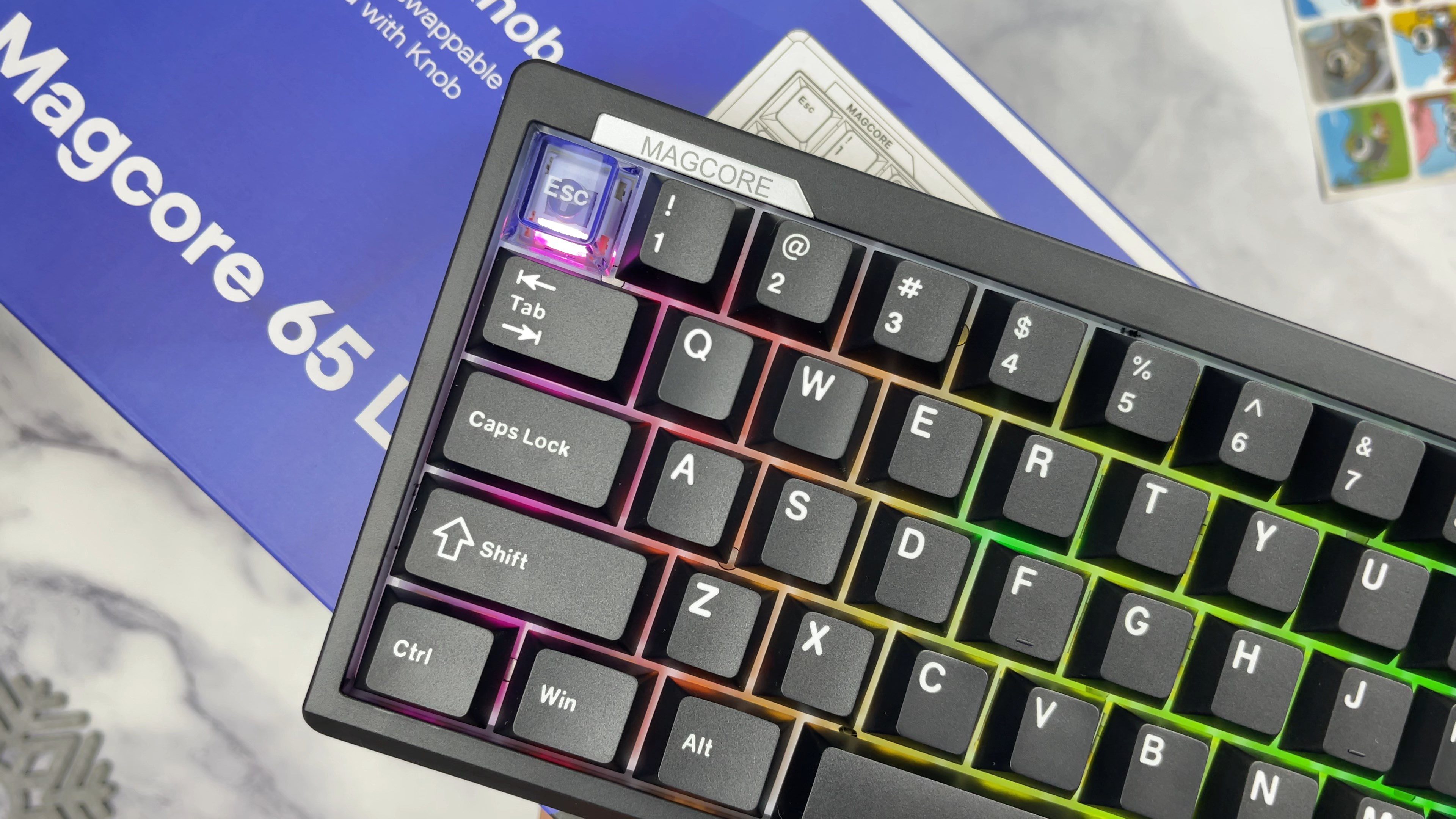
The Epomaker Magcore 65 Lite brings a fascinating twist to the current magnetic keyboard market by utilizing inductive switches instead of traditional Hall Effect sensors. This 65% wireless gaming keyboard aims to provide the analog precision gamers demand while extending battery efficiency through unique electromagnetic field technology. Epomaker explicitly designed this model to address the lack of wireless connectivity found in its older sibling, the Magcore 87.
Finding a tri-mode wireless magnetic keyboard at this price point is uncommon, as the Magcore 65 Lite retails for just $79.99 on Amazon and the official store. The package includes double-shot PBT keycaps, an aluminum volume knob, and a full suite of competitive gaming features. I have spent extensive time testing its rapid trigger capabilities and typing acoustics to determine how well these inductive switches perform in real-world scenarios.
Inductive Switch Technology
The Epomaker Core inductive switches operate differently from standard Hall Effect models. Instead of relying on individual magnets per key, they utilize an electromagnetic field to sense actuation distance and depth. This design eliminates the need for frequent recalibration that plagues traditional magnetic sensors over time as polarities degrade.
These pure linear switches feature a 3.5mm total travel and a light 30g initial force, creating a highly responsive feel. The stem structure is entirely open at the bottom to allow the metal pole to interact seamlessly with the PCB sensors below. This highly specific architecture makes the switches strictly proprietary and incompatible with standard mechanical or Hall Effect replacements.

Power efficiency is a massive benefit of this specific inductive approach. A single sensor on the PCB can process inputs for an entire cluster of keys, drastically reducing the electrical draw across the board. This allows the keyboard to maintain reliable wireless performance without draining the dual batteries prematurely.
Build Quality and Acoustic Profile
The external chassis relies on an ABS plastic casing with a clean matte black finish. It weighs exactly 730g and exhibits slight creaking when twisted, specifically around the center edges and side panels. Despite this minor flex, the gasket-mounted structure feels surprisingly rigid during heavy gaming sessions.

Internal dampening is extensive, featuring a silicone bottom pad, PCB foam, an IXPE sheet, and latex plate foam. The internal assembly pairs a 1.2mm FR4 plate with a 1.2mm PCB, intentionally deviating from the standard 1.6mm thickness found in most custom boards. Accessing these internals requires removing four bottom screws and meticulously unlatching the plastic clips with a pry tool.

Typing acoustics closely mimic electro-capacitive keyboards, producing a muted and soft bottom-out sound. The switches are notably quieter than most magnetic counterparts currently available on the market today. The upward stroke generates a distinct and somewhat harsh bounce-back noise that slightly detracts from the otherwise premium typing experience.
Wireless Performance and Software
The tri-mode connectivity includes Bluetooth at 125Hz, a 2.4GHz dongle, and a braided USB-C cable for charging. Wired mode unlocks an impressive 8000Hz polling rate for absolute minimum input latency during competitive matches. Switching to the 2.4GHz wireless dongle drops the polling rate to 1000Hz, which remains perfectly adequate for casual play and daily tasks.

Epomaker utilizes a web-based driver for configuration, completely removing the need for a dedicated, bloatware-heavy software download. The interface allows for precise adjustments to actuation points, Rapid Trigger sensitivity, and advanced bindings like SOCD and Mod Tap. Testing SOCD in Valorant provided seamless counter-strafing, while Rapid Trigger made executing superglides in Apex Legends highly consistent.
The software does have a significant limitation regarding user convenience and daily usability. It cannot currently save multiple onboard profiles, forcing users to manually adjust switch sensitivities when transitioning between gaming and typing tasks. Applying new calibration settings also requires a complete reset of the web application and the keyboard itself.
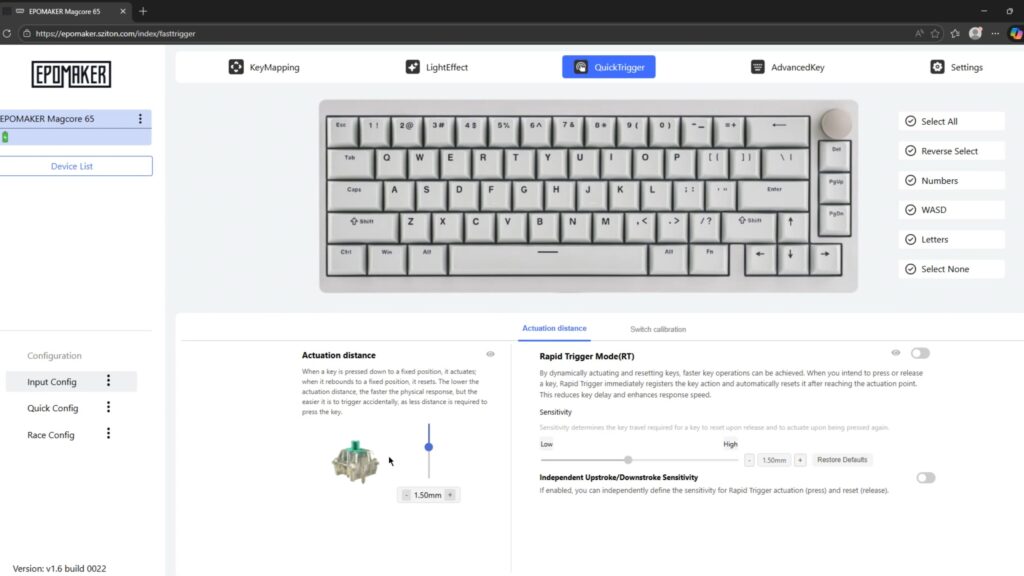
Battery Life and Illumination
Power is supplied by two separate 2000 mAh batteries, providing a total power capacity of 4000 mAh. While this capacity seems modest compared to premium wireless boards, the energy-saving nature of the inductive sensors compensates heavily for the smaller cells. It easily lasts a full week of intensive daily use and gaming on a single charge with lighting active.

The per-key RGB illumination is exceptionally bright, vibrant, and highly color-accurate across the spectrum. Booting up the keyboard triggers a smooth, gradual increase in brightness that feels incredibly premium and well-executed. You can instantly control the lighting effects and colors directly through onboard shortcuts using the function and enter keys.
The primary keycap set features crisp white-on-black alphas combined with blue transparent polycarbonate accent keys. The transparent accents allow the vivid backlighting to shine through beautifully, though the spacebar remains a standard opaque black. Epomaker also includes standard black replacement caps in the box for users who prefer a stealthier, uniform aesthetic.

Typing and Ergonomics
The 65% form factor strikes an excellent balance between desk space conservation and practical daily utility. The inclusion of a dedicated navigation cluster on the right side ensures that editing documents remains a smooth process. The aluminum volume knob positioned on the top right provides buttery smooth scrolling, though it heavily lacks tactile notches for precise volume stepping.

The default typing angle is quite steep, providing a comfortable ergonomic slope straight out of the box. For those who require further adjustments, the bottom panel features a two-level flip stand system to elevate the rear. A subtle front chamfer also provides good ergonomics and promotes a comfortable typing experience without requiring a wrist rest.
The double-shot PBT keycaps feature a standard Cherry profile that most enthusiasts will instantly recognize and appreciate. The keycaps have a slightly textured surface that grips the fingers well and resists shine over extended periods of heavy use. Combined with the 30g actuation force of the switches, typing long articles feels effortless and completely free of finger fatigue.

Final Thoughts — Price & Value
The Epomaker Magcore 65 Lite delivers an impressive array of analog gaming features for just $79.99. The inclusion of true Rapid Trigger, SOCD, and tri-mode wireless connectivity makes it a highly competitive option in the budget segment. The inductive switches provide a smooth, reliable gaming experience that easily rivals more expensive magnetic alternatives.
The ABS plastic case and the lack of hot-swap compatibility with standard Hall Effect switches are acceptable compromises at this tier. The web-based software effectively handles advanced keystroke modifications, even though the missing profile management system is a notable drawback. The battery efficiency heavily offsets the smaller 4000 mAh capacity, ensuring consistent wireless uptime.
This keyboard stands out as a practical solution for gamers seeking advanced movement mechanics without spending premium prices. The quiet acoustics and compact 65% layout fit perfectly into smaller desk setups. It represents a strong value proposition for anyone wanting to upgrade to analog technology while maintaining a clean, wireless aesthetic.
