

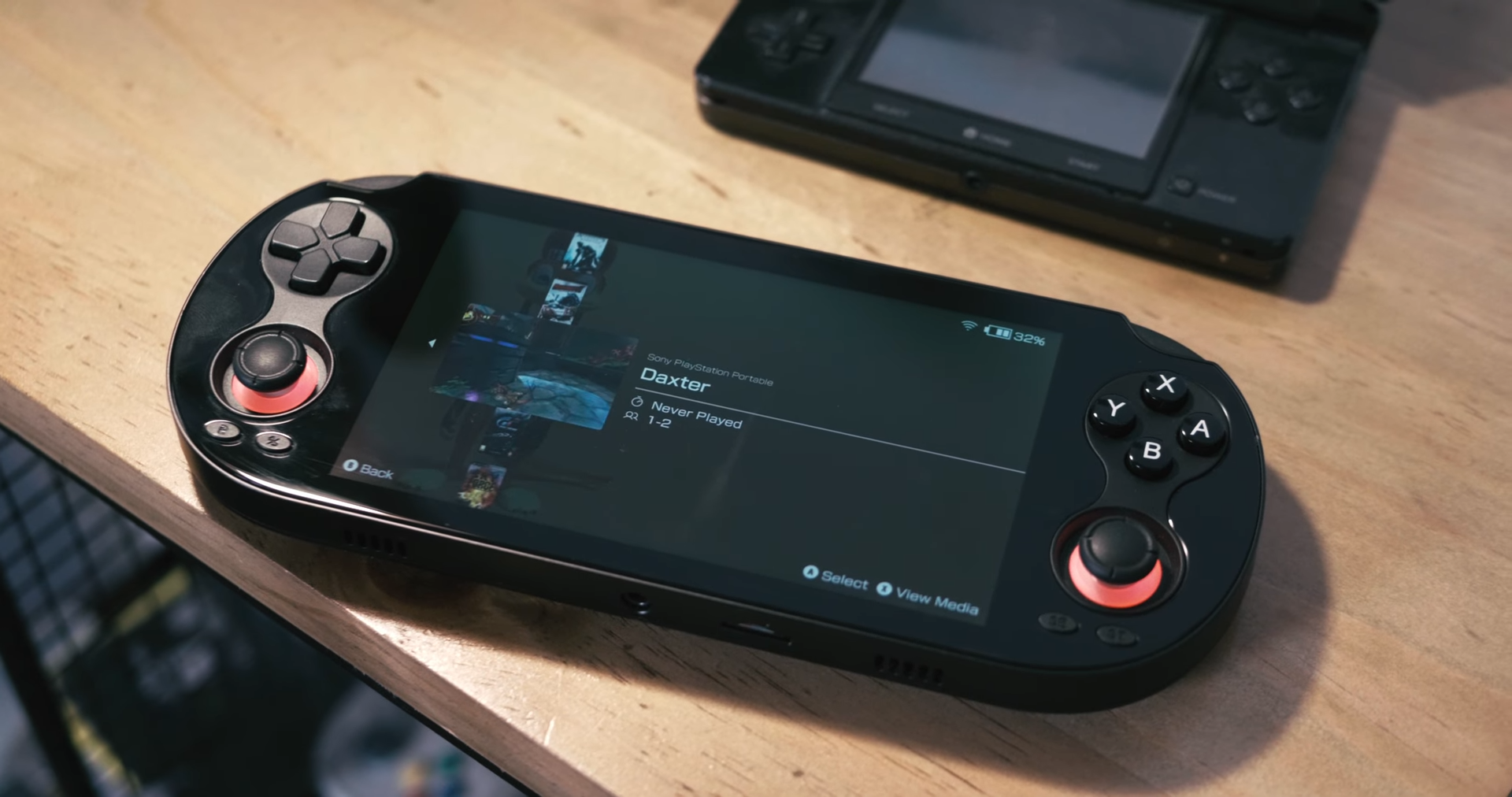
This Anbernic RG Vita is a budget-friendly device clearly inspired by Sony’s famous portable console. Priced competitively around the $100 mark to challenge rivals like the Trimui Smart Pro and Miyoo Air X, this machine attempts to balance nostalgic aesthetics with affordable hardware. Achieving this price point requires specific engineering compromises, making it essential to look past the attractive outer shell to see what the machine actually delivers.
I believe evaluating this device requires looking past the legendary reputation of the original PlayStation Vita, which was a premium powerhouse. This newer offering utilizes older hardware to combat the rising costs of modern storage and memory.

The Legacy of the PlayStation Vita and Modern Cost Barriers
Sony’s original handheld was a magnificent piece of engineering, but expensive proprietary components like high-end chipsets and OLED screens made the device too costly for many buyers. This pricing barrier allowed the Nintendo 3DS to dominate the market share, leaving the original Vita as something of a historical anomaly. Anbernic attempts to recreate the beloved form factor of that classic device while keeping manufacturing expenses low.

Modern electronic markets face significant price inflation for essential parts like RAM and SSD storage. Utilizing the Unisoc T618 chipset allows the manufacturer to bypass these expensive market trends and offer an affordable option. This strategic choice helps keep the retail price low, making the device accessible to a wider audience of budget-conscious players.
Choosing this route means accepting specific trade-offs in modern performance. The T618 was once a celebrated standard for retro emulation, but it struggles to keep pace with modern developments. The consumer ultimately benefits from a cheaper device, even though it sacrifices raw computing power.

Performance and the Memory Limit
I observed that memory capacity represents the biggest bottleneck on this system. Unlike previous T618 devices, such as the Retroid Pocket 3 Plus, which offered 4 GB of RAM, this model features only 3 GB. This single-gigabyte reduction has a significant impact, causing noticeable lag and sluggishness when navigating demanding front-ends like EmulationStation DE.

Demanding emulation platforms like PlayStation 2, GameCube, and Nintendo 3DS require aggressive background app management and high-performance system modes. Running God of War 2 on NetherSX2 is possible, but graphical anomalies and frequent stutters will occur. Emulating these high-end consoles requires significant tolerance for gameplay glitches and constant setting tweaks.
I found that running high-end emulators requires installing optimized standalone builds rather than relying on default system configurations. Downloading specialized versions of emulators like Dolphin MMJR2 and Citra yields the best results for GameCube and 3DS games. Players must expect a compromise-heavy experience where smooth gameplay requires constant configuration.

Display and Calibration Realities
During my testing, edge sharpening stood out as a highly noticeable visual quirk when navigating the default Android menus. This software-level issue can make text look harsh, though the effect luckily fades into the background during active gameplay. Future software updates or community-developed firmware like Gamma OS will likely address this sharpening issue.

Display brightness lands right in the middle of the road, offering enough visibility for dimly lit rooms and occasional outdoor play. Sensitive users should note that pulse-width modulation (PWM) is present, with screen flickering becoming more pronounced at lower brightness levels. Integer scaling performs wonderfully, producing minimal black borders on Game Boy Advance and Super Nintendo games.
I often see handheld screens compromised on budget models, but the visual quality here remains acceptable for daily retro gaming. Color calibration provides decent results without looking overly saturated or washed out. The front glass panel extends to the edges, creating a clean aesthetic that enhances the visual appeal of the console.

Button Feedback and Ergonomic Design
I noticed that button quality departs significantly from the traditional feel established by previous handhelds from this brand. The D-pad feels stiff, featuring harsh textured edges that can cause discomfort during long sessions of fighting games. Ghost diagonals are quite common here, making this layout unsuitable for highly competitive or precise inputs.

Standard action buttons provide a much better experience, offering the classic tactile membrane feedback that retro gamers appreciate. The analog sticks perform surprisingly well, avoiding strict cardinal axis snapping and offering genuine precision despite their aggressive center return tension. Digital-only triggers round out the control layout, operating as simple on-off switches rather than analog inputs.
Molded rear grooves mimic the classic PlayStation style to offer a comfortable grip, despite lacking rubberized coatings or rear touch functionality. The general plastic construction feels slightly inexpensive, though the polished glass faceplate helps elevate the visual appeal. Portability remains decent, fitting easily into deeper pockets for on-the-go gaming.

Audio Output and Usability
I was pleased to find that audio quality is surprisingly robust, utilizing bottom-firing speakers that deliver clean sound. Connecting external headphones or DACs works flawlessly through the integrated USB-C port. Heavy gaming sessions will quickly drain the battery, but intermittent play easily yields up to two days of use on a single charge.

Build quality is generally decent, although a shake test reveals minor rattling from the buttons. Extreme heat can weaken the internal adhesive holding the battery in place, causing it to shift inside the shell. Resolving this issue simply requires opening the casing and reapplying pressure to the adhesive.
I observed that standard wireless connections function smoothly when pairing external controllers via Bluetooth or 2.4 GHz receivers. The absence of video output prevents players from using this device as a home console on a television screen. This feature is reserved for the upcoming Pro version, which uses a different processor.

Custom Hardware and Prototyping Collaborations
Creative hardware modifications often rely on specialized parts and custom circuit designs. Ordering prototype parts from services like PCBWay makes it simple to execute unique DIY projects. Players can easily upgrade cheap microphones or custom accessories using shared open-source designs.
The printed circuit boards produced by these services feature exceptionally clean finishes and professional labeling. Creators can produce small prototype runs or larger business orders with identical precision. This level of quality makes custom electronics accessible to the wider gaming and making community.

PlayStation Vita Emulation and Retro Performance
My testing of actual PlayStation Vita titles on this hardware yields mixed results due to the limited power of the chipset. Simple 2D platformers and lighter games like Limbo and Rayman Origins run with stable framerates. Demanding 3D titles frequently crash or suffer from severe graphical stuttering during intense scenes.
Roughly half of the attempted Vita catalog runs in a playable state on this hardware. Classic consoles like the Sega Dreamcast and PlayStation Portable require far less effort to configure. Classic systems run flawlessly, ensuring that retro fans have a massive library of older games to enjoy.

Final Thoughts — Price & Value
Priced near the $100 mark, this device offers an affordable entry point for gamers seeking a large screen and comfortable physical controls. The nostalgic design choices successfully capture the aesthetic spirit of a beloved classic console without demanding a premium price tag. Competitors like the Trimui Smart Pro and Miyoo Air X present strong alternatives, yet this handheld holds its ground as a budget-friendly option.
Buyers must accept the performance compromises caused by the older processor and limited RAM. Demanding titles will require extensive configuration, but standard retro titles run flawlessly on this hardware. This console represents a sensible purchase for players prioritizing design aesthetics and classic emulation over raw processing power.
