

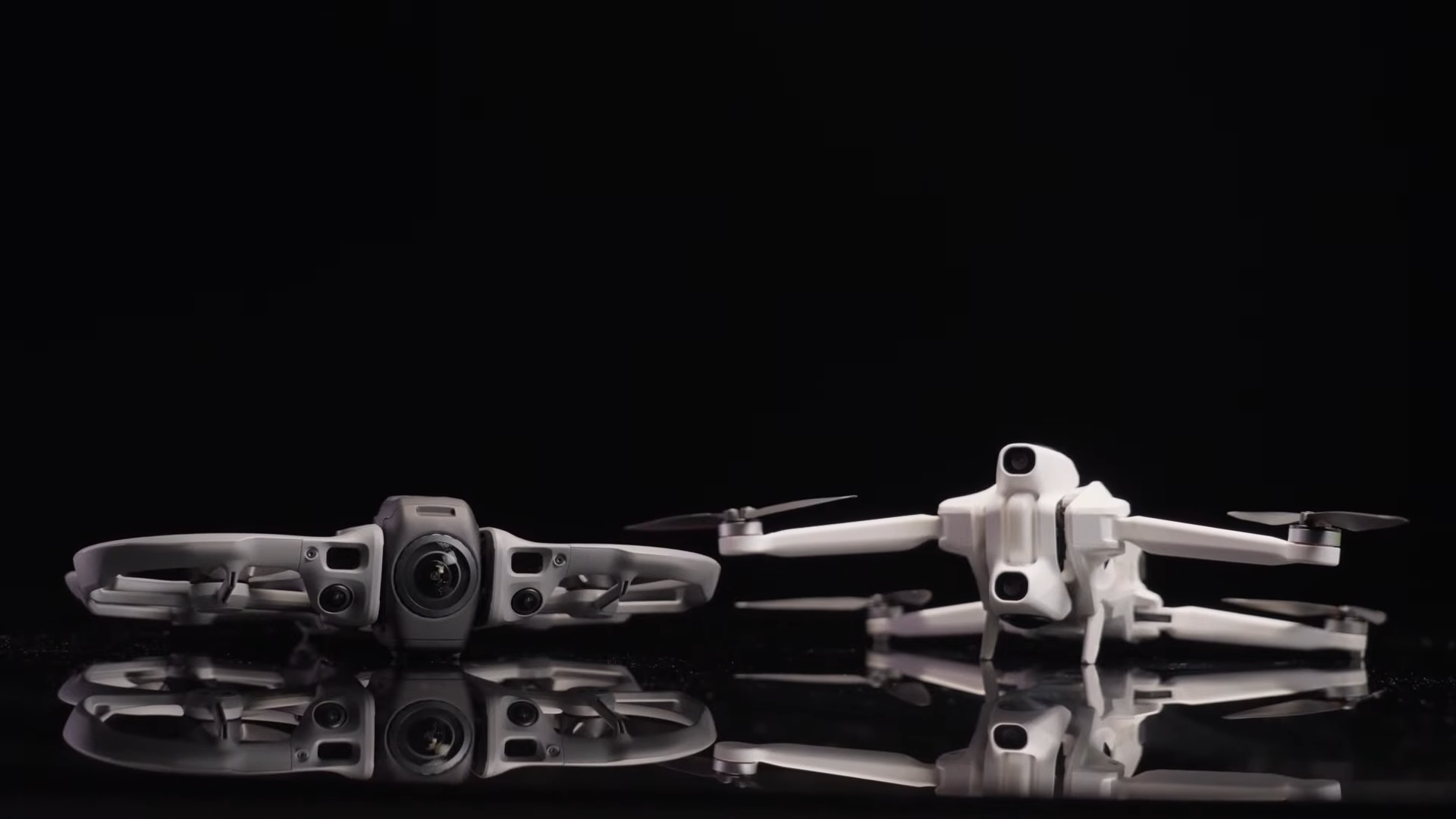
The drone market has experienced a massive wave of innovation over the past year, particularly with the rise of the panoramic drone category. After Insta360 incubated the Antigravity A1 and established this immersive class of aircraft, DJI responded by introducing the Avata 360 to compete directly. I have spent extensive time testing both systems to evaluate how they redefine aerial videography and consumer flight dynamics.
These packages represent completely different routes to the same panoramic destination, with DJI offering its system as part of a $980 Motion Flight Combo. Analyzing their capabilities reveals distinct design philosophies aimed at different consumer segments. I will break down the real-world performance of both machines to help you select the ideal system for your aerial adventures.

Native 360 Design Versus Evolutionary Systems
The Antigravity A1 presents itself as a ground-up revolution in drone form factor, built specifically around the concept of native 360-degree capture. Weighing in at an ultralight 249 grams, this compact, foldable aircraft circumvents heavy regulatory registration requirements in most global regions while remaining highly portable.
Operators can configure the drone with a standard battery or opt for a long-endurance power cell that pushes flight times up to a highly impressive 39 minutes. The entire package integrates panoramic goggles, an intuitive motion controller, and a streamlined mobile workflow into a singular, cohesive ecosystem built for the average consumer.

DJI takes a significantly different approach with the Avata 360, choosing to expand an existing, highly successful FPV product line rather than inventing a new architecture. The Avata 360 provides a respectable 23 minutes of flight time, maintaining the robust build quality and traditional flight telemetry that seasoned DJI pilots expect.
Instead of rewriting the rules of flight interaction, this drone overlays panoramic capabilities onto a mature, battle-tested platform. It acts as an evolutionary branch of a professional toolset, appealing heavily to flyers who prefer a standardized ecosystem over a fully redesigned workflow.

Goggles and Optical Engineering Compared
Visual immersion remains the ultimate metric for panoramic drone performance, and the optical designs here could not be more distinct. The Antigravity A1 includes its custom Vision Flight Goggles as standard equipment, utilizing dual 2.5K micro OLED panels paired with a modern pancake optical system. This advanced optical configuration mirrors the technology found in high-end VR headsets, delivering a wide 90-degree field of view with exceptionally low latency.
Weighing a mere 340 grams due to an external neck-mounted battery design, these goggles minimize facial pressure and feature a unique external display window on the left lens so bystanders can watch your flight in real time.

DJI bundles its Avata 360 with the Goggles N3, which rely on a more traditional LCD screen utilizing a folded optical path. This design essentially projects an entire LCD screen directly in front of your eyes, resulting in a somewhat narrow 54-degree field of view that feels like watching a television screen from a distance. The N3 headset lacks diopter adjustments, though it allows room for users to wear standard prescription glasses underneath.
Weighing 536 grams with a rear-mounted battery, the headset can cause noticeable neck fatigue during extended sessions. Upgrading to DJI’s premium flight glasses provides dual micro OLED displays and a real-world passthrough window, though the actual field of view remains relatively restricted.

Intuitive Point-and-Fly Versus FPV Mechanics
Operating the Antigravity A1 is incredibly simple because the system completely bypasses the steep learning curve associated with traditional dual-stick flight controllers. Pilots simply don the headset, grip the motion controller, and fly directly toward whatever point they aim at by squeezing the throttle. Complex aeronautical axes like pitch, roll, and yaw are managed automatically by the internal flight computer, giving beginners an instant sense of mastery.
Seasoned flyers can transition into a standard FPV mode for precise, manual stick control when necessary. Voice commands further simplify the experience, allowing you to trigger automatic camera paths, adjust settings, or initiate a return-to-home sequence hands-free.

DJI relies on its established motion controller and FPV joystick setup, which was originally optimized for agile drones like the Avata 2 and Neo. New pilots must immediately adapt to an intermediate FPV control scheme, requiring pre-flight practice and a solid understanding of spatial orientation. Flight maneuvers can feel disjointed for beginners because the physical motion controls do not always map intuitively to the panoramic video feed.
This mismatch between visual feedback and hand movement can occasionally induce motion sickness during dynamic flights. Experienced pilots will find that DJI’s traditional dual-stick remote provides unparalleled precision and a massive skill ceiling, but the barrier to entry remains high.

Stability Testing and Real-World Aerodynamics
Dynamic wind resistance and hovering accuracy are critical for capturing clean, unwarped panoramic footage. I conducted controlled pulling force tests on both platforms to evaluate how they handle external physical displacement. Both aircraft managed minor disturbances effectively, returning to their original coordinates with minimal drift.
The Antigravity A1 showcased exceptional stability under increased pulling tension, resisting heavy force while maintaining its exact position. Under identical heavy tension, the DJI Avata 360 experienced slight positional shifts, though it ultimately corrected itself within a completely safe operational margin.

Post-Production Workflows and AI Integration
Capturing 360-degree footage is highly satisfying, but transforming those massive raw files into usable video can be incredibly challenging. Fortunately, both platforms address this bottleneck by offering robust editing tools within their respective mobile applications. Users can execute keyframe editing, adjust camera paths, and create custom camera movements directly on their smartphones. DJI simplifies this process by offering a vast library of online creation templates and real-time playback editing. This allows creators to quickly format their clips for social sharing without needing a high-end desktop editing suite.
Antigravity matches these editing capabilities while integrating highly sophisticated AI album analysis directly into its mobile app. The software automatically scans your recorded flight, identifies the most visually compelling moments, and applies dynamic camera paths. The automated editor syncs transitions to the beat of your chosen music track and injects contextual sound effects to enhance the overall production value. This highly automated pipeline removes the creative friction of keyframing, letting beginners produce polished videos with minimal effort.

Final Thoughts — Price & Value
Deciding between these two panoramic systems comes down to choosing between a highly specialized, native consumer experience and a highly polished professional ecosystem. The Antigravity A1 delivers exceptional value out of the box by packing high-end pancake optics, a lightweight 249-gram airframe, and an incredibly intuitive flight control scheme into its standard package. This setup is specifically engineered to lower the entry barrier, making the joy of immersive flight accessible to everyone. The seamless AI editing suite further enhances its value proposition by ensuring that your captured footage actually makes it onto your social feeds.

DJI targets an entirely different consumer bracket with its premium-priced ecosystem, highlighted by the $5,499 UN Motion Flight Combo. This system is best viewed as a professional creative tool that excels when paired with a traditional dual-stick controller and a pilot who has invested time in rigorous flight training. The learning curve is undoubtedly steeper, and the Goggles N3 display system feels dated compared to the modern optics of its competitor. However, the sheer manual flexibility and deep integration within the broader DJI ecosystem make the Avata 360 a highly reliable long-term investment for experienced flyers.

