

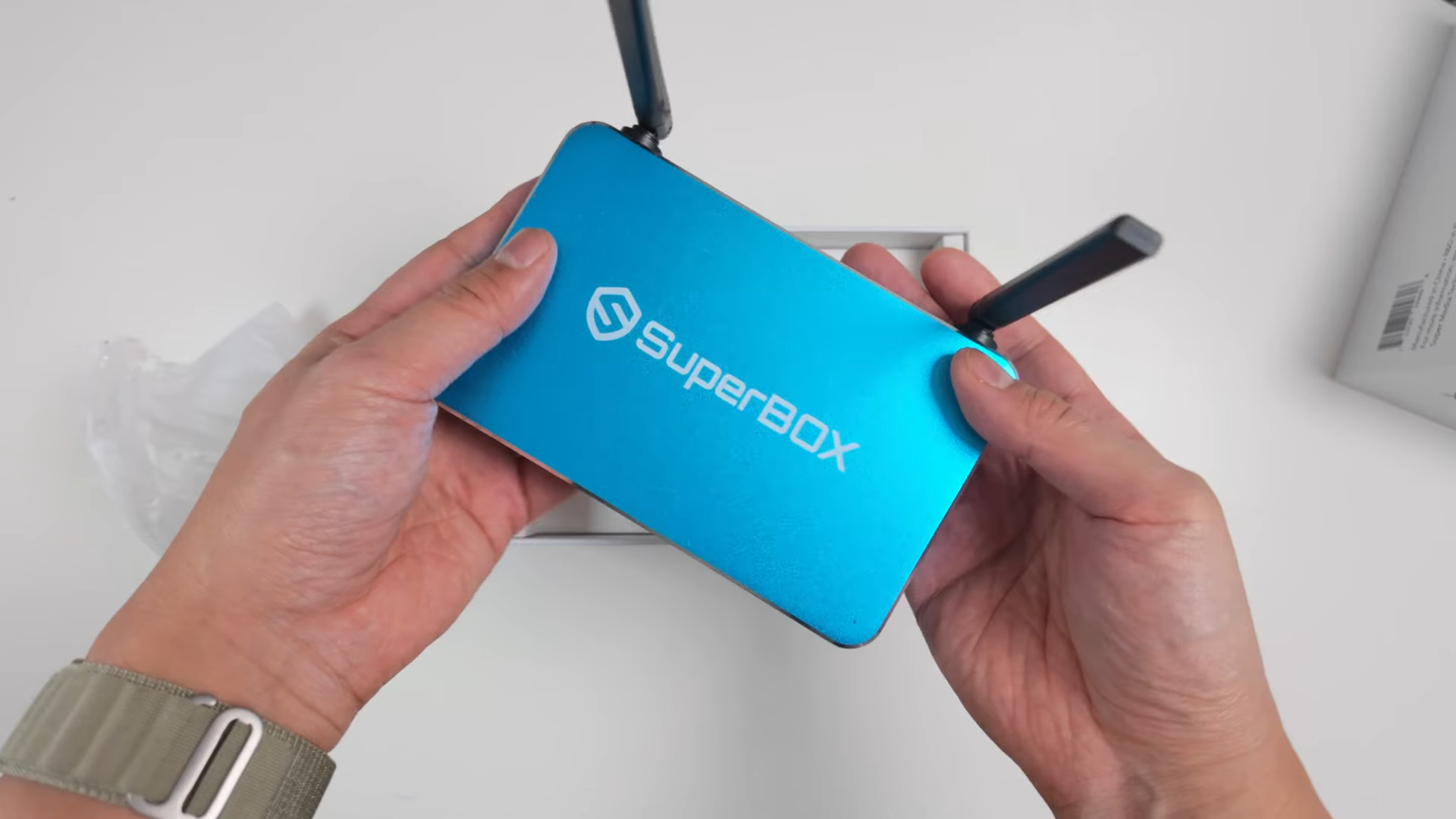
The world of Android TV boxes is often filled with cheap, plastic devices that promise the world but deliver very little. The SuperBox S7 Max attempts to break that mold with a premium metal build and a feature set that claims to change the streaming game entirely. It enters the market with a steep price tag, sitting around $399 USD, which immediately sets high expectations for its performance and build quality.
The device targets users who want a “set it and forget it” experience with features like 7-day playback and high-resolution support. It is designed to be simple enough for anyone to use while packing enough heat for tech enthusiasts. With promises of 6K resolution and advanced time-shift capabilities, it aims to replace multiple subscriptions and devices in your home setup. I have spent time analyzing the capabilities of this new unit to see if it justifies that premium entry cost

Unboxing and Physical Connectivity
Right out of the box, the SuperBox S7 Max makes a strong impression with its aluminum construction. This metal chassis is not just for looks; it actively helps with heat dissipation to prevent throttling during marathon streaming or gaming. The back of the unit is loaded with connectivity options that you rarely see on standard streaming sticks. You get a 1000 Mbps Ethernet port for rock-solid wired internet, an optical audio port, and an AV port.

The inclusion of dual antennas ensures better reception for the Wi-Fi 6 capabilities, which is crucial for high-bandwidth streaming. On the side, you will find two USB ports—one USB 3.0 and one USB 2.0—along with a TF card slot for expandable storage. The front panel features a small LED display that shows the time and network status, adding a nice touch of utility. I appreciate that they included a dedicated restore button, even if it is just a small pinhole, as it provides a safety net for troubleshooting.
The remote deserves special mention, as it’s sure to impress. It features Bluetooth 5.2 connectivity and a built-in microphone for voice commands, which I found both inexpensive and accurate. It also includes a “mouse mode” button, which is helpful for navigating between apps not optimized for TV screens. The design is intuitive, with shortcut keys that make switching between on-demand video apps quick and easy.

Hardware Specifications and Performance
Under the metal hood, the S7 Max runs on Android 12, powered by a quad-core ARM Cortex A53 processor and a Mali G31 GPU. While these specs are decent, the real star here is the memory configuration. The device packs 4GB of RAM and a generous 64GB of internal storage, which is double what we typically see in previous models. This extra storage is vital for users who want to record shows or install a large library of apps without constantly worrying about running out of space

I found the performance to be snappy, with apps opening instantly and navigation feeling fluid thanks to the upgraded hardware. The Wi-Fi 6 support is a significant addition, allowing for smoother streaming even on crowded networks where multiple devices are fighting for bandwidth. In my testing, the device handled casual gaming titles like Beach Buggy Racing and Asphalt 8 without any frame drops or stuttering. It manages to deliver a surprisingly competent gaming experience for an Android box, provided you stick to casual titles.
However, there is a technical limitation that potential buyers must be aware of regarding DRM certifications. The device only supports Widevine L3, which means premium streaming apps like Netflix will not play in 4K or full HD. This is a common trade-off in these types of “unlocked” boxes, as they prioritize their own proprietary apps over certified streaming services. If you are buying this strictly for Netflix or Disney+ in 4K, you might be disappointed, but for its intended purpose, the hardware performs exceptionally well.

The New User Interface and Voice Control
The S7 Max debuts a completely redesigned interface that looks much more modern and polished than its predecessors. The theme uses sleek grays and blacks with sharp text, giving it a premium feel that matches the hardware. I found the organization to be excellent, with new filters that make it easy to find specific content within the proprietary apps. You can also customize the home screen shortcuts, allowing you to pin your favorite third-party apps for quick access.

Voice control has received a serious upgrade and works seamlessly with the system. You can simply press the microphone button and say commands like “open YouTube” or search for specific genres of movies. In my experience, the response time was incredibly fast, and it understood natural speech patterns well. This feature eliminates the tedious process of typing on an on-screen keyboard, making the device much more accessible for users who are not tech-savvy.
The interface also includes clever quality-of-life features like a dedicated speed test and a memory cleaning tool directly on the home screen. These utilities help maintain performance without digging through deep settings menus. The “Blue” apps—Blue TV for live channels and Blue VOD for movies—are integrated deeply into this UI. They allow for a unified search experience that pulls content from various sources, making it feel like a cohesive entertainment ecosystem rather than just a collection of disparate apps.

Streaming Features and The 7-Day Time Shift
The standout feature of the S7 Max is undoubtedly the extended “Time Shift” capability. While previous models limited you to rewinding only 8 hours, this device lets you go back a full 7 days. This is a massive improvement for sports fans or anyone who regularly misses live broadcasts. You can easily pause, rewind, or replay shows from an entire week ago, essentially functioning as a cloud DVR without the need for manual scheduling.
Picture quality is another strong point, with the box supporting up to 6K resolution at 60 frames per second using H.265 decoding. Colors appeared deep and motion was smooth during my viewing tests, whether I was watching live sports or fast-paced action movies. The proprietary video-on-demand app updates frequently, offering access to new releases and TV show seasons often before they hit other platforms. It even categorizes content helpfully, with sections for “New Releases,” “Action,” and specific networks.

The “Blue TV” app provides an enormous selection of channels, covering everything from local news in the US and Canada to international content from the Philippines and Latino networks. I noticed that channel switching was fast, and the stream stability was impressive, likely due to the robust Ethernet and Wi-Fi 6 connections. It effectively replicates the cable TV experience but adds the flexibility of modern on-demand streaming. For those looking to cut the cord, this combination of live TV access and a vast VOD library is the device’s primary selling point.

Final Thoughts — Price & Value
The SuperBox S7 Max occupies a unique and somewhat controversial spot in the market with its price point of $399 USD. This is significantly more expensive than certified devices like the NVIDIA Shield or Apple TV, which offer better DRM support for mainstream apps. However, the value here is not in the hardware alone, but in the integrated software ecosystem that provides access to live TV and video-on-demand without recurring monthly fees.
You are essentially paying upfront for a service that aims to replace your cable bill and other streaming subscriptions. For users who prioritize access to sports, international channels, and the convenience of the 7-day playback feature, the math might work out in their favor over a year or two. The upgraded 64GB storage, Wi-Fi 6, and premium metal build do help soften the blow of the initial purchase price.
I believe this device is a niche product that fits a specific type of user perfectly but will be overkill for others. It is not the best choice for someone who just wants to watch Netflix in 4K, but it is a powerhouse for those seeking an “all-in-one” media solution. The S7 Max delivers on its promises of performance and convenience, making it a compelling, albeit pricey, option for the cord-cutting enthusiast.

