

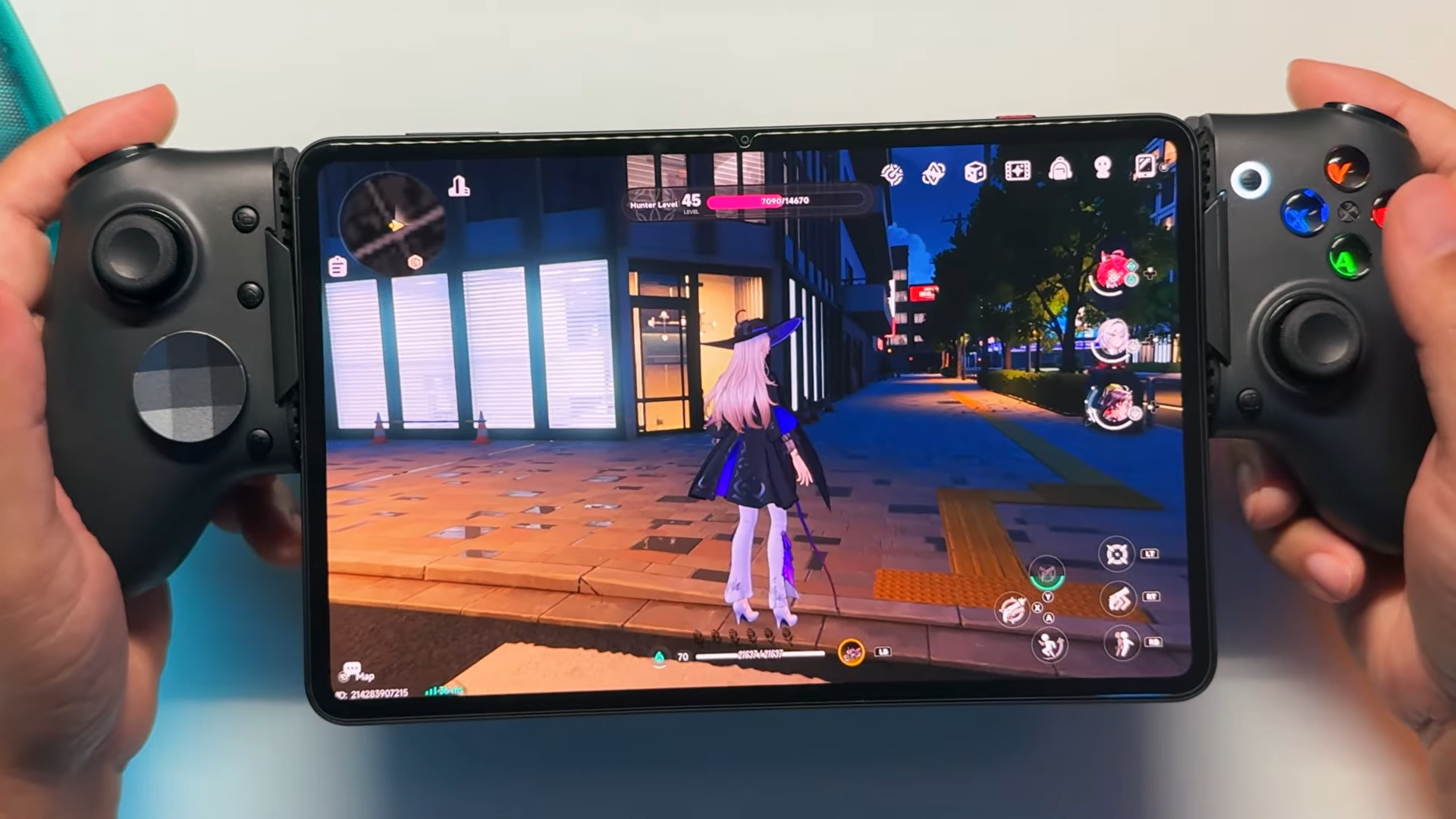
The mobile gaming accessory market is currently flooded with generic gamepads, yet the brand new EasySMX M20 manages to stand out by introducing several features never before seen in the telescopic category. This highly anticipated controller aims to solve classic handheld gaming pain points by delivering a premium, highly adaptable experience for both smartphone and tablet players. Retailing at a highly competitive price of $69.99 USD, this device directly challenges established players in the mobile gaming scene with its unique feature set.
I spent significant time analyzing this controller to see how its unique hardware additions translate to real-world gaming scenarios.
Physical Customization and Ergonomic
Unboxing the device reveals a level of customization that is incredibly rare for telescopic controllers in this price tier. Inside the package, EasySMX includes multiple side slides of varying thicknesses that can be swapped to adjust the grip to your specific hand size. You also get interchangeable D-pads, including a classic dish design and a hybrid cross-dish layout, allowing players to tailor the directional input to their preferred gaming genre.

The telescopic mechanism accommodates a wide range of devices, stretching effortlessly to secure even larger form factors like the notoriously difficult Red Magic Astro tablet. A pivoting USB-C connector on the left side ensures effortless insertion and removal of your device without risking damage to the port. Integrated audio routing channels redirect sound from side-firing speakers directly toward the player, while rubberized lips prevent the device from slipping even when paired with a thick phone case.
Tactile Buttons and Mechanical Hair Triggers
The face buttons utilize mechanical tactile switches under backlit ABXY keycaps, providing a satisfying, responsive click with every single press that elevates the physical response above standard membrane controllers. The directional pad delivers a highly unique, hybrid feel that sits comfortably between a standard soft dome and a fully clicky mechanical switch, offering a balanced sensation that appeals to retro and modern gamers alike. Additional tactile feedback is present in the crisp shoulder bumpers and the two programmable rear buttons, which guarantee reliable, rapid inputs during highly competitive multiplayer sessions.

The real stars of the hardware show are the physical toggle switches that activate true mechanical hair triggers. Traditional Hall Effect triggers provide smooth analog travel for racing games, but switching the physical toggles instantly converts them into ultra-fast micro-switch hair triggers. This dual-functionality provides instant click action that is absolutely essential for shooter games, mimicking the tactile click of a high-end gaming mouse. Such hardware versatility is a massive step forward for the telescopic controller market and should quickly become the industry standard.
The Physical Layout Switching System
Underneath the center faceplate lies an incredibly rare mechanical feature that allows you to physically rotate the button layout to match different console configurations. Using a small screwdriver tool included in the box, you can spin the internal dial to transition between an Xbox-style layout and a PlayStation configuration. This mechanical change is accompanied by a dynamic shift in the LED backlighting, instantly updating the visible face letters to match your chosen style.

This adjustment is not merely cosmetic, as the controller automatically changes its software protocol during the physical rotation. Games like Minecraft immediately recognize the shift, dynamically updating the on-screen button prompts to show PlayStation glyphs or Xbox inputs depending on the selected mode. While games must natively support these glyphs to display them properly, having a physical switch that changes the digital identity of the gamepad is a phenomenal feature that is virtually nonexistent in competing gamepads.
Dual Connection
Unlike most telescopic controllers that rely solely on a physical connection, this device operates using both wired and Bluetooth protocols despite having no internal battery. Power must always be supplied through a USB-C connection, either directly from the host device or via the pass-through charging port located at the top of the controller. This pass-through port is highly versatile, supporting direct data transfer to a PC so you can play wired on your desktop without needing specialized adapters.

Operating via Bluetooth while powered by a wire solves a massive headache for Android gamers. Popular mobile titles like Call of Duty Mobile notoriously block wired controllers on Android devices, restricting gameplay exclusively to official Bluetooth controllers. Activating the Bluetooth mode on the M20 tricks the Android operating system into recognizing the device as a standard wireless controller.
Companion App and Polling Rate Customization
Scanning the included QR code directs users to download the proprietary Geek Gamer companion software. On iOS, the application is available directly through the App Store, while Android users download a specialized version hosted on the brand’s official web page. Connecting the gamepad via Bluetooth grants full access to the software suite, opening up a variety of deeper hardware tweaks.

Inside the app, you can customize sleep timers, adjust the RGB lighting effects, and calibrate both the sticks and the triggers. The standout feature is the report rate configuration tool, which allows you to adjust the polling rate up to a blazing-fast 1000 Hz. This ultra-high polling rate is fully supported on Android, iOS, and PC, providing an incredibly responsive link between your finger movements and the on-screen action.
Real-World Performance and Stick Dynamics
Ergonomically, the controller feels wonderful in the hand, mimicking the offset asymmetrical stick layout made popular by modern console gamepads. The analog stick caps are wide and heavily textured, offering a highly comfortable grip for extended play sessions. Rumble feedback is delivered via dual high-quality rotary motors in the handles, producing satisfying, well-defined vibrations reminiscent of a first-party console controller.

Precision aiming is decent, though the sticks suffer from a slightly larger dead zone than I would personally prefer. The companion app lacks direct dead zone adjustment options, meaning you must rely on in-game settings to fine-tune your target acquisition in competitive shooters. While it may not surpass elite-tier controllers like the Elo Vagabond for competitive FPS matches, it easily matches or beats the performance of the EasySMX M15 or Memo S3, making it incredibly serviceable for casual and semi-competitive play.
Final Thoughts — Price & Value
Priced at $69.99 USD, the EasySMX M20 represents an outstanding value proposition in the telescopic controller market. Many competing products demand a premium price tag while offering far fewer innovative features. The inclusion of mechanical layout swapping, tactile micro-switch hair triggers, and a 1000 Hz polling rate elevates this controller to an easy S-tier ranking on any modern tier list.

This device is a highly recommended purchase for mobile and tablet gamers seeking a versatile, high-performance controller. The clever combination of wired and Bluetooth connectivity solves major software compatibility hurdles on Android, making it a reliable tool for any game. It is a robust, feature-rich gamepad that sets a new benchmark for what players should expect from mobile gaming hardware.
