

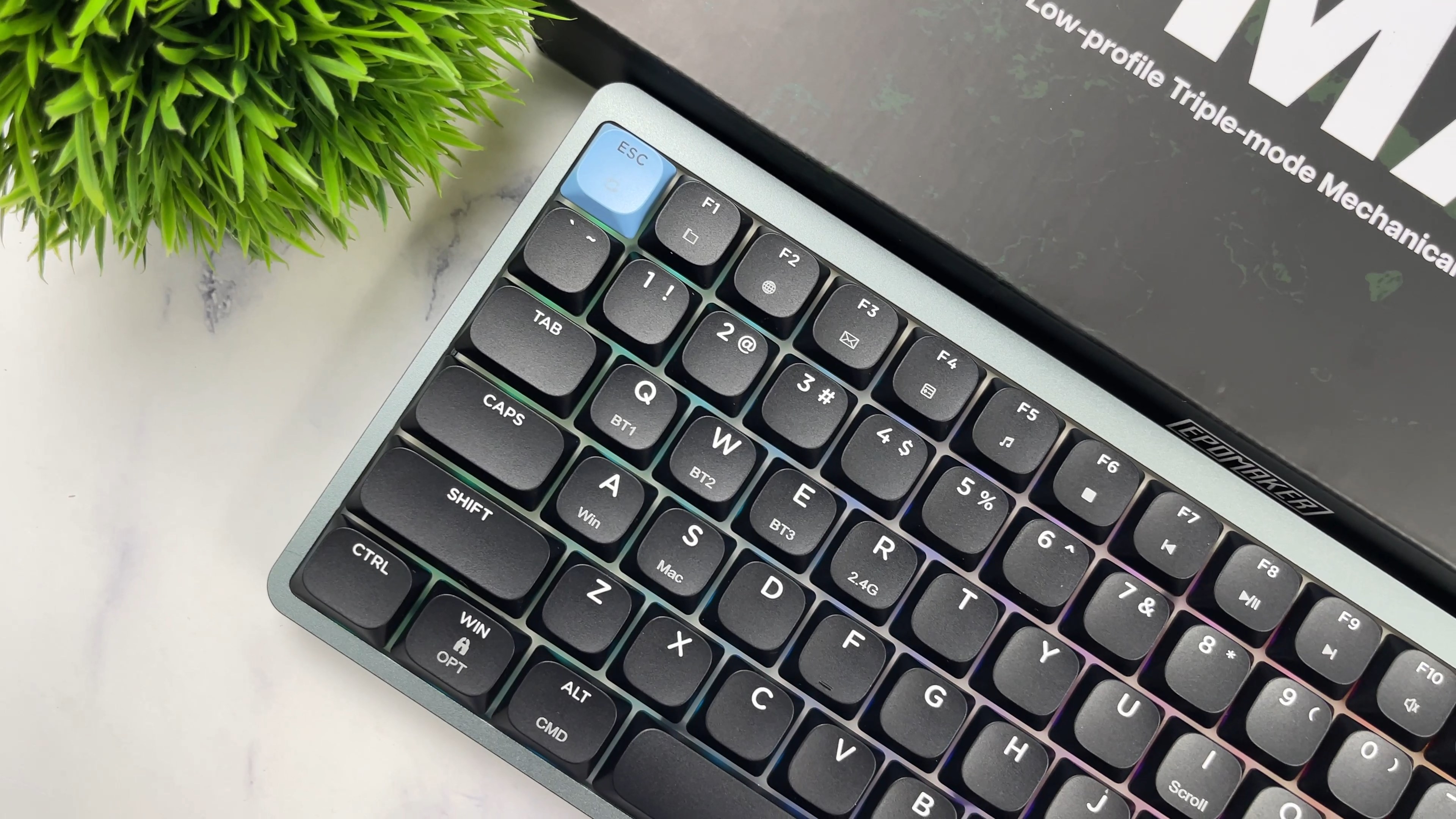
Low-profile mechanical keyboards have surged in popularity, but finding one with a full aluminum chassis without breaking the bank is quite rare. The Epomaker Luma 84 steps into this exact gap, aiming to rival heavyweights like the NuPhy Air75 and the Lofree Flow series. At a retail price of around $110 on platforms like Amazon, it positions itself as a highly competitive budget option.
I requested this specific board after receiving multiple comments asking for affordable metal alternatives for productivity setups. Featuring a sleek aesthetic and tri-mode connectivity, it stands out as an appealing choice for minimalist desks and travel-focused professionals. I have spent the past few weeks testing its features to see if the aggressive pricing comes with hidden compromises.
Full Aluminum Build and Sleek Design
The entire case of the Luma 84 is crafted from anodized aluminum, giving it a satin finish and serious structural rigidity. Weighing in at roughly 614 grams, or 1.35 pounds, it remains surprisingly light for a metal-encased peripheral. The smooth, curvy bottom base is beautifully machined and shares a noticeable design language with Apple’s modern MacBook lineup.
You will immediately notice uniform thickness along the sides, paired with sharp, blocky edges that give it an industrial look. The top frame houses a small LED light bar on the right side, providing an added splash of customizable accent lighting. On the underside, Epomaker opted out of adjustable flip feet, providing only four silicone bumpers that lock the board into a permanent two-degree typing angle.

Two distinct colorways are currently available to match different desk themes and personal preferences. The white version features bright purple accent keys on the enter and escape switches, though standard white replacements are included inside the box. A darker black-and-blue model offers a great alternative for users wanting a stealthy, understated appearance.
Layout, Keycaps, and Connectivity
Despite the Luma 84 name indicating the total number of keys, the actual layout is a standard 75-percent compact design. This form factor retains the dedicated arrow keys and a full function row, which I find essential for daily video editing. A vertical navigation cluster sits cleanly along the right edge, though it notably lacks a physical volume knob.
Epomaker ships this board with DSA low-profile, double-shot PBT keycaps that feel fantastic under the fingers. These keycaps are exceptional for the price, resisting the greasy shine that usually develops on cheaper plastics over time. They feature crisp black legends alongside dye-sublimated secondary icons that clearly display shortcuts for lighting profiles and connectivity modes.

The connectivity options are robust, allowing you to cycle through multiple devices without any frustrating delays. You get standard Bluetooth 5.0 with support for three simultaneous connections, a 2.4 GHz wireless USB receiver, and a wired Type-C mode. Both the wired and 2.4 GHz connections offer a 1000 Hz polling rate, making the board perfectly capable of handling competitive gaming sessions.
Typing Experience and Internals
Beneath the durable PBT keycaps sit Gateron low-profile mechanical switches, available in either linear red or tactile brown variations. The linear red switches feature a 45-gram operating force and a total travel distance of 2.5 millimeters. The hot-swappable PCB supports three-pin low-profile sockets, giving you the complete freedom to experiment with aftermarket switches later.

The acoustic signature of the board leans toward a clacky, slightly muted profile due to the extensive internal dampening layers. Epomaker utilized a thin, flexible polycarbonate plate mounted directly to the chassis via silicone gasket sleeves. The internal cavity is packed with a Poron sandwich foam, an IXPE switch pad, and a PET film to heavily isolate the typing sound.
While the general typing feel is comfortable, it simply does not reach the premium tier of more expensive rivals. I noticed a slight stem wobble on the basic Gateron switches, and the spacebar exhibited a noticeable amount of rattle right out of the box. The stabilizers appear to have only a tiny dab of dielectric grease, so applying manual lubrication is highly recommended to improve the acoustic response.

Battery Life and Software Customization
Powering the wireless functionality is a built-in 3000 mAh battery located safely under the main PCB. If you keep the vibrant, south-facing RGB backlighting turned off, the board can survive up to 130 hours of continuous typing. Activating the LEDs drastically cuts that endurance down to roughly 25 hours, meaning you will likely need to plug in the included braided Type-C cable twice a week.
Software integration is a massive highlight, as the board boasts native compatibility with open-source QMK and VIA platforms. By simply loading the available JSON file from the manufacturer’s website, you can instantly remap any key or create complex macros through a clean web interface. This entirely eliminates the annoying need to install proprietary bloatware on your personal computer.

The VIA compatibility also extends to advanced lighting control, letting you precisely adjust the per-key RGB and the top light bar. Switching between Mac and Windows modes is hardware-based via simple key combinations, requiring only a press of Function plus A or Function plus S. The underglow LEDs even serve a secondary functional purpose by accurately displaying the remaining battery charge when prompted.
Final Thoughts — Price & Value
The Epomaker Luma 84 enters a fiercely competitive market but manages to carve out a distinct identity through highly aggressive pricing. At just $110, finding another full aluminum, low-profile keyboard equipped with a hot-swappable PCB and QMK/VIA support is nearly impossible. It directly targets budget-conscious consumers wanting premium chassis materials without paying the heavy $140 tax associated with top-tier alternatives like the NuPhy Air75.

There are definitely valid concerns regarding internal quality control and minor acoustic imperfections to keep in mind before buying. Stripped screws on the bottom case and slight stabilizer rattle clearly indicate where the manufacturer cut corners to meet this strict budget constraint. The low two-degree typing angle and mediocre battery life under heavy RGB usage might also push ergonomic-focused users toward plastic-bodied competitors.
Ultimately, this is a highly functional productivity tool that significantly punches above its weight class in material design and software integration. The double-shot PBT keycaps feel fantastic, the layout is optimal for demanding daily tasks, and the tri-mode wireless connectivity remains flawless. If you strictly demand a metal case and prefer a sleek low-profile aesthetic, this mechanical keyboard easily justifies the investment.
