

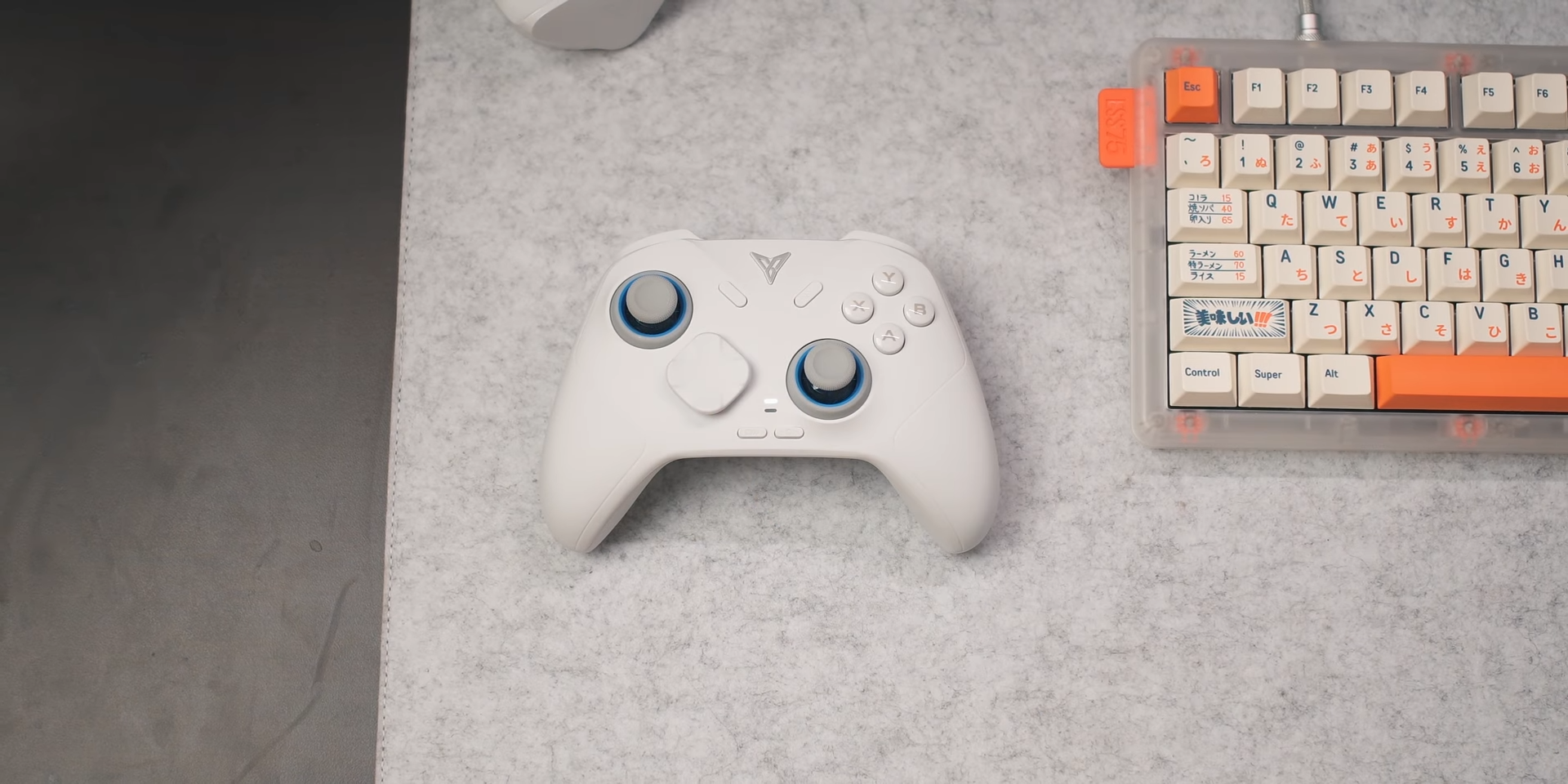
The budget gaming controller market has witnessed a massive shift with the arrival of the Flydigi Direwolf 4. I have spent significant time testing this latest release, and it quickly became clear that this gamepad represents an incredible leap forward for the brand. Many enthusiasts expected a minor iteration over the predecessor, but Flydigi opted to pack an impressive 75% to 80% of the Vader 4 Pro features directly into this housing. It feels more appropriate to classify this device as a “Vader 4 Lite” because the physical upgrades completely overshadow previous generations.
Pricing remains a critical factor for gamers looking to maximize their hardware budget without sacrificing competitive performance. Retailing at approximately $46, this controller positions itself comfortably under the $50, making it highly competitive against generic ODM alternatives.

A Design Fusion of Premium Models
The physical structure of the controller retains the highly praised Xbox-style layout that Flydigi has utilized for years. Users transitioning from older systems will find the ergonomics immediately familiar, eliminating any need for an adjustment period. My hands settled naturally onto the shell, which retains the general dimensions and structural footprint of the Direwolf 3. This design choice ensures that comfort remains high during extended play sessions across various genres.

Looking closely at the aesthetics reveals a fascinating design hybrid between the premium Vader 4 Pro and the high-end Apex 5. The face of the controller closely mimics the Vader 4 Pro, although the Direwolf 4 presents a slightly cleaner, more minimalist appearance with closely positioned start and select buttons. The home button features a stylized logo heavily reminiscent of the design language seen on the Apex 5.
The top-down perspective highlights a similar premium influence, particularly in the trigger design. Textured, rectangular triggers mirror the high-end look and tactile grip of the Apex 5. This blending of design elements yields a product that looks and feels significantly more expensive than its actual retail price.
Preserving Core Multi Platform Functionality
Excellent connectivity remains a cornerstone of this controller lineup, and this iteration carries forward all the versatile features of the previous model. Gamers can switch seamlessly between triple connection modes, allowing compatibility with PC, iOS, Android, and Nintendo Switch. This multi-platform flexibility ensures that a single controller can handle a mobile emulator setup, a main PC rig, and a handheld console without hassle.

Under the hood, the analog sticks and triggers rely on Hall effect sensor technology to eliminate stick drift and physical wear. The analog stick behavior can be toggled between circular and rectangular tracking zones through the dedicated software suite. This level of precise customization ensures that different gaming genres receive the exact input response required for peak performance.
The internal gyroscope functions perfectly, even when utilizing the 2.4GHz wireless dongle connection instead of a wired setup. Two programmable back buttons sit flush against the rear grip, allowing quick mapping of complex inputs via the companion software. Combined with a polling rate that reaches 1000 Hz, the core performance framework remains incredibly robust for competitive gaming scenarios.

Pro Tier Upgrades and Hardware Customization
The most significant development in this generation is the inclusion of a mechanical tension adjuster for both analog sticks. Users can manually increase or decrease the physical resistance of the sticks to match their personal aiming preferences. Having this pro-tier feature on a sub-million Rupiah controller elevates the gameplay experience, providing a customized feel previously locked behind premium price points.

Another substantial addition is the physical trigger lock mechanism, which transforms the trigger feel instantly. Gamers can choose between a smooth, linear Hall effect trigger pull and a tactile micro-switch digital click with a short travel distance. This dual functionality allows the gamepad to adapt instantly to different gaming requirements, offering rapid firing in shooters and precise modulation in racing titles.
Hardware customizability extends to the directional pad, which can be detached and replaced with a circular-style plate. Although the circular D-pad accessory must be purchased separately, the option to swap components is a welcome addition to the line. Furthermore, this model finally supports a dedicated charging dock that includes a clean, low-profile design and an integrated USB hub to house the wireless dongle.

Understanding the Design Compromises
Achieving such an aggressive price point required some deliberate engineering trade-offs compared to the flagship Vader 4 Pro. The main face buttons still utilize traditional membrane switches instead of the tactile mechanical micro-switches found on more expensive models. While the membrane action feels solid and reliable, it lacks the crisp, clicky feedback that premium enthusiasts might prefer.

The physical shell lacks the textured rubberized grips present on the high-end Apex and Vader series controllers. The outer plastic handles feel smooth to the touch, which might feel slightly less premium during intense, sweaty gaming sessions. Gamers who prefer extra tactile friction on their controller handles will need to look into third-party grip tapes.
Another minor omission is the lack of a dedicated smartphone mounting slot on the top frame of the controller body. Mobile gamers who prefer attaching their phones directly to the gamepad will have to find alternative mounting solutions. These minor drawbacks are easy to overlook when considering the massive feature upgrades packed inside the internal board.

Real World Gaming and Software Integration
My hands-on testing across several PC titles demonstrated the sheer versatility of the physical trigger locks and tension adjustments. Playing FC26 felt incredibly responsive when utilizing the digital micro-switch trigger mode for quick tactical maneuvers. Switching over to Grand Theft Auto 5 Online allowed me to engage the linear Hall effect triggers for precise throttle control during complex driving missions.

The upcoming release of racing simulators like Forza Horizon 6 makes the inclusion of Hall effect inputs highly valuable for precise car control. Fine-tuning the tension of the analog sticks allowed me to personalize the steering resistance, creating a highly immersive experience. Having these mechanical adjustments readily available directly enhances performance in competitive online multiplayer modes.
Software configuration relies on the newly updated Flydigi Space Station 4 application. This unified platform manages settings for the Apex 5, Vader 5, and this controller seamlessly, offering easy access to button mapping, trigger calibrations, and deadzone adjustments. The software interface remains clean and responsive, making it simple to store custom game profiles.

Final Thoughts — Price & Value
The Flydigi Direwolf 4 delivers unprecedented value for gamers searching for a high-performance controller under the Rp 900,000 price point. By inheriting a vast majority of the premium features from the Vader 4 Pro, this controller sets a brand new benchmark for mid-range gaming gear. The inclusion of physical stick tensioners and mechanical trigger locks makes it a much smarter purchase than more expensive competitors.
Buying the standard package provides the controller, a wireless dongle, and a high-quality USB Type-C cable. While the specialized charging dock remains a separate purchase, the overall cost-to-performance ratio remains unmatched in the current market. I highly recommend this gamepad as the absolute best option for anyone looking to maximize their gaming setup on a reasonable budget.
