

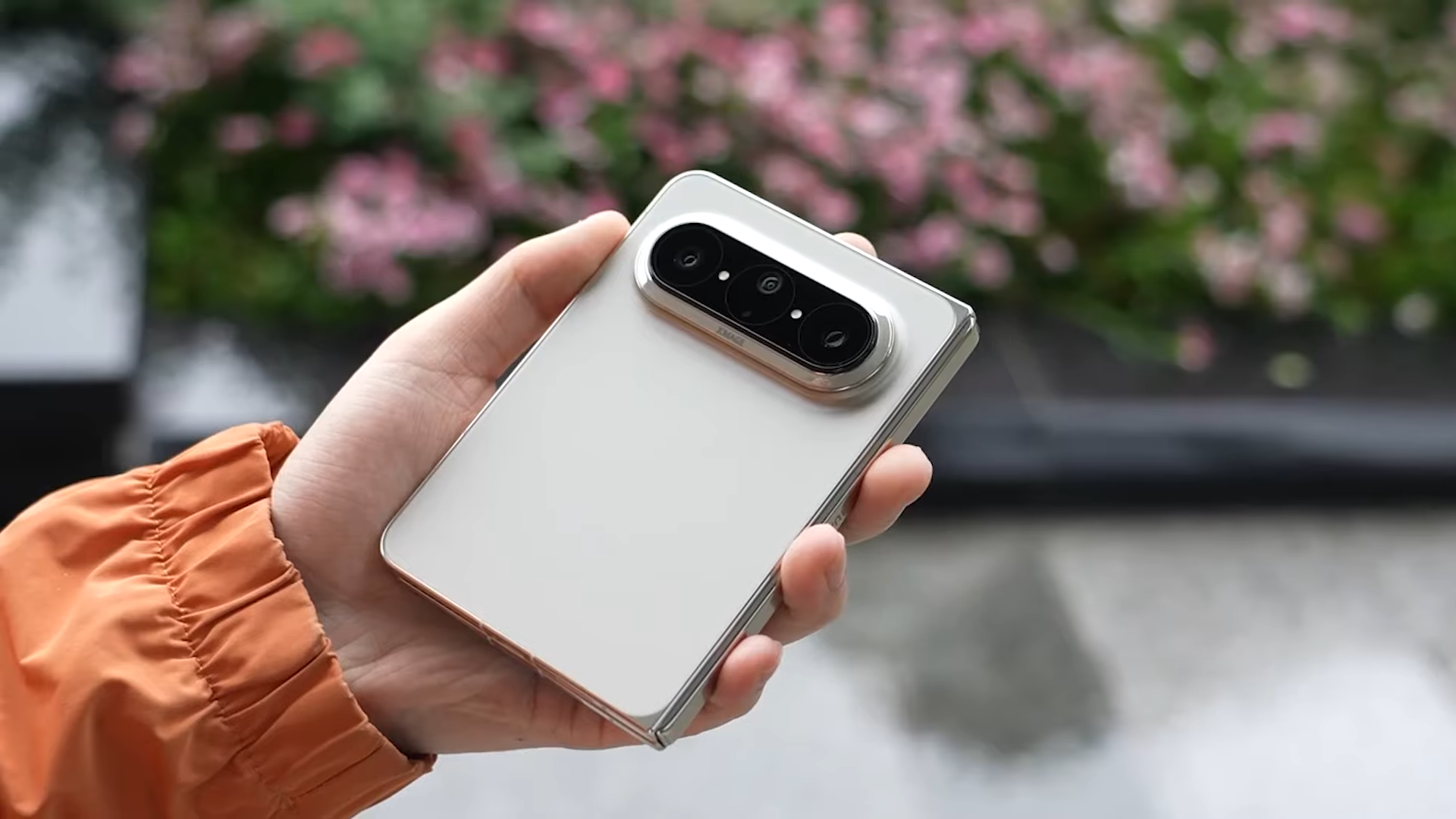
Huawei has long demonstrated a willingness to disrupt the standard smartphone layout, particularly within the competitive landscape of foldable devices. The introduction of the Pura X proved that an unusual, stretched foldable form factor could capture mainstream interest, showing up in everyday environments far beyond traditional corporate boardrooms. The arrival of the Huawei Pura X Max signals a deeper refinement of this design philosophy, pushing the boundaries of what a hybrid device can achieve.
Positioning itself in the premium tier around the $1,969.99 mark, this device is far more than a simple size bump over its predecessor. My extensive testing of this hardware reveals an experience that departs significantly from typical foldables, edging closer to an entirely new product category. This analysis explores how the hardware behaves under demanding workloads, highlighting where the physical refinements succeed and where the inevitable trade-offs reside.

Ergonomics and Advanced Durability
The Pura X Max immediately commands attention with its substantial dimensions and prominent rear camera module. Huawei has packed a sophisticated quad-camera array into this ceramic-ringed housing, incorporating dual flashes, laser autofocus, and an infrared color temperature sensor. Despite the physical presence of this camera bump, the device lies flat on tables with minimal wobble when folded or unfolded.
The premium aesthetics are further enhanced by material choices, such as the olive gold version featuring an AG frosted glass finish paired with glossy metal edges. Flat sides make the phone highly comfortable to hold from any angle. The frame features 16 distinct antenna bands visible when unfolded, pointing to robust signal engineering designed to maintain connection stability in difficult coverage areas.

Engineering advancements are highly evident in the physical construction of the folding chassis. Huawei utilizes a highly resilient three-layer inner display structure comprised of Ultra-Thin Glass, carbon fiber, and a polymer buffer layer to boost impact resistance. The upgraded waterdrop vortex hinge leverages high-strength rocket steel components, driving a 33 percent improvement in drop resistance.

Unfolded, the chassis measures a mere 5.2 mm in thickness, giving it the sensation of holding a slim wallet rather than a cumbersome piece of technology. Holding the phone in its folded state presents a concentrated heft, yet unfolding the screen immediately disperses this 229-gram weight across a wider surface area for superior balance. Because the design is narrower than many small tablets, one-handed portrait handling feels surprisingly natural.
Aspect Ratios and Screen Performance
The visual experience centers around a square 2:1 inner display ratio, matching the exact proportions of standard A4 paper. Regardless of the folding screen being closed or fully opened, content scaling remains uniform because the outer 5.4-inch panel mirrors this aspect ratio. Having such closely aligned proportions between both screens simplifies software scaling and ensures smooth transitions across various viewing modes.

Display quality is stellar, featuring a resolution that surpasses the MatePad Mini and matches the pixel density of the Mate X7. Peak brightness levels reach an impressive 3,000 nits indoors, scaling up to 3,500 nits on the outer display to combat harsh direct sunlight during outdoor use. A specialized anti-reflective coating works alongside the narrower, shallower crease to minimize visual distractions under bright lighting environments.
Media consumption benefits immensely from these structural proportions. Standard photo formats like 4:3 and 3:2, alongside 16:9 widescreen videos, fill the canvas with minimal letterboxing compared to narrower alternative foldables. Even ultra-wide cinematic content retains a larger active viewing area, maximizing the value of the folding screen.

Software and Productivity
Huawei has tailored the operating system to treat the unfolded inner display as a high-performance tablet rather than a bloated smartphone screen. Moving the selfie camera to the corner allows for cleaner interface scaling, which fits significantly more information on the screen at any given time. Smart software additions, such as a control center that dynamically slides closer to the thumb when swiping from the top-right corner, solve common ergonomic issues.
The integration of the proprietary Tienzhen Drawing application alongside comprehensive stylus support turns the device into a highly functional canvas for creative work. Working with productivity applications like Microsoft PowerPoint and Excel feels incredibly natural, closely mimicking a traditional personal computer workspace. Achieving this level of horizontal screen space on a standard foldable design would require an impractically large 9.35-inch inner display.

The stylus does not mount directly to the device body; instead, it utilizes a specialized protective case featuring an anti-gravity attachment system that charges the pen wirelessly. Third-party applications show excellent optimization, such as Shiao Hong Shu expanding to display four columns and Dian Ping using a spacious five-column layout. E-book readers utilize the physical fingerprint sensor to allow seamless page turning via physical taps or swipes, turning the device into an exceptionally comfortable e-reader.
Customized themes, such as the interactive liquid physics engine and customizable home-screen virtual pets, inject personality into the user interface. Propping the phone up while charging activates a standby style mode featuring clocks, weather, and a music panel. Air gesture controls allow interaction with the charging animations and the virtual pet system without touching the glass.

Hardware Performance and Gaming Capability
Driving this complex hardware experience is the Kirin 9030 Pro chipset, which delivers uncompromising flagship-level performance. Memory management shows massive progress, successfully retaining 30 active applications in the background without aggressive background termination. This represents a substantial leap forward over previous generations, allowing users to jump between demanding tasks without reloading delays.

Gaming testing yields highly encouraging results, particularly during high-frame-rate testing. In testing with Honor of Kings at 120 frames per second, the Pura X Max maintained highly consistent frame times and superior low-frame stability. Unfolding the screen provides a 40 percent wider field of view, transforming mobile gaming into a highly expansive experience resembling a dedicated gaming tablet.
Sustained performance is bolstered by an enlarged internal cooling solution that manages heat dissipation with great efficiency. Thermal stress testing reveals that the Pura X Max maintains high stability throughout extended workloads where older models throttled performance. Surface temperatures remain low, allowing the processor to run at optimal frequencies without aggressive thermal throttling.

Advanced RYYB Camera
The camera array represents a significant shift in imaging capability, utilizing custom RYYB sensor technology across all four lenses to maximize light capture. Huawei replaces the modest 8-megapixel telephoto lens of the past with a high-resolution 81mm 50-megapixel f/2.2 periscope camera. This physical upgrade yields dramatic improvements in detail retention at 3.5x and 10x zoom levels, particularly in challenging low-light environments.
Day-to-day shooting with the main camera showcases excellent HDR performance, capturing nuanced color shifts and controlled highlights even in high-contrast situations. Incorporating a 10-step physical variable aperture system grants precise control over light input, offering beautiful, natural background separation. Video capabilities receive a massive boost, now supporting full 4K resolution recording at 60 frames per second across the telephoto lens with seamless camera switching.

Operating the camera on a large, folding form factor introduces a distinct physical workflow. Landscape photos require holding the unfolded device vertically, a transition that requires some initial adaptation. For portrait shooting, the larger outer display acts as a highly detailed preview screen for subjects, complete with built-in AI pose suggestions to guide photography sessions.
Selfies taken with the rear cameras benefit from the larger outer screen previews, although the lens placement makes direct eye contact slightly less natural. The camera interface is highly intuitive, shifting controls horizontally in selfie mode to maximize the screen utility. These adjustments prove that Huawei has carefully considered how users interact with cameras on a wider canvas.

Battery Endurance and System Connectivity
Powering the massive dual-screen setup is a robust 5,300 mAh battery, which holds up remarkably well under real-world usage conditions. After three hours of continuous use strictly on the larger internal screen, the battery retained approximately 50 percent of its capacity. This puts its overall endurance safely between the iPhone 16 Pro and the standard iPhone 17, though relying primarily on the smaller outer display extends battery life even further.

Replenishing this battery is exceptionally swift, thanks to the inclusion of a 66W wired and 55W wireless charging system. Testing reveals that charging the device from a near-depleted 4 percent to full capacity takes a mere 45 minutes using the bundled charger. Beyond power delivery, Huawei has retained high-end connectivity features, including full USB 3.1 speeds through the Type-C port and dual-speaker stereo audio.
Environmental protection remains a priority, featuring comprehensive IP58 and IP59 water and dust resistance ratings. The special edition model expands safety features by integrating Beidou satellite messaging and two-way satellite text communication. These satellite features provide critical communication options when completely outside cellular network range, adding real value for adventurous users.

Final Thoughts — Price & Value
Positioned at the premium $1,969.99 price point, the Huawei Pura X Max stands as a highly sophisticated hybrid device that successfully bridges the gap between smartphone and tablet. The engineering team has managed to deliver a massive, productive inner workspace without succumbing to the prohibitive weight and extreme pricing of triple-fold alternatives. Robust software integration, exceptional Kirin-driven performance, and the vastly upgraded periscope camera system justify the high investment for users who demand a mobile workstation.
Choosing this device over a traditional foldable depends on how much one values a true, uncompromised tablet experience on the go. The physical compromises—such as slightly softer speakers and minor haptic differences—are easily outweighed by the brilliant screen proportions and outstanding battery endurance. Huawei has demonstrated a masterful grasp of foldable engineering, making this unique stretched design one of the most compelling and highly optimized productivity tools available on the current market.
