

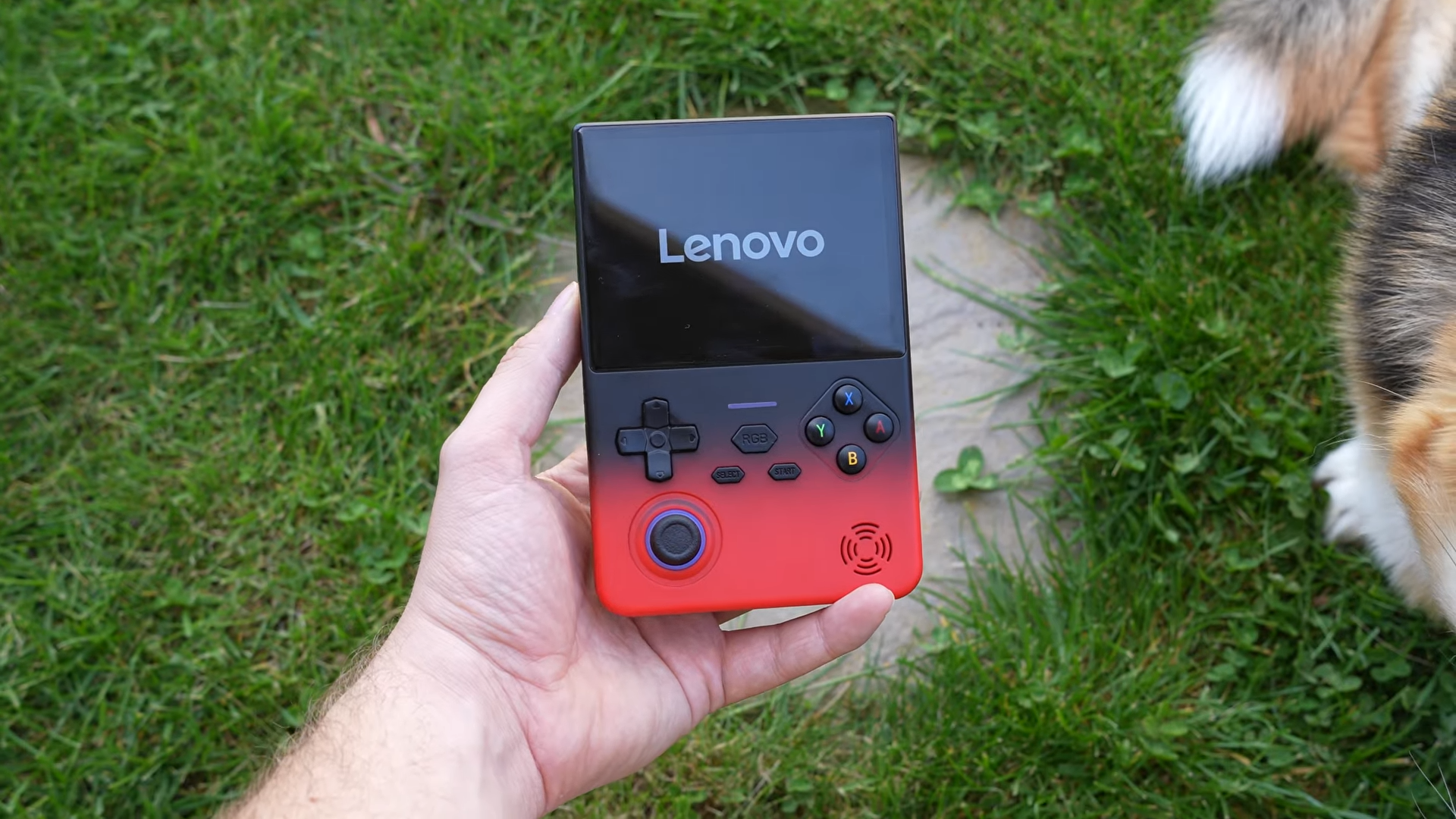
The sudden emergence of Lenovo-branded retro handhelds on Chinese retail platforms like AliExpress caught the attention of the gaming community. Carrying official corporate logos, genuine packaging, and a proprietary boot screen, the hardware initially raised suspicions of copyright infringement.
Priced at nearly $80, the console presents an unusual case of a tech giant entering the budget emulation market. This detailed analysis examines why this hardware feels like a massive misstep for a company of Lenovo’s stature.

Preloaded Games
Booting the system reveals more than 21,000 pre-installed titles representing classic intellectual properties from Nintendo, Sega, and Neo Geo. Major technology corporations typically avoid direct involvement with ROM distribution due to the strict legal protections surrounding these classic games. This product bypasses standard corporate compliance by preloading thousands of copyrighted games directly onto the included storage.

Cheap Materials and Major Design Flaws
Handling the device immediately reveals a physical shell constructed from thin, scratchy plastic that feels remarkably cheap. The texture closely resembles the brittle materials found on low-cost toys bundled with promotional magazines. The casing suffers from noticeable paint inconsistencies and uneven seams along the edges of the black-and-red gradient shell.

Structural flaws extend to the physical buttons, particularly the incredibly thin shoulder triggers that sit too close to their internal contacts. These triggers actuate with minimal pressure, frequently registering inputs under the mere weight of the console when placed on a flat surface. The primary D-pad also performs poorly, registering multiple directions simultaneously whenever it is pressed at a slight angle.

Ergonomic issues continue with the physical placement of the audio speakers directly beneath where a player’s thumbs naturally rest. This placement leads to muffled sound during standard gameplay, forcing users to adjust their grip constantly. Additionally, the housing around the analog stick is cut too wide, allowing internal RGB LED light to bleed through the gaps during gameplay.
Display and Software
The front of the handheld features a 4.5-inch IPS display sporting a crisp resolution of 1024×768. The panel provides excellent brightness and sharp text rendering, framed by pleasingly narrow bezels. Despite these strengths, the colors appear somewhat washed out, lacking the vibrant saturation found on competing budget screens.
The software experience relies on a custom Linux distribution paired with the popular Emuelec frontend. Navigating the system settings reveals leftover branding elements from the R36S, a completely different budget handheld. This leftover code indicates that the developers copied the entire operating system configuration directly from an existing competitor.

Failing to develop a proprietary user interface highlights how little effort went into personalizing this product. The manufacturer simply recycled existing open-source community software and slapped a corporate logo on the packaging. This lack of software optimization results in a generic user experience that fails to match the premium feel of official hardware.
Emulation Performance
Under the hood, an aging Rockchip RK3326 processor runs the system alongside 1TB of storage and a 4,000 mAh battery. While this processor handles classic 8-bit and 16-bit systems easily, it struggles immensely with more demanding 3D consoles. Testing Nintendo 64 titles like Cruis’n USA revealed unplayable framerates, severe audio stuttering, and massive slowdowns.
Graphical glitches plague other 3D titles, as seen during my testing of A Bug’s Life, which rendered as a chaotic mess of broken textures. The absence of a dedicated menu button prevents players from accessing emulator settings to tweak retro performance options. This limitation leaves users completely unable to optimize settings for difficult-to-run systems.

Performance stabilizes when playing less demanding consoles such as the PlayStation 1, Game Boy Advance, and Sega Mega Drive. These retro platforms run smoothly and look excellent on the sharp 4.5-inch aspect ratio. However, numerous competing devices retailing for under forty dollars can emulate these exact same systems with superior physical controls.
Final Thoughts — Price & Value
Priced at nearly $80, this licensed device fails to offer a compelling value proposition in a highly competitive market. Consumers can purchase superior handhelds from dedicated brands like Anbernic or Retroid for similar or even lower price points. The combination of cheap plastics, copied software, and terrible Nintendo 64 performance makes this product impossible to recommend to retro gaming enthusiasts.

A global technology leader like Lenovo should leverage its vast engineering talent to create high-quality, legitimate gaming products. Licensing their respected brand name to a low-tier white-label manufacturer damages their hard-earned reputation among passionate hardware fans. This disappointing console stands as a cautionary tale of corporate shortcuts in the modern retro gaming space.
