

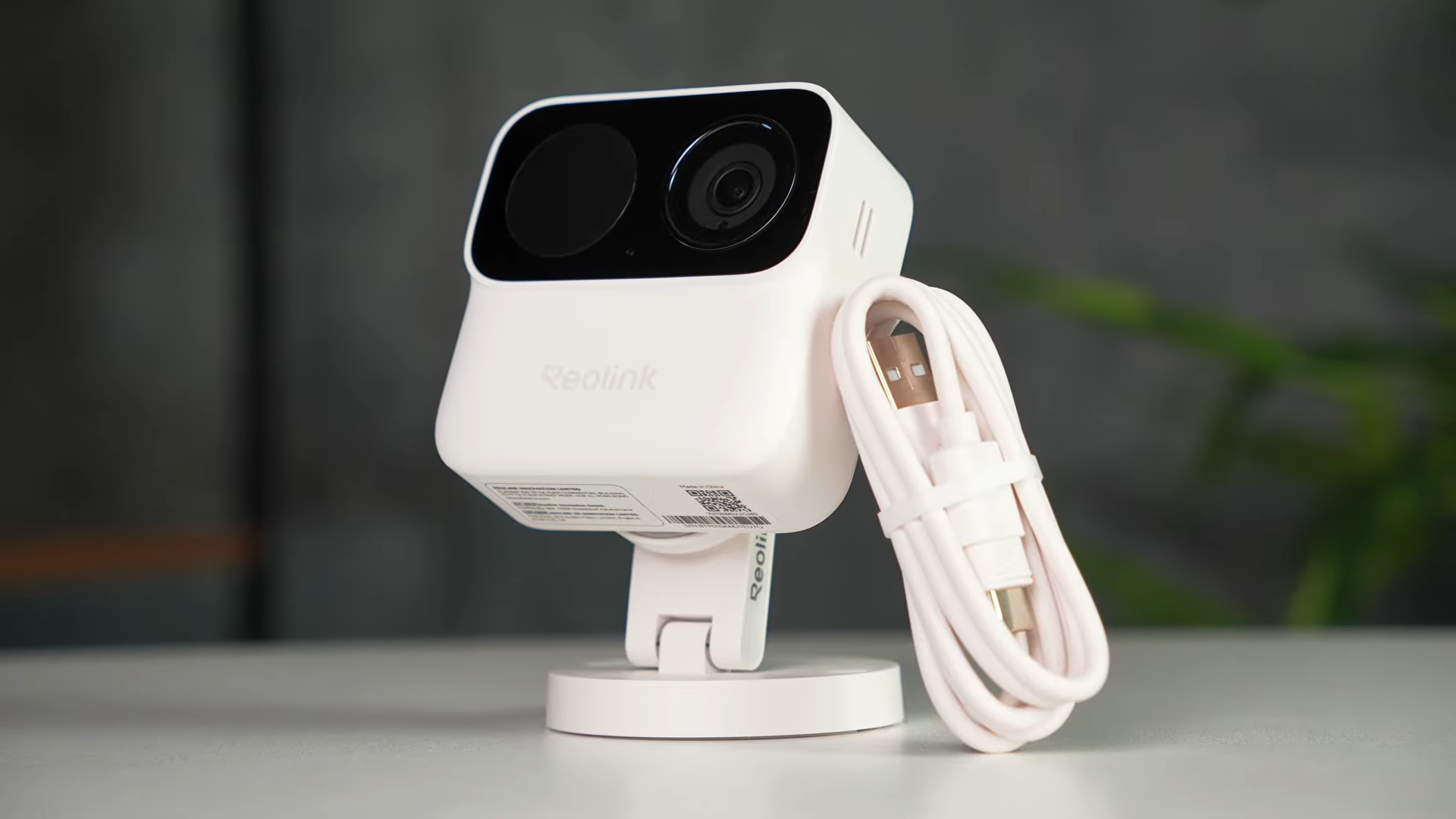
I have evaluated dozens of budget security cameras over my years at TechXReviews, and the industry has made impressive strides in eliminating frustrating setups. Most consumer-grade security systems still demand complex mounting procedures or lock the most basic features behind expensive monthly paywalls. The Reolink Argus MagiCam enters this crowded market as a highly portable, sub-$60 security solution designed to simplify home surveillance.
This tiny unit focuses on a highly versatile magnetic mounting system, enabling users to move the camera freely to target specific areas in seconds. Testing this device over several weeks has given me a clear picture of its capabilities, limitations, and how it holds up against industry benchmarks.

Unboxing and Build Quality
Opening the packaging reveals a straightforward collection of essential accessories, highlighting the lack of unnecessary clutter. Inside the box, I found the camera body, a magnetic bracket, a sticky magnetic mount pad, two AA lithium batteries, a USB-C cable, and the necessary installation screws. The inclusion of a mounting template offers a helpful guide for those who eventually choose to go down a more permanent installation route.

Evaluating the physical footprint reveals an incredibly tiny device that stands out in the outdoor camera category. Holding the camera highlights its lightweight design, weighing in at just 108 grams without the batteries installed. This miniature footprint makes it feel more like a compact, portable gadget than a traditional, bulky outdoor security unit.
Despite the plastic construction, the casing feels remarkably solid and features an IP67 weather resistance rating. Heavy rain and harsh outdoor elements should not pose a threat to this rugged little enclosure during regular usage. The combination of lightweight build and robust construction sets a positive foundation for its versatile mounting options.

The Power of the Magnetic Mount
The standout feature of this device is undoubtedly the magnetic mounting pad, which changes how users interact with home security. Adhesive backing allows you to stick the pad onto almost any flat surface before snapping the camera directly onto the magnetic base. This completely eliminates the need for drills, specialized tools, or permanent structural damage to your home.

Placing the unit in locations that normally require too much installation effort became a regular occurrence during my testing. I stuck the magnetic base to the side of my kitchen refrigerator to monitor the back door and keep tabs on my pets. Moving the camera to a different room required no tools, allowing me to sit the device on a shelf for temporary viewing.
Metal surfaces near the front door, such as metal door frames or railings, provide excellent mounting alternatives. Adjusting the viewing angle takes only a second, preventing users from feeling committed to a poorly framed shot. This unique physical flexibility makes the system ideal for tracking deliveries or quickly repositioning the camera to capture a better angle.

Simple Setup and Dual-Band Connectivity
Getting the device online through the companion Reolink application is an incredibly painless procedure. The app prompts you to scan the QR code located on the camera body, walking you through the remaining steps via clear on-screen instructions. The initial connection to the local network completes in just a few minutes, making it highly accessible for non-technical users.

Support for both 2.4 GHz and 5 GHz Wi-Fi bands is a welcome addition that elevates this device above many budget-tier competitors. Slower 2.4 GHz bands often clog up in busy households, so having access to the cleaner 5 GHz frequency ensures a snappier user experience. Live view streams load quickly, and retrieving recorded clips feels responsive when connected to the faster band.
Fine-tuning the settings within the application allows for deep customization of the security experience. Users can easily adjust detection sensitivity, toggle push notifications, and establish custom schedules to prevent unwanted alerts during the day. The interface layout remains intuitive throughout the adjustment process, keeping essential options within easy reach.

No-Subscription Local Storage Priority
Onboard person detection sets this model apart from many competing options in the sub-$60 price bracket. This localized processing filters out false alerts caused by blowing wind, passing shadows, or moving tree branches. You receive notifications only when an actual human presence is detected in the designated zone.

Consumer frustration with monthly cloud subscriptions is at an all-time high, making the local-first storage design of this camera highly appealing. Users can insert a microSD card up to 256 GB directly into the unit to store all triggered video footage. This ensures your security clips remain private and completely accessible without requiring an active monthly payment plan.
Integration with the wider Reolink ecosystem is possible for homeowners looking to centralize their security infrastructure. The camera communicates seamlessly with the Reolink Home Hub range, allowing users to consolidate multiple video feeds into a singular storage point. Most buyers will likely find that a standalone, high-capacity SD card provides more than enough storage space.

Saving money over the lifespan of a security camera is a major factor when evaluating budget smart home devices. Avoiding recurring cloud fees means the sub-$60 purchase price represents a true one-time investment. The absence of a paywall for core security functions makes this a highly consumer-friendly option in a market saturated with subscriptions.

Dual Power Options and Continuous Recording
Powering the device relies on two replaceable AA lithium batteries, which may seem slightly old-school at first glance. This design choice actually preserves the long-term reliability of the unit, as internal lithium-ion batteries inevitably degrade over time. Reolink claims a battery lifespan of up to nine months, though high-traffic areas will naturally drain the cells much faster.

Connecting a continuous USB-C power source completely changes the operational capabilities of this portable unit. Running the device on wired power unlocks true 24/7 continuous recording, transitioning the camera from a basic motion-activated sensor to a proper CCTV system. This represents a massive upgrade over standard battery-only units that can only capture short clips.
Having the freedom to choose between wireless convenience and continuous wired performance is a stellar design decision. Temporary surveillance points can run on battery power, while permanent front-door setups can utilize the USB-C port. This versatility ensures the hardware can adapt to your changing security needs over time.

Day and Night Video Performance
Capturing video at 1080p resolution delivers clean, usable footage for general home security purposes. Daylight video looks sharp enough to identify faces and read text, even though it lacks the cinematic clarity of 2K or 4K sensors. The 130-degree wide-angle lens does an admirable job of capturing a broad portion of the yard or room.

Recording frame rates differ depending on the selected power source, which is an important limitation to keep in mind. Battery power limits the video to 15 frames per second, while switching to USB-C power bumps the output to 20 frames per second. This lower frame rate results in slightly choppy, traditional security-camera motion rather than smooth cinematic video.
Nighttime recording relies on a single infrared LED that provides effective black-and-white night vision up to eight meters. The lack of a color night vision mode is a minor drawback, but the standard IR footage remains highly legible. Movement stays clear and lacks the blurry gray noise that often plagues cheaper sensors in low-light environments.

Smart Detection Without Paywalls
Tapping on a push notification immediately opens the companion application and takes you directly to the recorded event clip. The timeline interface allows you to scrub through the captured footage and download important clips directly to your phone. This entire notification and playback loop operates seamlessly without requiring a premium subscription plan.
Customizing your active monitoring zones helps eliminate nuisance alerts from public sidewalks or busy streets. The software allows you to paint specific motion zones and adjust schedules to match your daily routine. Having access to these advanced filtering options for free makes managing the system day-to-day incredibly simple.

Reolink Argus MagiCam vs Blink Outdoor 4
Comparing this unit to the popular Amazon Blink Outdoor 4 reveals several critical differences in installation and daily utility. The Blink Outdoor 4 is designed as a traditional mount-and-leave camera that requires permanent screws. In contrast, the MagiCam prioritizes quick-release magnetic mounting, making it far better suited for temporary placement and frequent repositioning.

Power management strategies also set these two devices apart when comparing their long-term capabilities. Blink claims a massive two-year battery life under minimal usage, but it cannot perform continuous 24/7 recording even when plugged into USB power. The MagiCam easily transitions into a true continuous recording device when connected to a continuous USB-C cable.
Smart features and ecosystem support present another clear division between the two competing security cameras. Blink heavily encourages subscription sign-ups to unlock cloud storage and smart person alerts, while Reolink offers local storage and person detection for free. Furthermore, the MagiCam supports both Alexa and Google Assistant, whereas Blink remains heavily restricted to the Amazon Alexa ecosystem.

Final Thoughts — Price & Value
Evaluating the market position of this compact security camera reveals an exceptional value proposition for budget-conscious homeowners. Retaining a price tag below the $60 mark makes this device an incredibly affordable entry point into smart surveillance. The absence of ongoing subscription fees ensures that the initial purchase price remains the actual total cost of ownership.
Buyers seeking ultimate wireless flexibility, local data control, and reliable smart alerts will find this unit hard to beat. Minor trade-offs like the lower 15 frames per second capture rate are easily forgiven when weighing the overall feature set. For those who want a capable, snap-it-anywhere security solution, this camera delivers exactly what it promises.
