

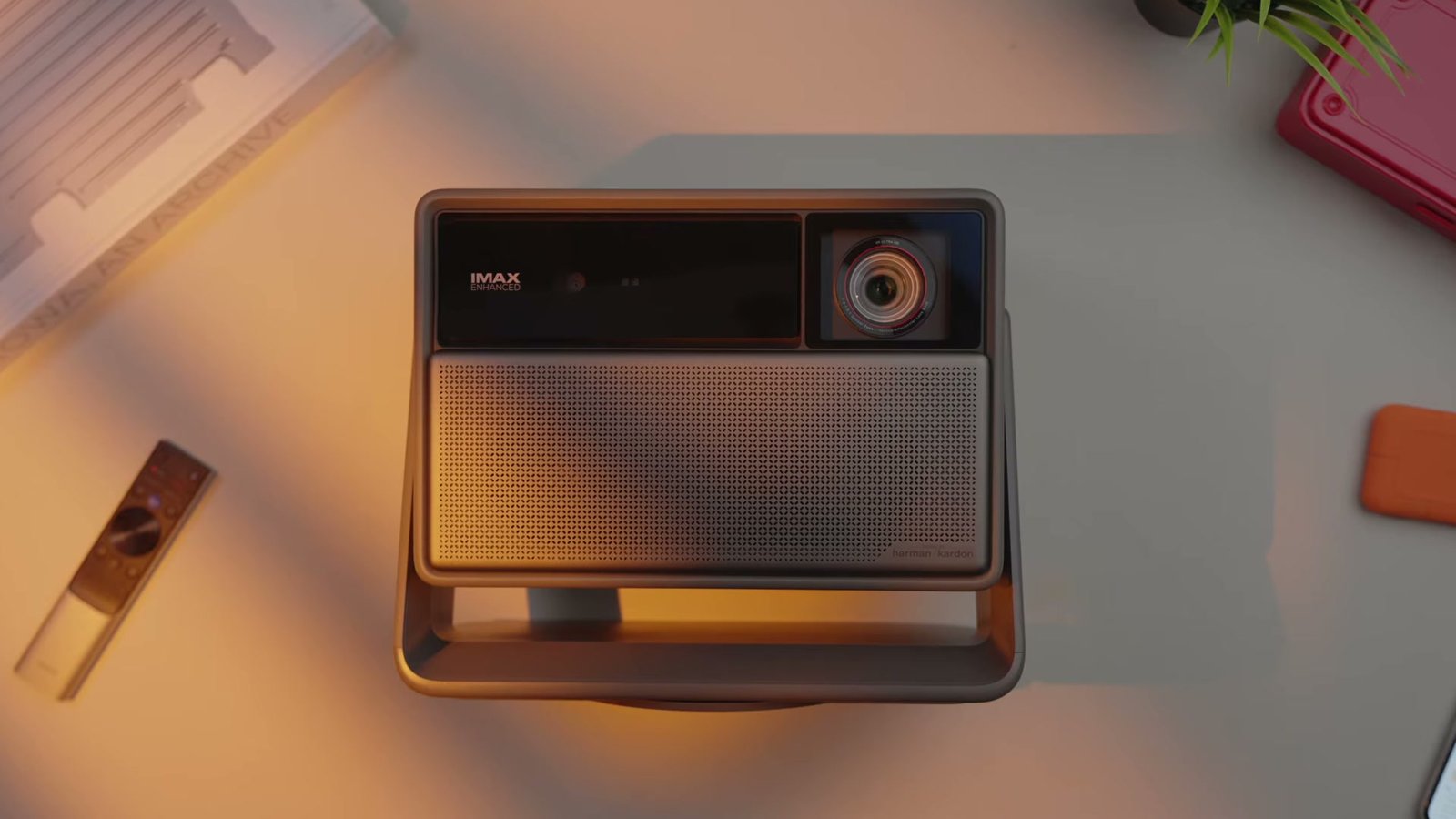
Most lifestyle 4K projectors look great only after you tape blackout curtains over every window in the house. The moment afternoon sunlight hits the living room wall, contrast washes out and colors turn milky. Priced at $2,999 MSRP (with international listings on Amazon and AliExpress), the XGIMI Horizon 20 Max aims directly at that daytime limitation with a massive 5,700 ISO Lumens RGB triple-laser light engine.
I tested the XGIMI Horizon 20 Max across bright afternoon living-room viewing, calibrated dark-room Dolby Vision movies, mechanical lens-shift alignment, and fast 120Hz/240Hz console gaming. Beyond raw brightness, XGIMI finally brings true optical zoom and wide mechanical lens shift into a gimbal-mounted lifestyle body. Here is how it performs in real-world home theater testing.
XGIMI Horizon 20 Max
The Good (Pros)
- Blistering 5,700 ISO Lumens cuts through daytime ambient light
- True ±120% vertical and ±45% horizontal mechanical lens shift plus 1.2–1.5:1 optical zoom
- 110% BT.2020 RGB triple-laser color with Dolby Vision and IMAX Enhanced
- Ultra-low 1ms 1080p/240Hz VRR gaming plus 24W Harman/Kardon audio
The Bad (Cons)
- Steep $2,999 flagship price tag
- Large, heavy chassis designed for fixed shelf or ceiling placement
- Noticeable fan hum at max brightness in quiet rooms
Quick Navigation (Table of Contents)
Technical Specifications
| Specification | XGIMI Horizon 20 Max |
|---|---|
| Resolution & Chip | 4K UHD (3840 × 2160) via 0.47" DMD |
| Light Source | RGB Triple-Laser, 5,700 ISO Lumens |
| Contrast & Color | 20,000:1 Dynamic (DBLE), 110% BT.2020 |
| HDR & Certifications | Dolby Vision, HDR10+, HDR10, IMAX Enhanced |
| Optics & Lens Shift | 1.2–1.5:1 Optical Zoom, ±120% Vertical / ±45% Horizontal Lens Shift |
| Gaming Performance | 1ms @ 1080p/240Hz, VRR, ALLM |
| Audio | Dual 12W Harman/Kardon Speakers (24W Total) |
| Smart OS & Price | Google TV with Built-In Netflix, $2,999 MSRP |
Industrial Design, Gimbal Stand & Rear I/O

Unlike boxy dedicated theater projectors that demand a heavy wall mount, the XGIMI Horizon 20 Max integrates a sturdy U-shaped gimbal cradle directly into its metallic chassis. You can tilt the projector smoothly upward or downward on a high rear shelf without stacking books under the front feet. The matte bronze-gray finish and perforated front speaker grille give it an understated, living-room-friendly presence.

Flipping around to the back reveals a clean, well-spaced port array seated above wide horizontal cooling vents. You get dual HDMI inputs for consoles and streaming boxes, USB ports for local 4K media playback, optical audio out, and a dedicated power socket. Everything sits recessed enough that cables route neatly down behind a media console or shelf.

5,700 ISO Lumens Brightness & Triple-Laser Picture Quality
At 5,700 ISO Lumens, the XGIMI Horizon 20 Max sits in rare territory for a single-chassis lifestyle projector. Even with blinds cracked open during late afternoon daylight, a 120-inch projected image stays punchy, saturated, and completely watchable for sports or YouTube. Once the lights go down, that sheer brightness headroom translates into searing specular highlights across HDR10+ and Dolby Vision films.
Color coverage hits 110 percent of the BT.2020 gamut thanks to its RGB triple-laser architecture, delivering rich reds and deep emerald greens without a color wheel's rainbow artifacts. XGIMI's DBLE dynamic contrast boosts perceived black depth up to 20,000:1, keeping letterbox bars dark in moody cinema scenes. IMAX Enhanced certification also ensures proper aspect-ratio framing and punchy film grain reproduction out of the box. Combined with intelligent wall-color adaptation and auto-focus, picture setup takes under ten seconds.
Mechanical Lens Shift, Optical Zoom & Google TV

Digital keystone correction always throws away pixels and leaves a faint gray border around your screen, which is why XGIMI's optical hardware matters so much here. The Horizon 20 Max packs both a 1.2–1.5:1 optical zoom lens and true mechanical lens shift offering ±120 percent vertical and ±45 percent horizontal travel. In my living room setup, shifting the image cleanly onto a high wall screen required zero digital cropping and zero sharpness loss.

Software runs smoothly on Google TV with native certified Netflix, YouTube, Prime Video, and Disney+ baked straight into the home screen. You no longer need an external streaming stick hanging off the back just to watch 4K Dolby Vision streams. The brushed-aluminum remote feels weighty in hand and includes dedicated shortcuts for quick focus, settings, and voice assistant commands.
240Hz VRR Gaming & 24W Harman/Kardon Sound

Gamers get serious specs alongside the cinema credentials, headlined by 1ms input lag at 1080p/240Hz with full VRR and ALLM support. Swinging through dense cityscapes on console felt remarkably snappy on a 120-inch wall without distracting motion blur or frame tearing. Even at native 4K/60Hz, responsiveness stays tight enough for action titles and casual couch co-op. Switching into Game Mode happens automatically via ALLM the moment you wake a PlayStation 5 or Xbox Series X.
Built-in audio comes courtesy of dual 12W Harman/Kardon drivers totaling 24 watts of clean output. Dialogue cuts through clearly above ambient room noise, and there is enough mid-bass warmth that you do not immediately need a soundbar for casual shows. Dedicated movie nights still benefit from an eARC soundbar or AVR, but the onboard speakers easily outperform typical projector drivers. You can also pair Bluetooth headphones or external speakers when watching late at night.
💡 Recommended Alternatives: Compare this flagship against the newer XGIMI Horizon 30 Ultra Max review, read our head-to-head JMGO N1S vs N3 Ultimate 4K comparison, or browse all tests in our Projectors Hub.

XGIMI Horizon 20 Max 4K Triple-Laser Projector
- 5,700 ISO Lumens RGB Laser
- ±120% V / ±45% H Lens Shift
- Dolby Vision & IMAX Enhanced
- 1ms 240Hz VRR + 24W Audio
Final Thoughts — Price & Value
At $2,999, the XGIMI Horizon 20 Max is undeniably a flagship investment, but its hardware justifies the tier. Combining 5,700 ISO Lumens of RGB triple-laser punch with true optical zoom, wide mechanical lens shift, and 240Hz VRR gaming solves the biggest compromises of lifestyle projectors. You no longer have to choose between daytime usability and lossless optical placement. For dedicated living-room theaters, it replaces a massive flat-panel TV without permanently dominating your wall.
Buy it if you want a true living-room TV replacement capable of 120-inch+ cinema in daylight and ultra-responsive big-screen gaming at night. Skip it only if your budget sits under $1,500 or you need a compact battery-powered unit for travel. Most users will appreciate having native Google TV, Netflix, and 24W Harman/Kardon audio built into one tidy gimbal unit. Check current availability on Amazon or compare global stock on AliExpress.
Frequently Asked Questions
Can the XGIMI Horizon 20 Max be used in a bright room during the day?
Yes, its 5,700 ISO Lumens RGB triple-laser engine is bright enough to maintain punchy colors and legible contrast even with ambient daylight in the room. Pairing it with an ALR (ambient light rejecting) screen pushes daytime performance even closer to a large-format QLED TV. For dark-room cinema, you can dial back laser power for quieter fan operation and deeper blacks.
Does the XGIMI Horizon 20 Max have optical lens shift?
Yes, it features true mechanical lens shift offering ±120 percent vertical and ±45 percent horizontal adjustment alongside a 1.2–1.5:1 optical zoom lens. Unlike digital keystone correction, optical lens shift moves the projected image physically without cropping pixels or softening 4K detail. That makes off-center shelf or ceiling mounting far cleaner.
Is the XGIMI Horizon 20 Max good for PS5 and PC gaming?
Yes, it supports 1ms input lag at 1080p/240Hz along with Variable Refresh Rate (VRR) and Auto Low Latency Mode (ALLM). Fast-paced shooters and action titles feel crisp and responsive across huge 100-to-150-inch projections. You also get native 4K/60Hz support for cinematic single-player adventures.
