

The mechanical keyboard market has experienced a massive shift with the rise of Hall Effect magnetic switches and Rapid Trigger technology. This premium gaming feature used to demand premium pricing, keeping casual competitive players from experiencing its benefits. Budget manufacturers have slowly begun to democratize this technology, making lightning-fast switches available to a much broader audience.
Enter the Aula Win 68HE, a magnetic switch keyboard priced at an astonishing $39.99 on platform marketplaces like Amazon. I have spent significant time testing this ultra-affordable gaming peripheral to analyze whether a real Hall Effect keyboard can truly deliver professional-grade performance at such a minuscule price point.

Chassis Design and Structural Integrity
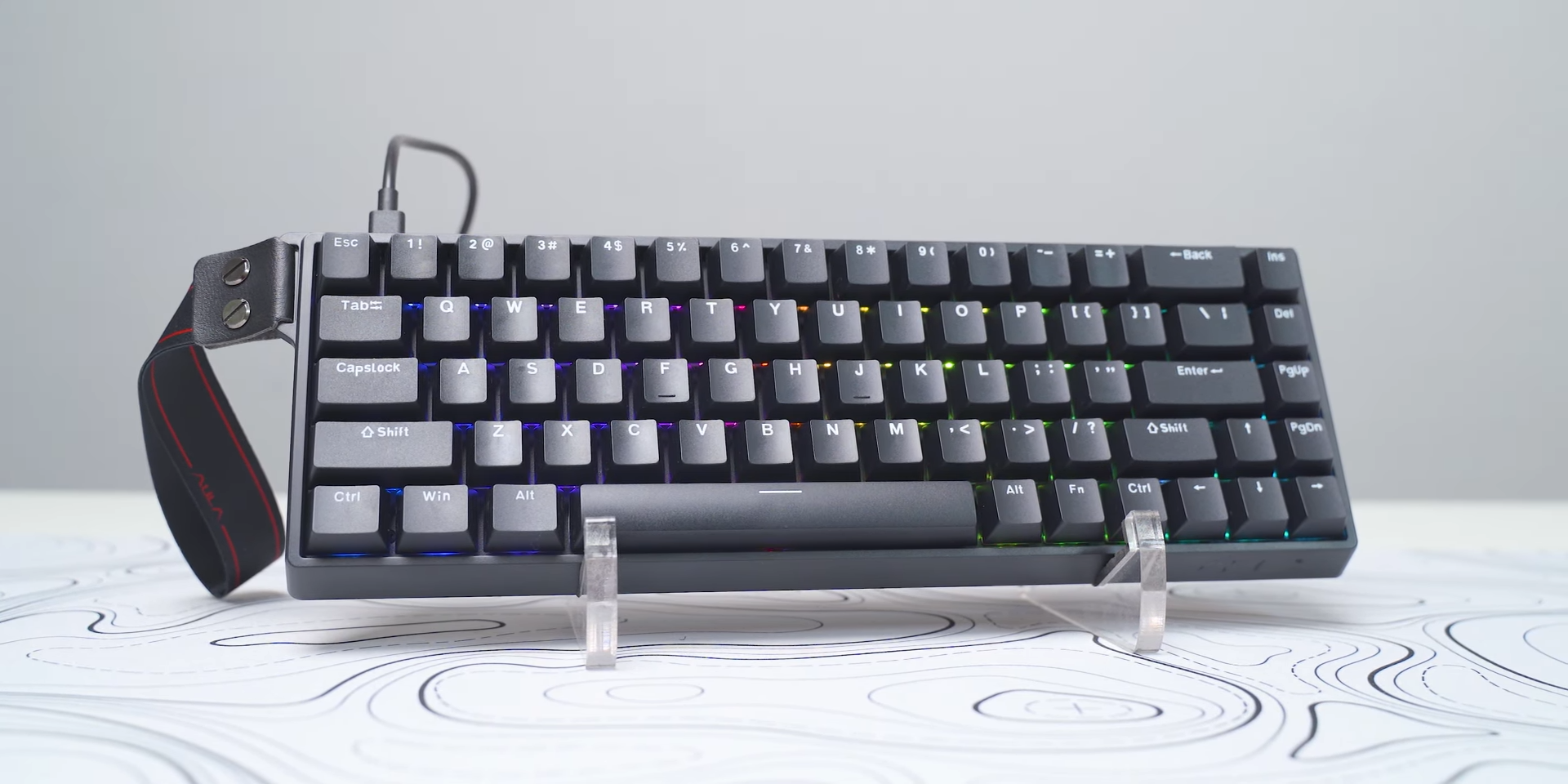
To meet the aggressive budget target, the exterior casing is constructed entirely of plastic rather than aluminum. Despite this choice of material, the chassis feels remarkably rigid, resisting flex and creaking even under heavy pressure. A distinctive fabric strap accent sits on the left bezel, heavily inspired by the design language of the premium Wooting keyboards, which you can easily remove to achieve a cleaner look.
Flipping the keyboard over reveals four thick silicone feet that prevent sliding on your desk, flanking a neatly debossed Aula spider logo in the center of the bottom case. The USB-C port resides at the top-left edge, making cable routing straightforward for standard setups. My only minor complaint lies in the final finishing process, as the plastic edges along the seams feel slightly sharp and could have been smoothed down more during manufacturing.

Keycaps and Stabilizer Tuning
High-quality keycaps are crucial for tactile consistency, and the double-shot PBT keycaps included here exceed expectations for an entry-level keyboard. Utilizing an OEM profile, the keycaps feature sharp, legible legends that resist fading over prolonged gaming sessions. Typing on these keycaps reveals a satisfying texture that does not collect oils or become slippery over time.
Stabilizer performance frequently serves as the deciding factor between a cheap keyboard and a premium one. Testing the stabilizers reveals that the spacebar and Enter keys feel exceptionally smooth and well-lubricated right out of the factory. The backspace key exhibits a very slight ticking noise, though this minor imperfection does not detract from the surprisingly solid acoustic performance.

Magnetic Switch Mechanics and PCB Design
Underneath the keycaps sit the custom-branded L-Box magnetic switches, built with a highly stable box-stem design that minimizes key wobble. The keyboard utilizes a south-facing, hot-swappable PCB paired with an aluminum switch plate and an integrated plate foam layer. Interestingly, there is no foam layer directly resting on the PCB surface itself, a design choice that serves an important technical purpose.
Standard mechanical keyboards often use thick foam layers to modify sound acoustics, but magnetic Hall Effect sensors require an unobstructed path to measure magnetic flux accurately. Adding dampening materials between the switch and the sensor can interfere with the precise magnetic readings needed for Rapid Trigger. The engineered clean space ensures that the controller can detect subtle vertical movements without signal degradation.

Rapid Trigger and Advanced Gaming Software
Gaming performance depends heavily on the companion software, which is easily accessible via the official Aula website despite the keyboard being a very recent release. The control panel allows players to adjust actuation points, configure dynamic keystrokes, and fine-tune individual key sensitivities. Testing shows that the physical bottom-out distance measures precisely at 3.6 millimeters, matching the software detection limits flawlessly.
Competitive players will be thrilled to find full support for SOCD, commonly known as Snap Tap or simultaneous opposite cardinal directions. This feature overrides overlapping inputs, allowing you to quickly alternate movements in games like Counter-Strike, Valorant, or Apex Legends without releasing the opposing key. Holding down the left movement key and tapping the right key instantly prioritizes the newer input, giving you a massive advantage in tactical strafing.

Visual enthusiasts are not left out either, as the board features fully customizable RGB backlighting that shines brightly through the keycap gaps. The lighting effects remain fluid and highly customizable through the software, proving that Aula did not cut corners on aesthetic features. Experiencing such responsive hardware alongside advanced software capabilities at this price range is incredibly rare.
Internal Teardown and Construction Analysis
Opening the case is a simple process because the structure is held together by only six screws, making it much easier to disassemble than competing budget models like the M-Lion M68. Separating the plate from the bottom case reveals two thin dampening foam pads resting in the lower housing to absorb hollow resonance. The PCB traces look incredibly clean, boasting pristine solder joints that reflect high-quality manufacturing standards.

Unlike keyboards that utilize a flexible daughterboard, the USB-C port on this model is soldered directly onto the main PCB. This rigid connection provides a very stable plug-in feel, though it means there is no gasket-style flex in the typing experience. Everything inside is arranged logically, confirming that this keyboard is a unique design and not simply a rebranded version of other cheap models on the market.
Final Thoughts — Price & Value
This release has completely disrupted the market for entry-level gaming peripherals. Priced at just over $39.99, the keyboard delivers accurate magnetic sensor tracking, robust build quality, and fully functional Rapid Trigger performance without compromising on software utility. Gamers looking to experience advanced features like Snap Tap without spending hundreds of dollars will find this to be an unmatched proposition.
Investing in this peripheral offers an incredibly high return on performance per dollar spent. Minor complaints like slightly sharp plastic edges are easily overlooked when weighed against the excellent PBT keycaps, smooth stabilizers, and highly responsive firmware. This outstanding device sets a new benchmark for what budget gaming hardware can achieve.
