

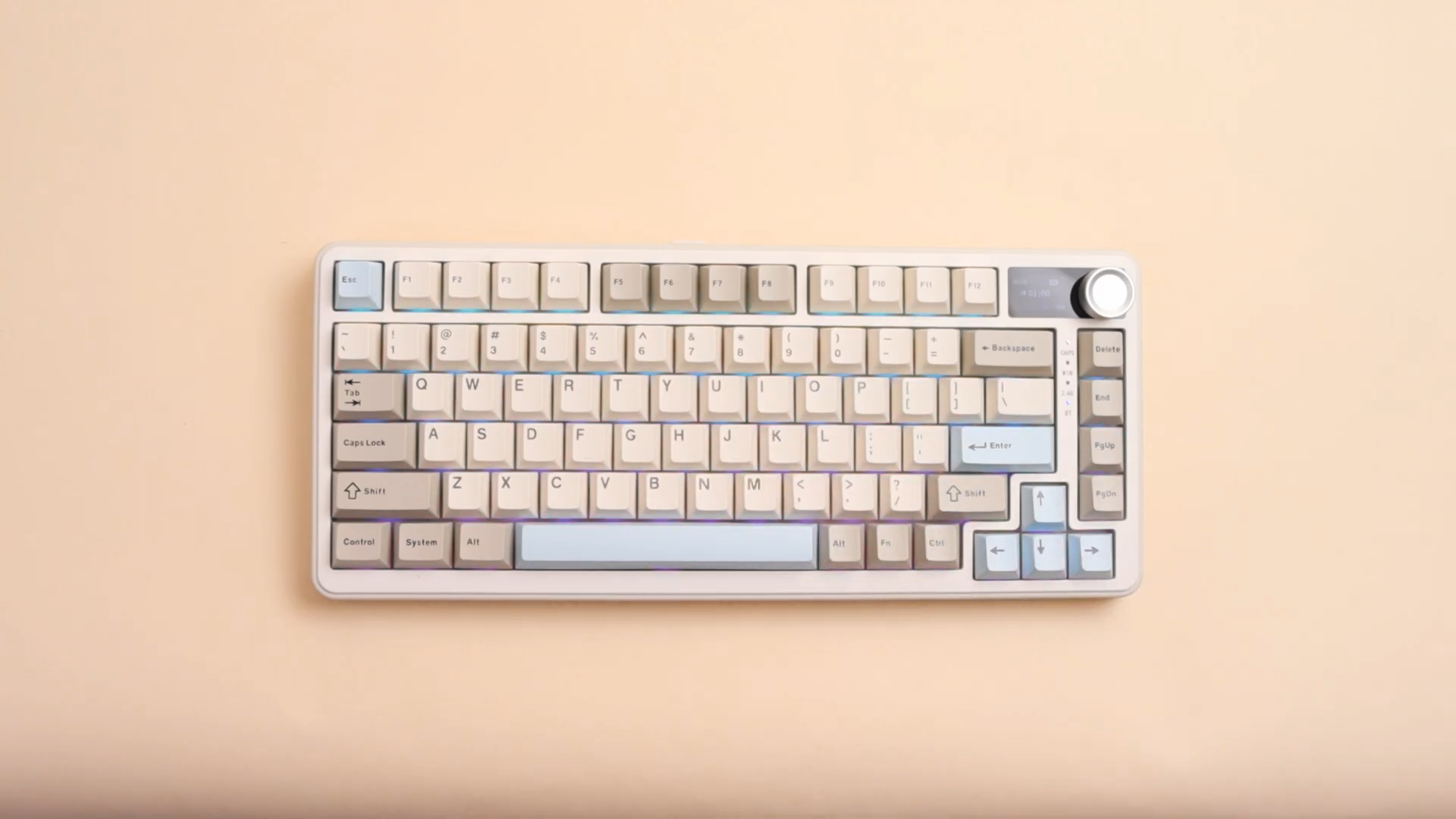
Finding a highly functional mechanical keyboard under the hundred-dollar mark used to require significant compromise from consumers. The Yunzii B75 Pro Max arrives as a compelling contender in this competitive landscape, targeting newcomers and experienced enthusiasts alike who want premium features without high costs. Priced at just $85 USD, this budget-oriented peripheral offers an impressive feature set that matches more expensive options on the market.
Spending two weeks put this specific unit through its paces to see how well it functions as a daily driver. Yunzii sent this unit over for a complete, unbiased evaluation, allowing me to dissect its performance, structural integrity, and software implementation. The goal is to determine the value this third iteration in the B75 lineup brings to your desk.

A Detailed Look at Case Design and Build Quality
This keyboard presents a standard, exploded 75% layout, housed inside a wedge-shaped plastic enclosure that feels surprisingly light at just under one kilogram. The specific colorway evaluated features a clean baby blue and cream aesthetic, though buyers can select from black, beige, white heart, or pink heart configurations. A ratcheting, clickable control knob sits prominently in the top-right corner, accompanied by a bright TFT screen that remains highly readable even in dimly lit environments.

Durability remains solid for a plastic construction, as my two weeks of testing revealed no physical dings, scuff marks, or noticeable deck flexing. The structural integrity is maintained using internal clips and tabs to lock the top and bottom case components together, eliminating the use of traditional screws. This assembly method makes physical modifications highly risky, as attempting to pry open the case could easily snap the plastic clips.
The rear of the chassis houses a USB Type-C port, a physical connection toggle, and a dedicated storage slot for the wireless 2.4 GHz dongle. Flipping the keyboard over reveals two-stage rubber feet that allow for customized typing angles on your desk. While the design leans toward the generic side, it offers a functional and clean layout that serves its purpose well for daily productivity.

PCB Features and Screen Customization
The internal electronics represent a major highlight of this board, featuring a 5-pin hot-swappable PCB with vibrant, south-facing RGB lighting. Yunzii implemented full VIA compatibility for key mapping, ensuring that enthusiasts can customize their layout without relying on bloated proprietary software. Managing the integrated TFT screen is handled smoothly through a dedicated web application, allowing users to load custom static images or animated GIFs effortlessly.

Wireless performance relies on a massive 8,000 mAh internal battery that supports tri-mode connectivity options including Bluetooth, 2.4 GHz wireless, and wired USB-C. Testing across multiple devices, including a tablet and a desktop PC, demonstrated a stable, lag-free connection with zero stuttering during extended sessions. The screen interface itself toggles between a home page showing battery life and connection status, a photo screen, and a dedicated GIF display page.
Out-of-the-box stabilizer tuning is exceptionally clean, eliminating the typical rattle associated with budget-tier mechanical keyboards. The integration of high-end PCB features with web-based screen customization creates a streamlined user experience. This execution shows that Yunzii prioritized functional stability alongside aesthetic customization.

Plate Mounting and Typing Sound Profile
The mounting architecture utilizes a standard gasket mount system, placing flexible silicone tabs along the edges of a polycarbonate plate with flex cuts. Despite this structural choice, the typing experience does not offer a significant amount of physical bounce or flex during use. This stiffness occurs because Yunzii packed the internal case cavity to the brim with sound-dampening foam to refine the overall acoustic output.

Modern keyboard designs have turned gasket mounting into the standard standard, often mimicking the sound of traditional tray mounts when heavily dampened. Choosing this setup results in a typing feel that is neither too harsh nor overly stiff, providing a comfortable medium for typing. Acoustic resonance is managed exceptionally well, completely preventing any hollow echo or metallic pinging from bouncing inside the plastic housing.
Typing enthusiasts will appreciate how clean the keystrokes sound, even without executing aftermarket modifications. The combination of the polycarbonate plate and dense foam layers focuses the acoustic energy directly into the switches. This design priority ensures that the keyboard sounds cohesive and premium right out of the retail packaging.

Performance of Candy Linear Switches and PBT Keycaps
The typing experience is elevated by the inclusion of Yunzii Candy linear switches, which come pre-lubed directly from the factory. These switches operate with a light 45-gram actuation force and bottom out at 51 grams, delivering a smooth, fluid keystroke. Acoustically, these linear switches produce a deeper sound signature that finishes with a noticeably sharp, clean return on the upstroke.

Keycap selection remains another strong point, as the included set features thick PBT double-shot keycaps styled in a classic beige colorway with baby blue accents. The legends are crisp, thick, and well-aligned, offering a premium aesthetic that closely resembles high-end GMK aftermarket sets. Having access to keycaps of this caliber on a pre-built budget keyboard is a massive benefit for buyers.
Testing these switches and keycaps in tandem confirmed that they work beautifully together without requiring immediate upgrades. The keycap profile feels natural under the fingers, while the pre-lubed stems of the Candy linears prevent scratchiness. The bundle also includes extra keycaps to accommodate macOS layouts, alongside a handful of extra switches for backup use.

Final Thoughts — Price & Value
The Yunzii B75 Pro Max establishes itself as a highly capable, feature-packed entry into the crowded budget mechanical keyboard market. Priced at a modest $85 USD, it delivers tri-mode wireless connectivity, a customized TFT screen, a physical control knob, and high-quality double-shot PBT keycaps. While the lightweight plastic case and difficult clip-together disassembly present some limitations for dedicated modders, the stock performance requires zero adjustments to enjoy a premium typing experience.
The phrase “cheap keyboards are getting good” perfectly encapsulates what this product offers to the consumer. Finding a board that combines a functional screen, extensive VIA compatibility, and pre-lubed switches at this price point was nearly impossible just a few years ago. This keyboard represents a stellar recommendation for any newcomer looking to experience the best elements of the mechanical keyboard hobby without breaking the bank.
