

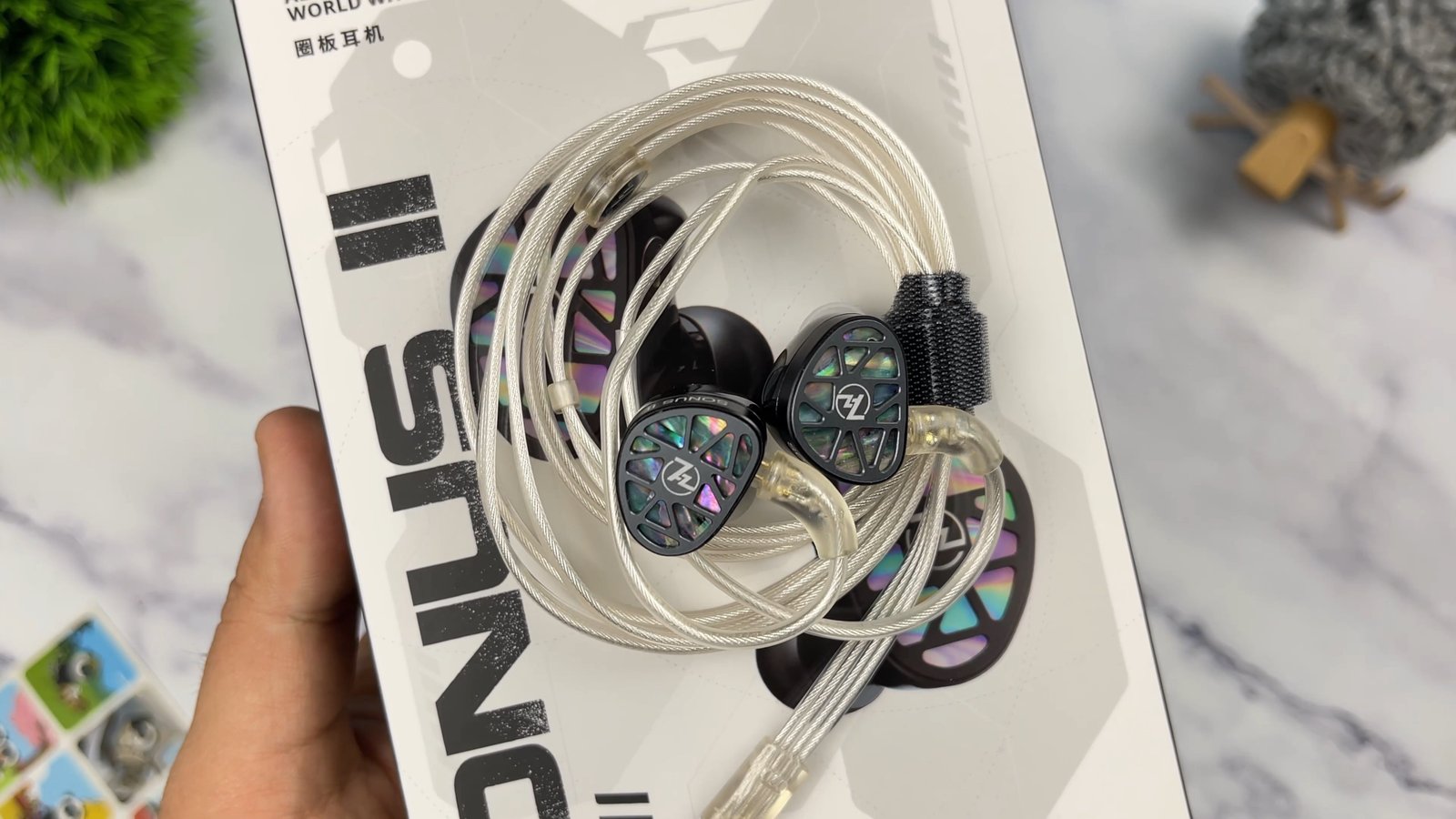
I spent the past week testing the 7Hz Sonus II to see if this direct successor actually justifies an upgrade in the sub-$100 bracket. Retailing for $80 on AliExpress and Linsoul, 7Hz completely reworked the internal architecture from the original version, replacing the balanced armature with a custom high-frequency planar driver while upgrading the low end to a custom dynamic unit.
The promise here is clear: planar transient speed and micro-detail resolution anchored by genuine dynamic bass slam. However, specs on paper don’t always match real-world performance, especially when driver efficiency and internal acoustic damping come into play.
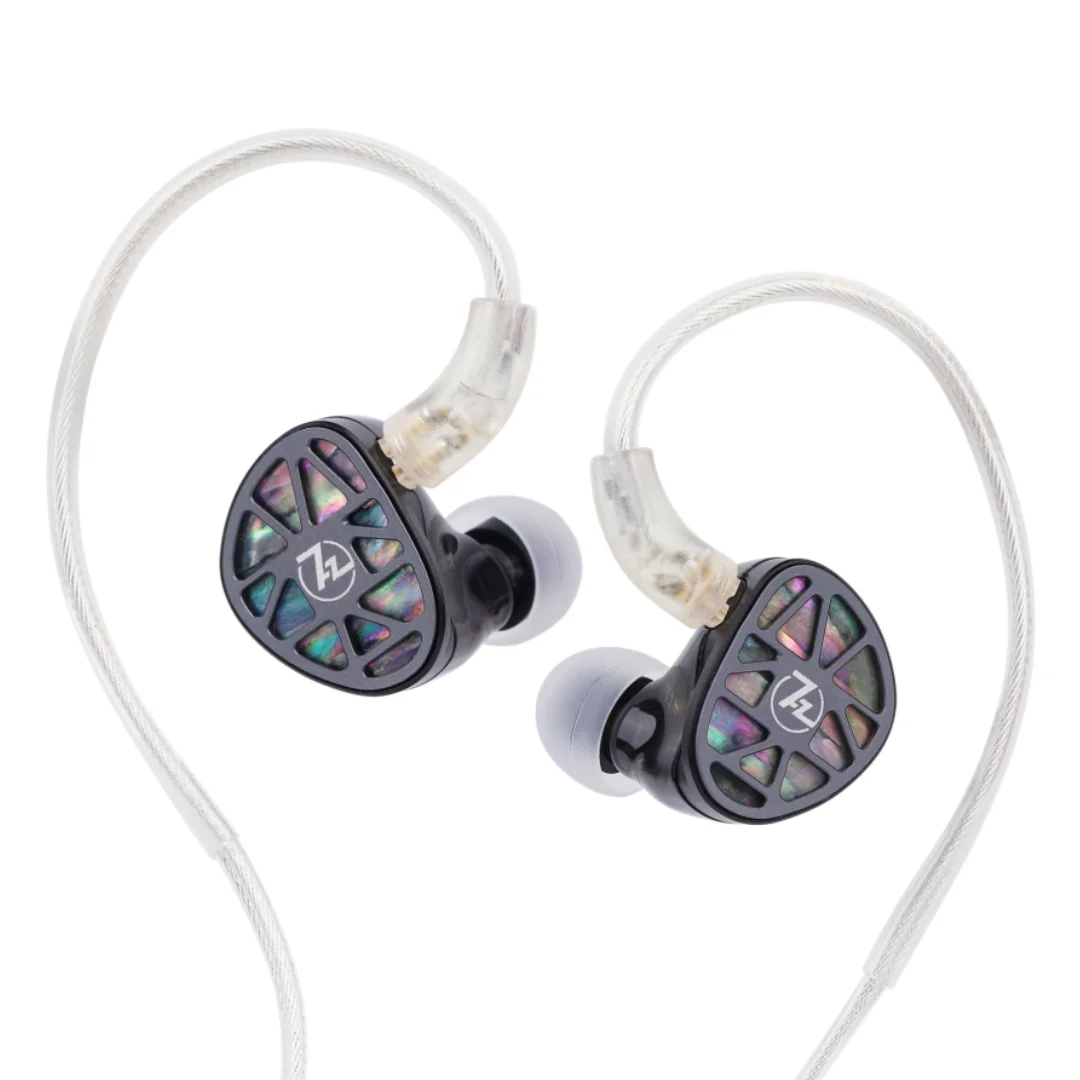
7Hz SONUS II Dynamic + Planar Hybrid HiFi Wired Earbuds IEMs with High-Purity Silver-Plated OFC Cable
Unboxing, Cable Hardware, And Storage
The unboxing experience brings a practical set of accessories tailored for everyday audiophiles. The package includes eight pairs of silicone ear tips, combining standard bullet-style tips with wide-bore sets resembling KBEAR 07 and 08 designs. These tips vary slightly in core stiffness and bore diameter, allowing you to experiment with acoustic sealing and treble suppression right out of the box.
The stock cable is a high-purity silver-plated oxygen-free copper (OFC) wire arranged in a 4-strand flat ribbon weave totaling 196 individual strands. It terminates in a semi-transparent 3.5 mm single-ended plug with a functional aluminum chin slider and an engraved 7Hz Y-split. The 0.78 mm 2-pin connectors sit flush against the earphone body, making aftermarket cable swaps straightforward, though including a balanced 4.4 mm option would have made more sense for this specific driver setup.
Storage is handled by an ivory-white leatherette pouch styled like a vintage coin purse. The material feels supple and keeps the shells separated from abrasive items like keys inside a pocket. However, the soft enclosure lacks internal structural reinforcement, meaning it offers minimal crush protection against heavy drops or compression inside a loaded backpack.
Shell Engineering, Ergonomics, And Fit
The physical housing uses a hybrid two-piece structure consisting of a medical-grade resin inner chamber and an aerospace-grade aluminum rear faceplate. The aluminum plate undergoes sandblasting and anodization, featuring geometric accent patterns that reflect light dynamically as your viewing angle changes. A fine metal acoustic mesh insert is embedded into the outer faceplate, giving the set a distinct look, though it can trap pocket lint and skin oils over long-term daily carry.

In terms of dimensions, the housing is noticeably thicker through the rear body than the original Sonus and larger overall than the Crinacle Nightfall. Despite the thicker profile, the anatomical inner curve distributes pressure evenly along the concha and antihelix without creating hot spots. The aluminum nozzle extends at an aggressive inward angle, allowing deep canal insertion that anchors the monitors firmly during head movement.

Passive noise isolation is above average once you dial in the correct tip size, effectively attenuating ambient chatter and low-frequency rumble. The shells sit slightly proud of smaller ears due to the added depth required for the planar acoustic chamber, but weight distribution remains well-balanced. Standard listening sessions lasting two to three hours caused no mechanical fatigue or physical discomfort.

The Power Trap: Why Source Gear Dictates Performance
Do not let the 29 Ohm impedance fool you into treating this like an easy-to-drive pair of budget earbuds. Because that 108 dB rating is calculated per volt rather than per milliwatt, the real-world efficiency requires serious current to overcome driver resistance. Plugged straight into an integrated PC audio card or a standard 30mW to 50mW smartphone dongle, the Sonus II delivers a flat, hollow, and congested presentation that sounds cheap and unrefined.
When underpowered, the dynamic driver loses its mechanical control, resulting in sluggish mid-bass slam and a recessed, lifeless vocal range. The high-frequency planar driver also suffers, sounding choked and metallic rather than fast and airy. A standard laptop output simply lacks the voltage swing and current reserve to bias both drivers simultaneously.

Hooking the monitors up to a dedicated desktop amplifier or a capable high-output DAC delivering 130mW or more completely transforms the acoustic output. Bass transients snap into place with physical authority, the dynamic headroom expands dramatically, and micro-details emerge from a silent, black background. If you plan to buy the Sonus II, you must factor in a capable portable amplifier or balanced dongle to hear what the hardware is actually engineered to do.
Low-End Slam, Sub-Bass Depth, And Bleed
The custom dynamic driver reaches down into the sub-bass register with genuine authority, generating physical vibration on tracks featuring heavy 808 drops and electronic synthesizers. Kick drums land with sustained impact, moving actual air thanks to the N52 magnet and long-throw voice coil design. The low end avoids the sterile, ultra-fast decay of pure planar sets, offering natural acoustic decay that breathes life into modern pop, hip-hop, and EDM mixes.
Mid-bass punch delivers solid tactile slam on acoustic drum tracks and rock bass lines. It retains adequate texture and mechanical speed, tracking complex polyrhythms without falling behind the tempo. The low-end presentation is unabashedly energetic, leaning toward an engaging V-shaped signature rather than a flat, ruler-straight studio reference.

The compromise lies in the lower-midrange transition around 250 Hz to 300 Hz. On tracks with congested arrangements, that deep sub-bass vibration can occasionally cast a warm shadow over the lower mids, softening the fundamental clarity of baritone vocals. Listeners hunting for a dry, surgically lean bass response will find this low end slightly too thick for pure monitoring work.
Midrange Articulation And Vocal Forwardness
The transition between the dynamic driver and the planar unit yields a clean, forward vocal presentation that pulls singers into the foreground. Male vocals benefit from the warmth transferred from the upper bass shelf, retaining realistic chest resonance and weight on acoustic and folk tracks. Fundamental instrument lines like rhythm electric guitars and pianos cut through the mix with good body.
Female vocals are pushed aggressively forward, driven by a pronounced rise through the 2 kHz to 4 kHz pinna gain region. This elevation injects immediate excitement, making breath details and vocal nuances exceptionally easy to track. However, this forward presentation exposes mastering flaws, making compressed or poorly recorded vocal tracks feel slightly shouty at higher volumes.

Acoustic instruments and backing harmonies occupy distinct spatial positions across the stereo field without clumping into the center. The triple acoustic damping system keeps driver intermodulation low, preserving instrument separation during heavy choruses. The presentation stays energetic, though listeners sensitive to forward upper mids will want to keep playback volumes moderate.
Planar Treble: Speed, Air, And The 8K Peak
Handing high frequencies over to a dedicated planar magnetic driver provides immediate technical dividends in transient speed. Cymbals, snare drum overtones, and acoustic guitar plucks resolve with crisp attack and zero mechanical overhang. The driver tracks microscopic details and rapid percussive decay far better than the balanced armature found in the first Sonus.
Acoustic measurements and critical listening reveal a distinct energy peak centered around the 6 kHz to 8 kHz region. This spike injects deliberate brilliance and edge into the sound, creating an immediate sensation of hyper-clarity. The trade-off is an occasional metallic glare that makes sibilant consonants like “S,” “Sh,” and “T” hit with sharp bite on aggressive rock and pop recordings.

Air extension past 10 kHz is stable, providing an open atmosphere without rolling off prematurely into darkness. The treble tuning clearly prioritizes presence, bite, and transient sharpness over a forgiving, laid-back presentation. Those who crave maximum detail and energetic percussion will appreciate the technical bite, but treble-sensitive users will need narrower-bore tips or foam to soften the edge.
Soundstage Width, Imaging, And Layering
The internal acoustic chamber implementation creates a virtual soundstage that expands comfortably outside the listener’s head. The horizontal stage offers wide panning capabilities, giving orchestral movements and gaming environmental cues plenty of breathing room. Stage depth is respectable, allowing clear physical layering between the lead vocalist in front and backing instruments behind.
Instrument localization is pinpoint and stable across the entire frequency range. You can easily track individual guitar riffs, synthesized arpeggios, and percussive hits across dense arrangements without them blurring together. The planar treble unit’s sheer mechanical speed keeps complex passages organized, preventing the sound from dissolving into a chaotic wall of noise.

The overall resolution punches above the $80 price tag, competing directly with hybrid sets closer to the $120 mark. It extracts background reverb trails, studio room ambiance, and secondary instrumental textures with impressive competence. While some of that detail retrieval is artificially highlighted by the 8 kHz peak, the underlying driver speed provides genuine resolving power.
Final Thoughts — Price & Value
The 7Hz Sonus II delivers exceptional technical value for $80 by successfully mating a punchy dynamic driver with a blisteringly fast planar unit. The aerospace-grade aluminum faceplate, 24K gold-plated acoustic cavities, and silver-plated OFC cable make it look and feel like a more expensive product. The anatomical fit ensures an excellent acoustic seal, even if the soft leather storage case offers zero crush resistance and the decorative mesh will collect debris over time.

Acoustically, the monitor offers an engaging, highly detailed experience characterized by deep sub-bass vibration, forward vocal clarity, and expansive stereo imaging. However, the prominent 6 kHz to 8 kHz treble spike and lingering vocal sibilance mean this is not a forgiving or relaxing set for treble-sensitive listeners. It demands high-quality, well-mastered tracks to sound its best.
The defining factor remains power. If your plan is to plug these earphones straight into an everyday smartphone jack or basic laptop port, skip them entirely because low-powered sources leave them sounding flat and muffled. But if you already own a dedicated desktop amplifier or a high-output portable DAC capable of pushing clean current, the Sonus II delivers a dynamic, high-resolution package that easily justifies its asking price.
