

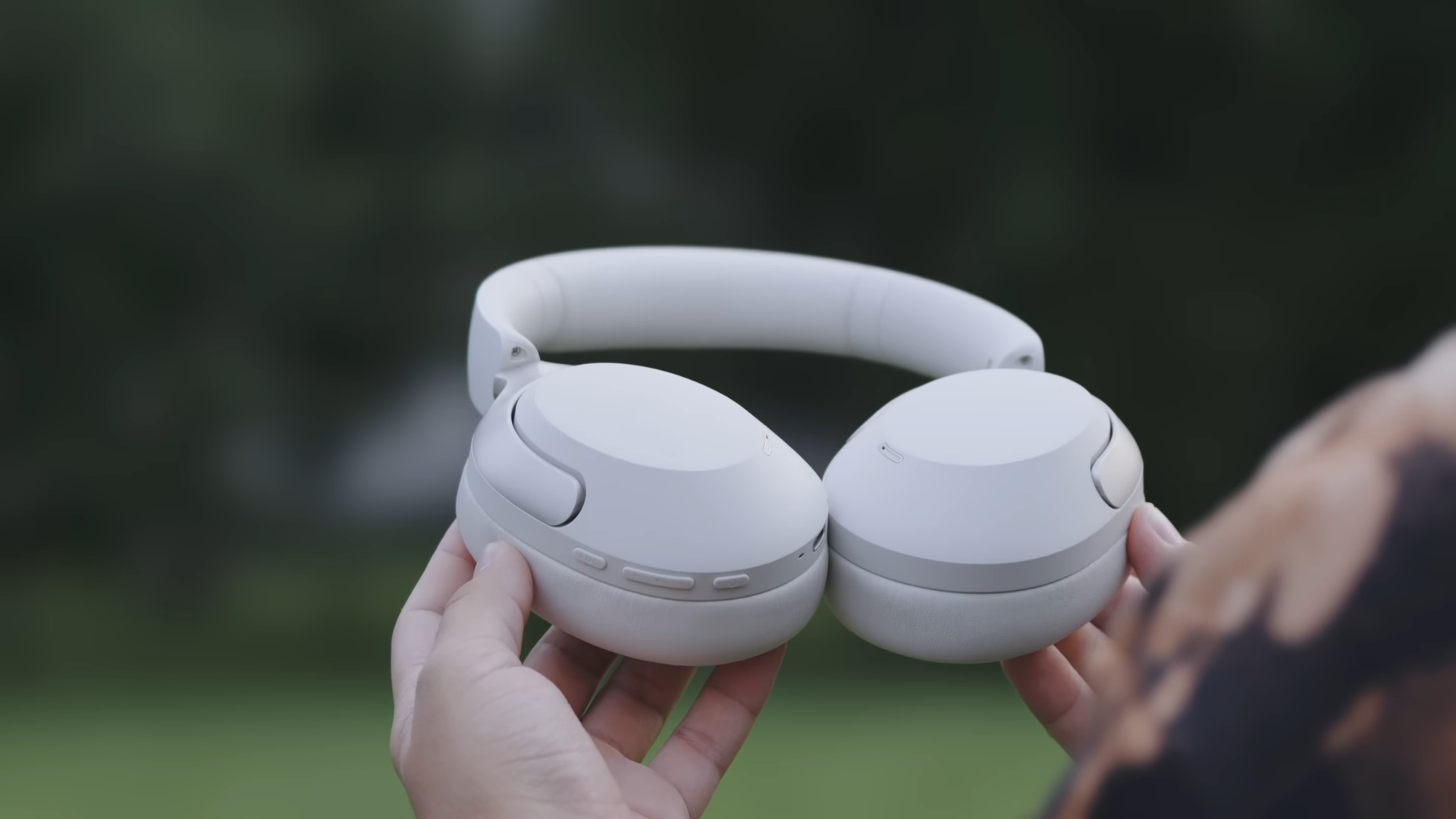
Today, I am diving deep into the performance of the Haylou S40, a pair of budget-friendly, full-sized wireless headphones that arrive with an incredibly ambitious spec sheet. On paper, these headphones promise active noise cancellation up to 50 dB, spatial audio with head tracking, a highly advanced Bluetooth 6.0 chip, and up to 90 hours of total battery life.
Promotional banners often paint a perfect picture of seamless connectivity and pristine high-fidelity audio, but real-world testing quickly separates marketing hype from actual utility. I have spent significant time testing the Haylou S40 to evaluate its acoustic signature, active noise cancellation effectiveness, ergonomic comfort, and companion application.
In this detailed review, I will share my hands-on findings to help you determine whether this headset deserves a spot on your desk or if you should look toward more established competitors in this crowded market segment.

Design, Build Materials, and Ergonomic Fit
Available in both black and white color options, the Haylou S40 sports a clean, minimalist design that closely resembles its predecessors. The entire outer shell is constructed from plastic with a smooth, matte finish that resists fingerprints reasonably well. The ear cushions and the headband padding are wrapped in a soft, hypoallergenic protein leather.
Despite the clean appearance, the overall assembly quality leaves room for improvement, especially when compared directly to what rival brands offer at a similar price point. No official IP rating is provided, so avoiding rainy walks while wearing this headset is highly recommended.

The folding design allows the earcups to collapse inward for easier storage, but the hinges at the folding joints are made of plastic. Fortunately, the structural arc running through the core of the headband is reinforced with metal, providing much-needed durability.
The headband itself is quite narrow and exceptionally soft, which helps distribute the vertical pressure on your skull. The ear cushions are equally plush, though they exhibit a very weak memory foam recovery effect. The ability to easily remove and replace the ear pads is a major design positive, extending the potential lifespan of the hardware.

Finding a comfortable fit is easy thanks to the highly adjustable ear cups, which pivot smoothly to match the shape of your head. The clamping force is moderate, keeping the headset secure during light movement without causing headaches, though physical activities like running are not recommended. The headband features a ten-step adjustment mechanism that locks into place with acceptable feedback, even if it does not feel entirely heavy-duty.
Passive isolation is average, and the simple ventilation design means your ears will likely sweat during warm weather. When resting the headset around your neck, the cups rotate comfortably out of the way without restricting head movement.

Controls and the Touch Interface
The physical layout of the Haylou S40 splits its functionality across both earcups, though the left side remains completely bare of buttons or ports. The right cup houses a 2.5 mm jack designed specifically for the detachable microphone, alongside a Type-C port for charging and wired audio. Three rubberized mechanical buttons are arranged on the edge: a volume adjustment rocker, an ANC toggle, and a multi-function power button.
These physical controls handle pairing activation, track skipping, and cycling through the active noise cancellation modes. The rubberized texture makes it easy to locate the buttons by touch, and they register commands instantly with distinct system tones that cannot be turned off.

A specialized touch-sensitive panel sits on the outer face of the right earcup to manage advanced functions. A single tap or hold controls playback, manages incoming phone calls, and activates the “Open Chat” mode. This particular feature acts as an instant transparency shortcut, lowering the volume of your music while funneling in environmental sound. Removing your hand from the touch sensor instantly deactivates the transparency mode and restores your music to its original volume. Learning the exact positioning of the touch zone requires some practice, but the system is highly responsive once you get used to it.
Dual-Driver and Active Noise Cancellation Performance
Internally, the Haylou S40 employs an intriguing dual-driver configuration inside each earcup. A large 40 mm dynamic driver is paired with a secondary 20 mm tweeter, a setup designed to separate the low-end frequencies from the treble.
Active noise cancellation is rated up to 50 dB, offering three manual intensity levels in addition to an adaptive environmental mode. The standard ANC modes perform admirably, keeping background hiss to an absolute minimum while successfully dampening low-frequency rumbles. The adaptive mode occasionally struggles to calculate the correct level of suppression in rapidly changing environments, but it remains usable for daily commutes.

The noise reduction capability is more than sufficient to eliminate predictable, monotonous sounds like office hums, street traffic, or distant engines. Navigating noisy environments like shopping malls is comfortable, but riding the subway requires raising the music volume past 75% to drown out the screech of train tracks.
The built-in transparency mode functions well enough to hold quick conversations, though the incoming voices sound somewhat muffled and unnatural. A dedicated wind noise reduction setting is also accessible, which effectively prevents harsh wind buffeting from ruining your listening experience outdoors.

Connectivity and Latency
Equipped with a Bluetooth 6.0 chip, the Haylou S40 supports standard SBC and AAC codecs alongside the high-resolution LDAC protocol.
Indoor range is impressive, maintaining a stable audio stream through two solid walls without any dropouts. Walking outdoors can occasionally introduce brief signal stutters or audio freezes, suggesting the wireless antenna is sensitive to external interference. Video playback on platforms like YouTube is perfectly synced when using the low-latency gaming mode. True gaming performance fails to meet the advertised 80-millisecond benchmark, making the headset less ideal for competitive shooters.

To achieve the lowest possible audio delay, utilizing the included Type-C cable for a direct wired connection is your best option. The headset also supports full multipoint connectivity, allowing you to link up to two source devices simultaneously for easy switching.
There are no built-in wear detection sensors, meaning your media will not auto-pause when you take the headphones off. Power is supplied by a 650 mAh internal battery, which takes roughly two hours to charge completely. While real-world testing shows slightly shorter runtimes than the advertised battery claims, the longevity remains impressive, and a quick ten-minute charge yields about three hours of playback.
Microphone Audio Testing
Voice capture on the Haylou S40 can be handled in two distinct ways, starting with the built-in microphone array. These internal mics utilize environmental noise cancellation to filter out background distractions during standard phone calls. In quiet indoor settings, the internal microphones perform adequately, capturing legible vocals with a typical compressed wireless quality. Transitioning to noisy outdoor environments or busy roads causes the noise-canceling algorithm to struggle, often swallowing parts of your speech in an effort to suppress background din.

The secondary option is the included external boom microphone, which plugs directly into the 2.5 mm jack on the right cup. Despite the physical proximity of the boom mic to the user’s mouth, the actual recording quality is disappointing.
Testing reveals a thin, low-fidelity vocal reproduction that actually sounds worse than the internal microphone array. Most callers prefer the tone of the built-in microphones over the detachable boom arm, making the external accessory largely redundant. For reliable voice communication, sticking to the integrated internal mics is highly recommended.
App Integration, Spatial Audio, and Equalizer
Deep customization is managed through the Haylou Sound companion app, which is available on both Android and iOS platforms.
The application itself feels unpolished, featuring poor language translations and a slightly clunky user interface that desperately needs software updates. The home screen displays the current battery level of the headset and allows you to toggle the ANC and transparency settings. The app also hosts a six-axis spatial audio feature designed to track your head movements. Enabling this dynamic spatial mode locks the soundstage to your initial head position, though the processing severely degrades the overall audio resolution.

Selecting the high-resolution LDAC codec automatically disables the spatial audio feature, the low-latency game mode, and the multipoint connection option. The sound tab offers five pre-configured equalizer profiles, alongside a custom parametric equalizer for manual tuning. The default presets are unimpressive, but the physical drivers respond beautifully to manual EQ adjustments, allowing you to easily correct the frequency response. The “sound market” tab within the app consistently fails to load, pointing to unfinished backend development. Despite these app bugs, the software remains essential for installing future firmware updates.
Final Thoughts — Price & Value
The Haylou S40 presents a compelling mix of advanced features and noticeable compromises that reflect its aggressive pricing. On one hand, having access to a dual-driver acoustic system, LDAC support, and highly capable active noise cancellation at this price point is impressive. The sound profile can be tuned to deliver punchy, engaging bass and clear vocals, making the hardware punch above its weight class. Long battery life and the inclusion of a convenient touch-to-mute transparency mode add genuine daily utility.
On the other hand, several areas reveal where corners were cut to meet the budget target. The reliance on cheaper plastic for the folding joints, the lack of a protective carrying case, and the poor performance of the external microphone are notable drawbacks. Additionally, the clunky companion app and the occasional wireless stutters outdoors keep this device from achieving true greatness. These issues prevent the headset from delivering a flawless premium experience, reminding users of its budget-oriented design.

Ultimately, purchasing the Haylou S40 makes sense if you find it on a deep promotional sale. It represents a solid entry-level option, but it faces incredibly stiff competition from alternatives like the Ugreen HiTune Max 5C, the QCY H3 Pro, or the Edifier W820NB. Anyone seeking a more rugged build or a polished companion app should weigh these competing options carefully before buying. Trying these headphones in person is always recommended to ensure the physical fit and sound profile match your personal preferences.
