

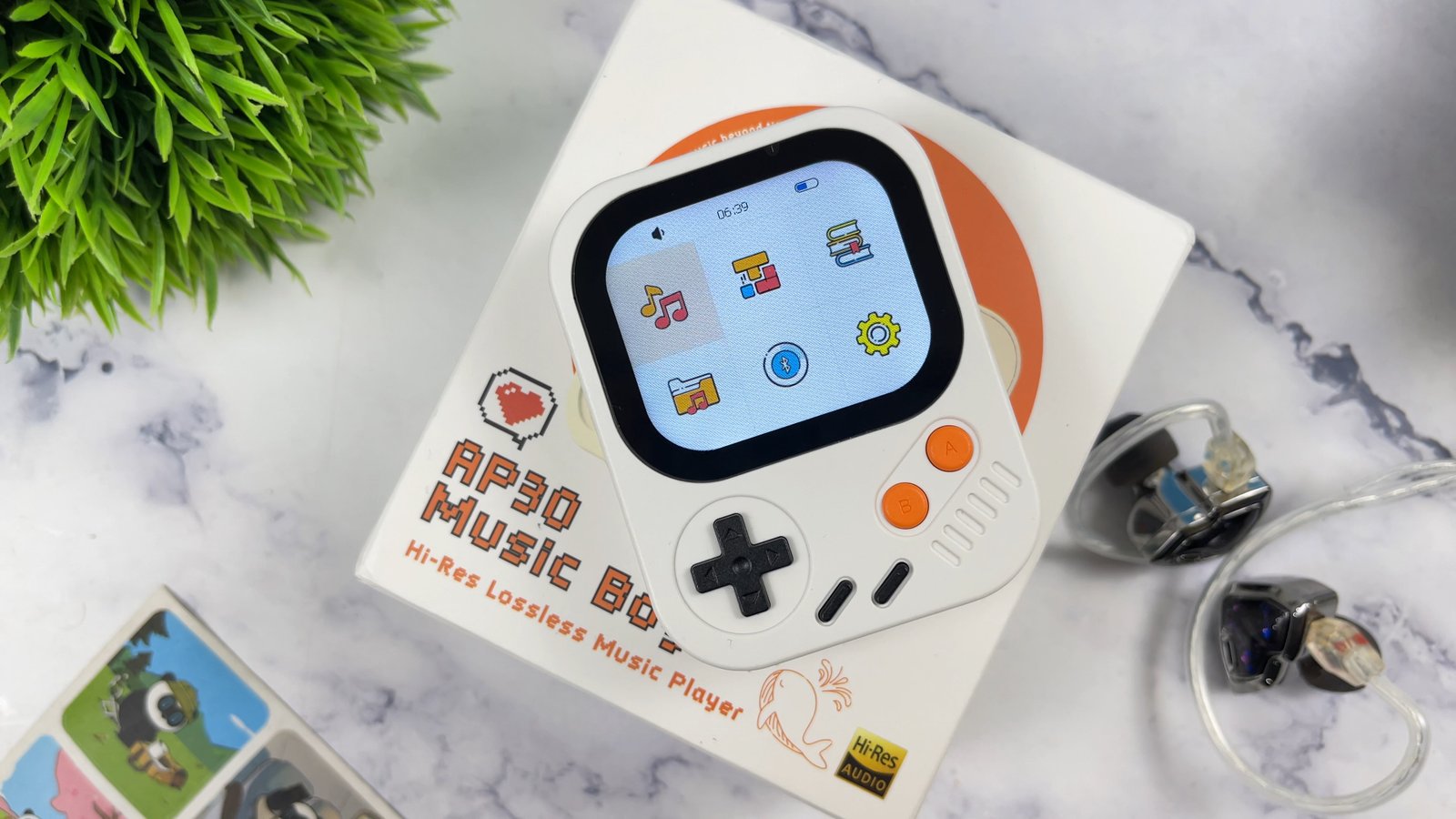
The portable audio market has spent years refining high-resolution performance, but modern digital audio players have increasingly settled into an uninspired routine of heavy, black touchscreen slabs running bloated Android software. Hidizs attempts to break this monotony with the AP30 Music Boy, a handheld player openly inspired by retro handheld consoles like the Game Boy Color. Offered in both a lightweight translucent plastic edition and a CNC-machined aluminum chassis, it emphasizes analog physical controls and lightweight portability over expansive streaming features.
Pricing reflects an accessible entry tier for offline audio enthusiasts. During its Kickstarter launch, early bird pricing started at $85 for the plastic model and $93 for the CNC aluminum variant, with full retail pricing scaling up toward approximately $120 to $130.
Retro Industrial Design and Physical Controls
The physical footprint of the AP30 Music Boy is compact, measuring roughly 50 mm by 68 mm and fitting neatly into the palm of a hand or a coin pocket. Hidizs intentionally skipped the conventional touch interface in favor of a 2.0-inch non-touch IPS screen paired with physical switches. Navigation is handled through a classic directional pad, tactile A and B buttons, start/select toggles, and an integrated Japanese ALPS analog volume wheel that doubles as the power switch.

The mechanical feedback of the buttons delivers a firm, tactile click that reinforces the nostalgic gaming aesthetic. While the translucent plastic versions show off the internal board and battery layout, the aluminum version brings structural rigidity and dense hand-feel. The casing also features retro speaker-grille styling and includes an external snap-on MagSafe case with insertable magnets, allowing users to physically piggyback the unit onto the back of a modern smartphone.
Hardware Architecture and Connectivity
Under the chassis, the audio pipeline is powered by a Cirrus Logic CS43198 DAC paired with an RT6863 amplifier module. File decoding handles up to PCM 24-bit/192 kHz and native DSD256. The base of the unit hosts a USB Type-C port alongside dual analog outputs: an unbalanced 3.5 mm single-ended jack delivering 61 mW per channel at 32 ohms, and a 4.4 mm balanced output rated at 137 mW per channel.

Wireless connectivity is handled via Bluetooth 5.3, but its functionality is strictly limited to transmitting audio out to wireless earbuds using basic SBC compression, with no reception capability or high-resolution codecs like LDAC. Storage relies on external microSD cards up to a strict ceiling of 256 GB, as the unit contains no onboard flash memory for personal media.
Operating System and Interface Navigation
The player runs on a proprietary, non-Android lightweight firmware dubbed HiBy OS/Hide OS, managed by a dedicated Rockchip processor. Boot times are virtually instantaneous, bypassing the lengthy warm-up routines and background service overhead associated with Android-based players. The primary interface is organized into a clean grid of six core destinations: Music Library, Games, E-Book reader, File browser, Bluetooth settings, and System setup. Primary interactions rely on the A button to confirm actions and the B button to retreat through menus.

And I’m not gonna lie, the built-in retro mini-games are ridiculously charming. Hidizs didn’t just throw in one gimmick; they loaded this thing with a full retro arcade suite. You get a faithful Tetris falling-block clone, classic Snake, a Box Pusher puzzle game, Brick Breaker, Tank Battle, and even Minesweeper and Sudoku. Is playing Tetris on a tiny two-inch display completely unnecessary for a dedicated audiophile DAP? Yes! Did I catch myself playing it while listening to my favorite tracks? Absolutely, and it makes the entire device feel alive.

When you dive into the actual media player side, you get a clean “Now Playing” interface complete with album art and track info. But here’s where you need to be prepared for the realities of non-touch navigation. If you pop in a two-hundred-fifty-six gigabyte micro SD card packed with thousands of songs, scrolling through a massive artist list from A to Z with only a directional pad takes some serious thumb endurance.

On top of that, the media player currently lacks native M3U playlist importing and on-device playlist building, meaning you’ll want to organize your tracks cleanly into computer folders beforehand. The now-playing screen has some quirky button mapping, where the D-pad won’t adjust volume—you have to reach for that physical side wheel—and quick-menu access is restricted to certain playback screens.
Battery Life and Power Management
Internal energy is supplied by a built-in 1200 mAh lithium-polymer battery, visible through the rear shell on the translucent edition. Under standard wired playback conditions driving low-impedance in-ear monitors through either the 3.5 mm or 4.4 mm output, the player yields between 10 to 12 hours of active listening. If you switch to the internal Bluetooth 5.3 radio for wireless output, battery endurance drops to approximately 8 hours per charge.

Replenishing the internal cell requires roughly 60 minutes via the bottom-mounted USB Type-C connection. The power draw remains minimal, allowing users to top off the battery quickly using standard 5V mobile chargers, power banks, or computer USB ports. The lean operating system avoids phantom battery drain in standby, ensuring the device retains charge across multi-day intervals when powered down.
External USB DAC Functionality
Plugging the AP30 directly into a PC or smartphone enables asynchronous USB DAC decoding. The MagSafe accessory facilitates an all-in-one stack against a phone backplate, though the combined thickness is substantial. When establishing the USB connection, the player presents a prompt requiring the user to confirm USB Audio Decoding within a brief multi-second window; missing this timing causes the device to default to standard charging or firmware-transfer modes.

Once locked into external decoding, hardware volume control shifts directly to the host source. The AP30’s physical dial becomes inactive, leaving volume attenuation entirely in the hands of the connected phone or computer. For desktop listening or high-res phone bypass, output latency remains low and clean, operating identically to standard portable dongle DACs.
Audio Performance and Amplification Limits
Sound reproduction leans clean, uncolored, and reference-neutral. The Cirrus Logic CS43198 delivers clear midrange articulation, natural vocal presence, and crisp upper-frequency extension without sharp sibilance. The internal DSP suite includes high and low gain steps, five digital reconstruction filters—including Non-Oversampling (NOS) and Fast/Slow roll-offs—six EQ presets, and an adjustable 5-band equalizer with ±6 dB gain ranges. The balanced 4.4 mm port exhibits an exceptionally low noise floor, remaining dead silent even on ultra-sensitive hybrid in-ear monitors.

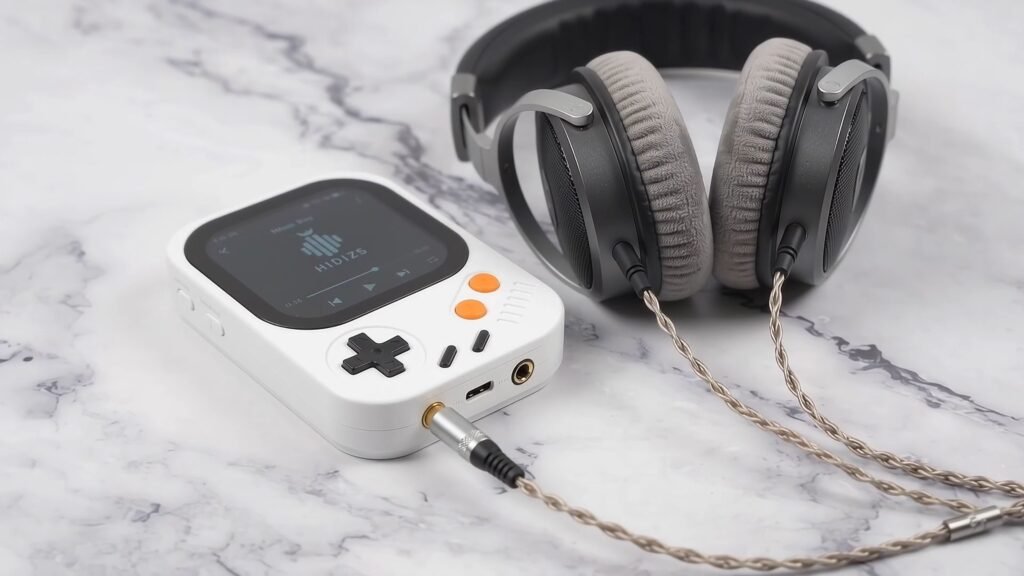
Power delivery remains the primary boundary. While 137 mW on balanced gain easily pushes high-sensitivity dynamic and planar IEMs, pairing the player with heavy high-impedance headphones exposes ceiling limitations. The player achieves safe listening volume on demanding dynamic cans when pushed above 80% output, but drivers lose dynamic control, transient authority, and deep bass extension. It operates at its best driving moderately sensitive IEMs and lightweight portable over-ears.
Final Thoughts — Price & Value
The Hidizs AP30 Music Boy occupies an unusual niche within the budget portable audio ecosystem. Priced between $85 on early backing and $130 at retail, it competes directly with high-performance USB dongles and entry-level standalone players. It does not match the driver-gripping wattage or streaming flexibility of high-end mid-tier units, nor does it try to. Instead, it trades modern touchscreen conveniences for tactile button satisfaction, an ultra-compact chassis, and distraction-free offline playback.
Value hinges on how much you prioritize hardware character versus pure software refinement. If your daily routine relies on massive lossless libraries requiring fluid navigation, advanced Bluetooth codec support like LDAC, or streaming services like TIDAL, the AP30 will feel restrictive. The 256 GB card limit, rigid button navigation, and missing onboard playlist tools require patience and manual library structuring on a PC.
