

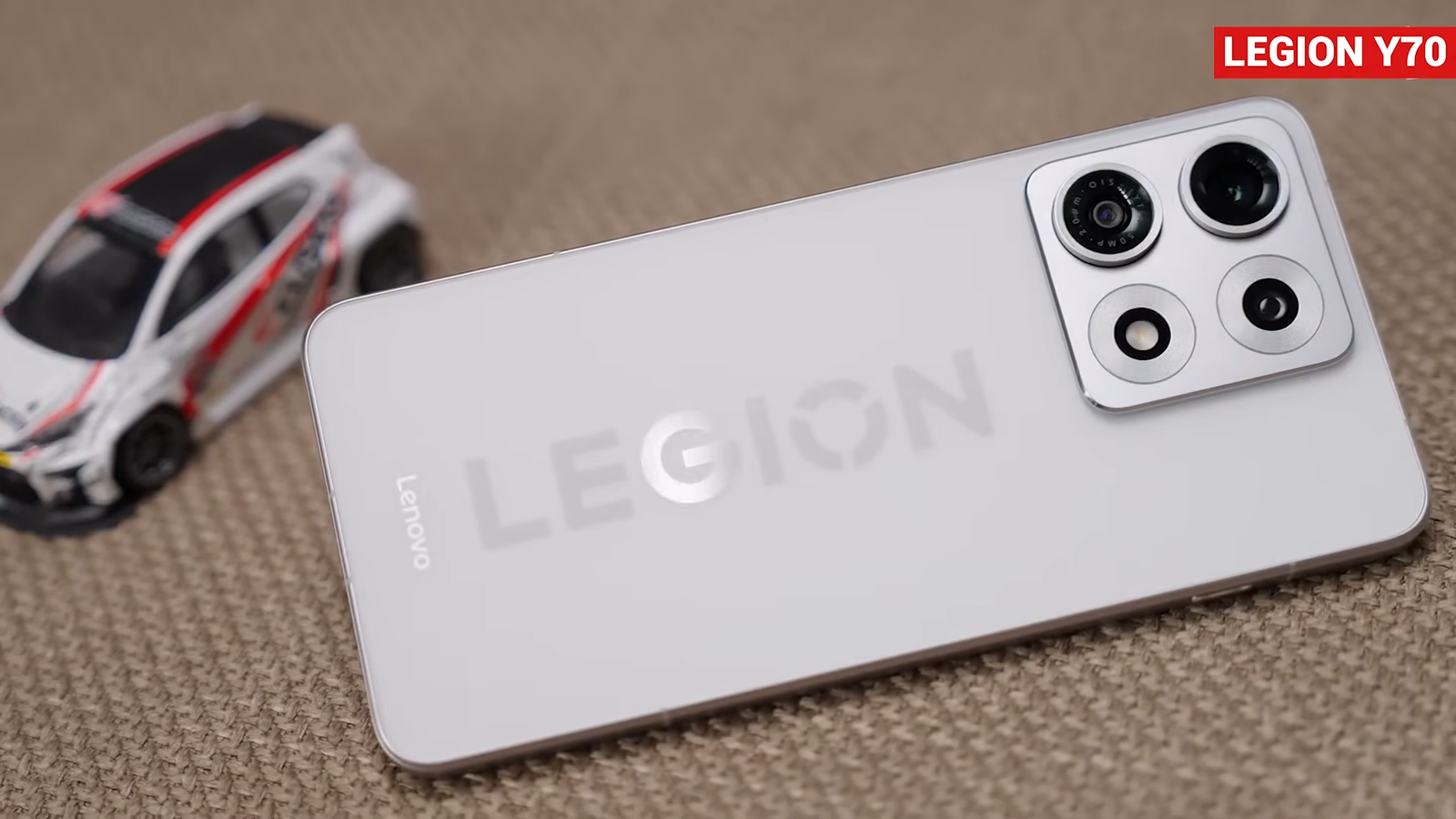
Lenovo has officially returned to the smartphone arena with the new Legion Y70, marking a significant milestone after a four-year hiatus. The device arrives at a competitive price point on platforms like AliExpress and Amazon, positioning itself as a serious contender in the high-performance segment. I have spent considerable time evaluating whether this phone truly deserves its legendary lineage in an era dominated by AI-driven hardware.
The core question for any enthusiast is simple. Does the hardware justify the return of the brand? My analysis suggests that Lenovo has successfully bridged the gap between traditional flagship capabilities and dedicated gaming utility. The phone does not merely chase raw benchmarks; it integrates a cohesive ecosystem that appeals to both casual users and hardcore competitors. This review breaks down the specific technical achievements that set this device apart from its contemporaries.

Design and Display Quality
The aesthetic approach of the Legion Y70 feels both familiar and distinctly fresh. Lenovo retained the clean design language of the 2022 model, avoiding the over-the-top visual clutter often seen in gaming phones. The ice white version I tested features a smooth matte finish that feels premium to the touch. It resists wear effectively and hides fingerprints well, a crucial detail for daily carry devices.

Upon closer inspection, a subtle 3D mesh texture becomes visible beneath the surface. The centered Legion logo and Lenovo branding provide an unmistakable family identity that stands out in a crowded market. In the hand, the 6.82-inch device feels unique due to its slightly raised mid-frame. This ergonomic choice adds a tactile element that distinguishes it from standard flat-backed smartphones.
The front is dominated by a flat OLED display with a resolution that surpasses standard FHD panels. Lenovo utilizes BOE’s latest Q10 panel, which delivers both high resolution and a buttery-smooth 144Hz refresh rate. The sharpness stands out instantly when compared to typical gaming phones that prioritize speed over clarity. Brightness levels are another major highlight, reaching 2,100 nits with a massive 7,000 nit local peak. This level of luminance ensures visibility in direct sunlight and enhances contrast in dark scenes.

Legion Zone and AI Features
The software experience introduces a new feature called Legion Zone, which goes far beyond a simple game store. Users can search and download popular games directly from official servers, bypassing traditional Android store limitations. This direct access method streamlines the installation process and reduces reliance on third-party repositories. The interface also includes rankings based on total play time and live player activity. These metrics provide meaningful stats rather than the often misleading marketing-driven download charts found elsewhere.

The built-in game manager remains a key component of the user experience. It is clean and free from unnecessary advertisements, a refreshing change from many competitors. The system combines mobile and PC gaming history into a single dashboard. This integration makes it easy to track everything you have been playing across different devices. The transparency of the UI allows for quick access to performance tools without navigating through multiple menus.
AI plays a huge role in the functionality of this device. Two standout features are AI pre-start and AI keep alive. AI pre-start loads game resources before the launch, resulting in significantly faster load times. AI keep alive is equally useful for multitasking scenarios. You can switch apps to reply to a message or order food without worrying about your game closing or disconnecting. Behind the scenes, an advanced AI performance scheduling system manages these tasks to maintain stability.

Thermal Management and Cooling
Hardware-wise, the Legion Y70 packs serious cooling capabilities to sustain its performance. It features the Qiankun Ninjin cooling architecture, which includes a large VC vapor chamber and graphite layers. The system also utilizes high-conductivity thermal gel and liquid metal technology. These materials are typically found in high-end devices like the PlayStation 5 and Lenovo’s premium gaming laptops. The inclusion of such advanced thermal solutions sets high expectations for sustained performance.

The engineering behind this cooling system aims to prevent throttling during extended use. By dissipating heat efficiently, the device can maintain its clock speeds without compromising frame rates. This approach is critical for competitive gaming where consistency is more important than peak burst performance. The physical design supports this goal by ensuring airflow and heat distribution are optimized across the chassis.
The effectiveness of this cooling setup becomes evident during rigorous testing. The combination of passive and active cooling elements works in tandem to manage thermal load. This infrastructure allows the processor to operate within its optimal temperature range. As a result, the device remains responsive even under prolonged stress. The hardware design clearly prioritizes long-term stability over short-term power spikes.

Gaming Performance Benchmarks
I began the performance evaluation with Genshin Impact at maximum settings and 60 FPS. The Legion Y70 averaged 59.5 FPS while using only 4.75 W of power. The back of the device reached just 43°C, indicating serious efficiency. This result demonstrates that the phone can maintain high frame rates without excessive energy consumption. The thermal output remains manageable even in demanding open-world scenarios.

Next, I tested Honkai Impact 3 Ironclad at maximum settings. The device again averaged 59.5 FPS with power staying below 6 W. Temperatures remained around 44°C on both the front and back surfaces. For a phone relying on passive cooling, this is an outstanding achievement. The consistency in frame rate suggests the AI scheduling system is effectively managing resource allocation.
Finally, I tested a demanding open-world game during a rainy night in the city. Even under heavy load, the Legion Y70 delivered an average of 50.8 FPS while drawing less than 5.5 W. Surprisingly, it stayed cooler than during the Honkai test, showing there is still performance left in reserve. If the retail software improves further, I expect even closer to full frame rates while keeping the same excellent efficiency and thermal performance.

Competitive Gaming Stability
To finish the gaming tests, I tried two of the biggest competitive mobile games. In a 5v5 Honor of Kings match with ultra graphics and max frame rate, the Legion Y70 used just 3.6 W. The device stayed around 40°C throughout the session. Thanks to its AI performance scheduling, gameplay stayed smooth from start to finish. Even during intense team fights, frame rates barely moved. This stability is crucial for competitive play where lag can be decisive.

I also tested the 120 FPS mode to see how the device handles higher refresh rates. Once again, the phone stayed close to the maximum frame rate while using less than 4 W. The efficiency at higher frame rates is particularly impressive. It confirms that the hardware can scale performance without a proportional increase in power draw. This capability makes the device suitable for high-refresh-rate esports titles.
After all these tests, one thing became clear. Lenovo did not chase raw power at the cost of heat and battery. Instead, it borrowed years of experience from its Legion gaming laptops to balance performance, efficiency, and cooling. This holistic approach results in a device that feels refined rather than brute-forced. The integration of software and hardware creates a seamless gaming experience that feels mature and polished.

Connectivity and Ecosystem Integration
Performance means nothing without a stable connection, so the Legion Y70 comes with a dedicated e-sports antenna. This hardware component keeps the signal strong no matter how you hold the phone. It also supports four SIM dual standby and four network switching for reliable connectivity wherever you play. These features ensure that latency remains low even in congested network environments. The focus on connectivity is a smart addition for mobile gamers.

The software experience has improved significantly and feels very close to stock Android. It still includes smart features designed for specific user bases, though. While many brands are copying Apple’s style, Lenovo stays closer to Google’s material design. This decision adds powerful AI features, including the new Tianxi Cloud. The interface remains intuitive while providing deep functionality for those who need it.
Tianxi Cloud is built around personalized AI and can create gaming guides based on the games you actually play. It can search the web for hidden secrets, Easter eggs, and speedrun strategies, then bring everything directly to your phone. It is still in beta, so more features are coming, but combined with Legion PCs and tablets, its future looks very promising. This ecosystem approach adds value beyond the hardware itself.

Super Connectivity and Multitasking
Lenovo also introduced a redesigned super connectivity system that simplifies workflow. Sharing files between your phone and PC is effortless, and with one tap, you can mirror your phone to your computer. Even better, PC mode creates a true desktop-style interface where every app runs in its own window. Your phone remains fully usable while running in this mode. I had to test if you can play a game on your phone while using PC mode at the same time.

Surprisingly, the system works, opening up some really interesting multitasking possibilities. This capability allows users to manage productivity tasks while maintaining a live gaming session. The flexibility of the interface makes the device more versatile than a standard smartphone. It serves as a legitimate secondary computer for many users.
The biggest advantage of Super Connect is its compatibility. It works with most Windows PCs, not just Legion laptops, making it far more useful in everyday life. This broad support ensures that the feature is
